featured News Trending

The long-standing expectation that the global obesity drug market would reach $150 billion within the next decade is becoming less certain as prices for leading GLP-1 treatments from Novo Nordisk and Eli Lilly decline in the United States. Analysts say intensifying competition, the rise of cash-pay consumers, and the prospect of new drugs and generics have forced a reassessment of how big — and how fast — the market can grow. Forecasts for 2030 are now roughly 30% lower, closer to $100 billion, with the $150 billion milestone pushed further out to the mid-2030s.

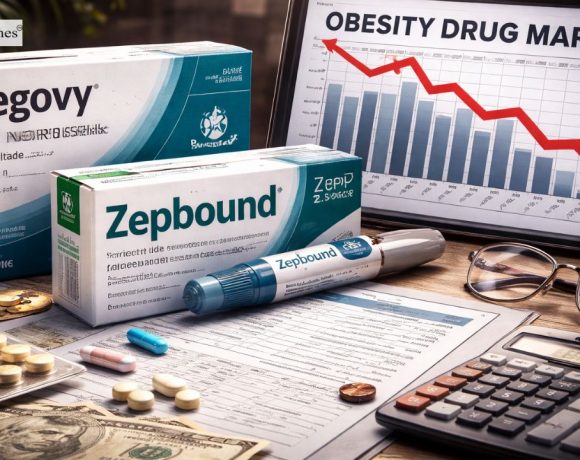
Once priced at around $1,000 a month, flagship weight-loss drugs such as Wegovy and Zepbound are now available directly from manufacturers for $149 to $299, reflecting political pressure and pricing agreements. While lower prices could boost volumes, analysts warn that revenue growth will depend heavily on sustained demand. Several banks, including Jefferies and Goldman Sachs, have trimmed their peak market estimates, citing faster-than-expected price erosion and changing patient usage patterns.

Despite the caution, some analysts and industry leaders remain optimistic, arguing that higher volumes, longer treatment durations, and the launch of oral weight-loss pills could still drive substantial growth. Novo and Lilly remain dominant players, and the approval of more convenient pills may expand the patient base rather than merely shift market share. With earnings updates and new clinical data expected in 2026, analysts say the coming year will be critical in determining whether the obesity drug market is truly shrinking — or simply entering a new phase of growth.

Pic courtesy: google/ images are subject to copyright
featured News Trending

Novo Nordisk’s newly launched Wegovy weight-loss pill has shown encouraging early uptake in the United States, according to analysts citing initial prescription data. About 3,071 retail prescriptions were filled in the first four days after the January 5 launch, offering a first glimpse of performance for the first oral GLP-1 weight-loss drug to reach the market. Following the news, Novo’s shares rose 6.5%, recovering from earlier declines and reaching their highest level since September.

The pill is a key part of Novo’s strategy to regain ground from U.S. rival Eli Lilly, as competition intensifies ahead of a potential FDA decision on Lilly’s experimental pill by April. Analysts caution that the early data is limited and that pricing pressures and insurance coverage changes could affect sales. However, UBS noted that if prescriptions exceed 400,000 in the first quarter, the launch would rival Lilly’s Zepbound and outperform the earlier rollout of Wegovy injections.

Novo is prioritizing the U.S. launch to avoid supply issues and is targeting cash-paying consumers through major pharmacies and telehealth platforms. Analysts estimate the pill could generate around $1 billion in sales this year if Novo capitalizes on its first-mover advantage. While injectable treatments are expected to remain dominant, experts say oral options could significantly expand the market by attracting patients seeking alternatives to needles.

Pic courtesy: google/ images are subject to copyright

featured News Trending

Pfizer is preparing to raise its offer for obesity drugmaker Metsera after a U.S. judge refused to block rival Novo Nordisk’s $10 billion bid, according to a source. The pharmaceutical giant is scrambling to keep its takeover plans alive as its current merger agreement with Metsera is set to expire at midnight ET without an improved proposal. The fierce competition reflects the companies’ push to secure a foothold in a rapidly expanding obesity treatment market projected to reach $150 billion by the early 2030s.

The bidding war, which began privately in January, escalated into public view when Novo launched an unsolicited proposal last week—its seventh attempt—undermining Pfizer’s earlier $7.3 billion deal. Both companies raised their offers on Tuesday, with Pfizer valuing Metsera at up to $8.1 billion and Novo offering a mix of upfront cash and milestone-based payments. The uncertainty has caused Metsera’s stock to swing, falling 2.5% Wednesday before rising in after-hours trading.

Regulatory challenges are adding further complications. The U.S. Federal Trade Commission warned that Novo’s deal structure may violate antitrust rules without proper premerger review, while Pfizer’s claim that the rival offer is illegal was rejected in court. As Pfizer seeks to overcome past setbacks in the obesity space and Novo tries to regain ground lost to Eli Lilly, control of Metsera—and its next-generation GLP-1 drug pipeline—remains hotly contested.

Pic Courtesy: google/ images are subject to copyright