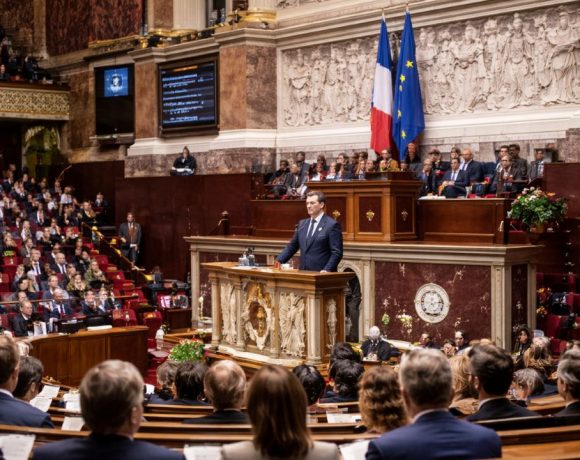
The French government has survived two no-confidence motions in the National Assembly after pushing through a new energy law by decree earlier this month. The motions were filed by the far-right National Rally (RN) and the hard-left La France Insoumise (LFI), but neither secured the 289 votes required to topple the government. The RN-backed motion received 140 votes, while the LFI motion gathered 108, allowing Prime Minister Sebastien Lecornu to remain in office.
The outcome offers temporary relief to Lecornu’s minority administration, which has faced repeated challenges since taking power. Earlier this year, the government also survived two no-confidence votes linked to the passage of a delayed budget. However, political uncertainty persists in France, with President Emmanuel Macron experiencing low approval ratings as he approaches the end of his second term.
The contested energy law outlines a revised national strategy that scales back renewable energy targets and eases operational pressure on state-owned utility Electricite de France (EDF), including reversing a previous mandate to shut down 14 nuclear reactors. The measure sparked intense debate between lawmakers advocating continued renewable subsidies and those favouring investment in nuclear power, amid concerns over the country’s high debt and long-term energy security.
Pic courtesy: google/ images are subject to copyright