
featured News Trending

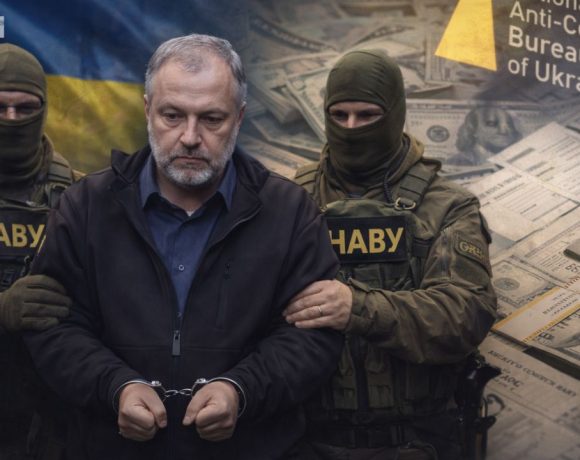
Ukraine’s anti-corruption authorities have detained former energy minister German Galushchenko on accusations of laundering millions of dollars in kickbacks linked to the so-called “Midas” case. Investigators allege the scheme involved around $100 million in bribes at state nuclear company Energoatom. Galushchenko, who served as energy minister from 2021 to 2025 and briefly as justice minister before resigning last year, was reportedly stopped while attempting to leave the country. He denies wrongdoing.

According to Ukraine’s anti-corruption agency National Anti-Corruption Bureau of Ukraine (NABU) and its prosecutorial partner SAPO, more than $7 million was transferred into foreign accounts naming Galushchenko’s wife and four children as beneficiaries. Prosecutors say some of the funds were used to pay for elite schooling in Switzerland, while other sums were placed in deposits generating additional income for the family. The broader probe has implicated senior officials and business figures, including associates of President Volodymyr Zelenskiy.

The scandal has shaken Kyiv’s wartime leadership and raised concerns among Western allies supporting Ukraine in its fight against Russia. The investigation previously led to high-level political fallout, including changes within the presidential administration. As Ukraine pushes for closer integration with the European Union, tackling entrenched corruption remains a central condition for advancing its reform agenda.

Pic courtesy: google/ images are subject to copyright

featured News Trending

Ukrainian anti-corruption investigators have accused former prime minister and opposition leader Yulia Tymoshenko of bribery, alleging her involvement in a vote-buying scheme, a source familiar with the case said on Wednesday. The accusation comes as part of a widening anti-graft crackdown that has shaken Ukraine’s political establishment. The National Anti-Corruption Bureau of Ukraine (NABU) said it had served bribery charges to an opposition party leader without naming Tymoshenko directly.

According to NABU, the investigation uncovered a “systemic” scheme in which lawmakers allegedly received payments in exchange for voting instructions or abstentions. The bureau said the plan was not a one-off arrangement but a long-term mechanism involving advance payments and coordinated parliamentary behavior. Tymoshenko, a prominent figure of the 2004 Orange Revolution, denied all allegations and said in a social media post that she would defend herself in court.

The probe forms part of a broader anti-corruption drive that has ensnared senior officials and lawmakers across the political spectrum, amid Ukraine’s push to meet European Union standards. Tackling corruption is central to Kyiv’s EU accession ambitions, though recent high-profile cases have underscored the scale of the challenge. Tymoshenko, who served as prime minister in 2005 and from 2007 to 2010, now leads a smaller parliamentary faction, with her political influence having waned in recent years.

Pic courtesy: google/ images are subject to copyright