featured News

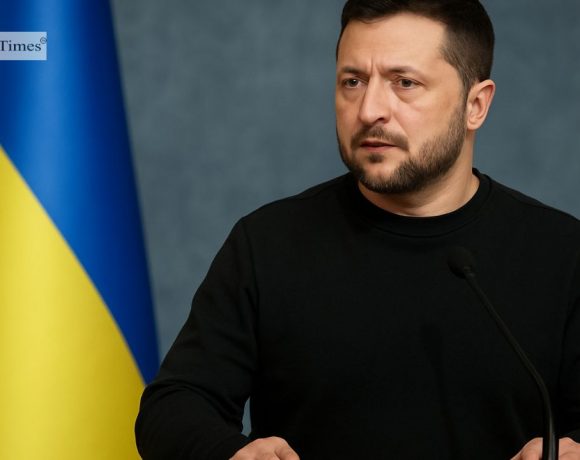
Ukrainian President Volodymyr Zelensky has said he is prepared to work with the United States on what he called “their vision” for ending the war with Russia, following reports of a leaked draft peace proposal shaped during meetings between US special envoy Steve Witkoff and Russian representative Kirill Dmitriev. The plan, which has drawn global attention, suggests Ukraine would cede parts of the Donetsk region still under its control, reduce the size of its military, and commit not to join NATO—terms Kyiv has previously rejected.

The White House insists Ukraine has been included in discussions, pushing back against criticism that negotiations happened behind its back. The draft emerged as Russia reported small territorial gains in eastern Ukraine and as Zelensky faces a domestic political crisis linked to a $100 million corruption scandal. In a televised address, Zelensky confirmed that US military officials had presented points of a peace proposal in Kyiv, stressing that Ukraine seeks a “real peace… one that will not be broken by a third invasion.”

The plan has triggered concern among European leaders, who say they were excluded from early talks. Germany’s foreign minister described the US proposal as only a “list of topics and options” rather than a complete agreement. While Washington claims the draft is balanced and acceptable to both sides, Kyiv maintains that any peace must protect Ukraine’s sovereignty and dignity. The debate unfolds as fighting continues, including recent deadly Russian attacks in Zaporizhzhia and Ternopil, and as the fourth anniversary of Russia’s full-scale invasion approaches.

Pic Courtesy: google/ images are subject to copyright

featured News Trending

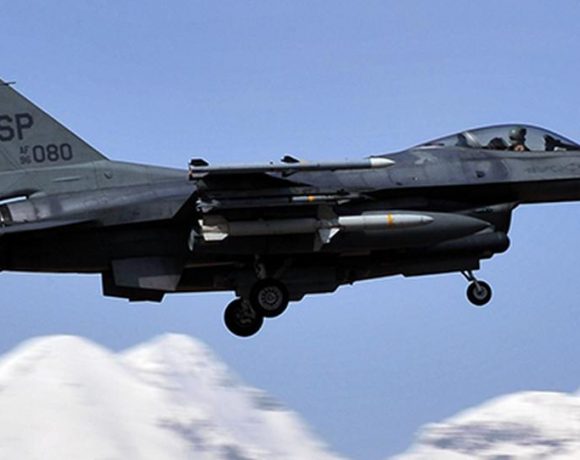
The first batch of much-anticipated F-16 jets has arrived in Ukraine, according to Lithuania’s foreign minister and a U.S. official on Wednesday. This delivery is expected to aid Ukraine in restoring its weakened air force. The F-16s, manufactured by Lockheed Martin, have long been sought by Ukraine due to their significant firepower and widespread availability. Equipped with a 20mm cannon, these fighter jets can carry a variety of bombs, rockets, and missiles. Lithuanian Foreign Minister Gabrielius Landsbergis remarked on X (formerly Twitter) that “F-16s in Ukraine. Another impossible thing turned out to be totally possible.” A U.S. official, who wished to remain anonymous, confirmed that the delivery has been completed.

Denmark has pledged a total of 19 jets, while the Netherlands has committed to delivering 24 aircraft. Both nations have played a key role in forming an international coalition to supply Ukraine with F-16s. Norway has also announced it will donate six F-16 fighter jets. Ukrainian pilots and ground personnel have undergone training with the help of Western allies for several months.

As Ukraine has fought against Russia’s full-scale invasion that began in February 2022, it has relied on a limited fleet of Soviet-era aircraft. Ukrainian officials consider the addition of F-16s a crucial enhancement for their Air Force. However, analysts and officials indicate that while the F-16s will strengthen Ukraine’s capabilities, they are unlikely to be a decisive factor in the ongoing conflict.

Picture Courtesy: Google/images are subject to copyright

featured Trending

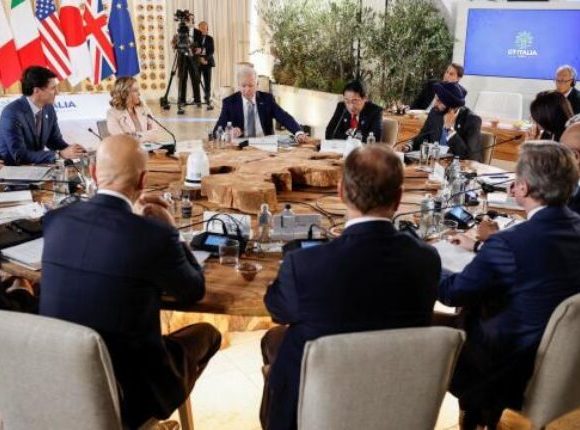
The G7 has agreed to utilize frozen Russian assets to raise $50 billion (£39 billion) for Ukraine to aid in its defense against Russian forces. President Joe Biden emphasized this decision as a signal to Russia that the support for Ukraine remains steadfast. However, Moscow has warned of “extremely painful” retaliatory actions. The funds, anticipated to be available by the end of the year, are intended to support Ukraine’s war effort and economic stability in the long term.

At the G7 summit in Italy, Ukrainian President Volodymyr Zelensky and Biden signed a 10-year bilateral security agreement between the US and Ukraine, which Ukraine hailed as “historic.” This agreement involves US military and training aid but does not commit US troops to combat. It aims to enhance Ukraine’s defense capabilities, support its defense industry, and aid in economic and energy recovery. It also stipulates consultations at the highest levels in case of future Russian attacks on Ukraine to decide necessary support measures.

Separately, about $325 billion in Russian assets were frozen by the G7 and the EU following Russia’s 2022 invasion of Ukraine. These assets generate approximately $3 billion annually in interest. The G7 plan involves using this interest to cover the annual interest on a $50 billion loan for Ukraine, sourced from international markets.

President Biden, at the summit in Puglia, Italy, reiterated that the $50 billion loan would support Ukraine and send a strong message to Russian President Vladimir Putin. Zelensky expressed gratitude for the continued support from the US and other allies, calling the security deal with the US the strongest since Ukraine’s independence in 1991. Other G7 leaders, including UK Prime Minister Rishi Sunak, praised the loan deal as transformative.

The $50 billion loan compares significantly with the $61 billion in US military aid agreed upon in May. A senior White House official noted the loan would support various needs, including military, budget, humanitarian, and reconstruction efforts. While the frozen funds’ interest is seen as a symbolic victory for Ukraine, some in Kyiv had hoped for the release of the entire $300 billion frozen fund. However, the European Central Bank opposed this, citing risks to international order.

The funds from the loan will not immediately impact the war, as they are expected later in the year. Ukraine continues to seek more immediate military aid, such as air defense systems and F-16 fighter jets, which could start arriving in the summer. Zelensky mentioned that the new security agreement includes US shipments of these aircraft.

The loan arrangement symbolizes a significant move where Russia’s frozen assets are repurposed to support Ukraine’s defense. Although this marks a turning point, it is unlikely to change Russia’s stance on the war. Most of the frozen Russian central bank assets are in Belgium, and international law prevents their direct confiscation for Ukraine’s benefit. Russia has condemned the West’s actions as criminal and has hinted at severe retaliatory measures. European investors have around €33 billion stuck in Russia, complicating the situation further.

Picture Courtesy: Google/images are subject to copyright