
featured News

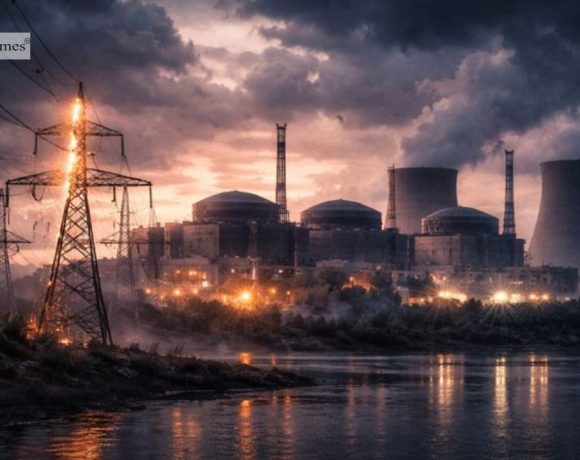
The Russian-controlled Zaporizhzhia nuclear power plant in Ukraine is currently running on only one of its two external power lines, Russian management reported on Tuesday. The second line was disconnected due to ongoing military activity, though officials confirmed that radiation levels remain normal. Repair work is planned to restore full power as soon as possible.

Europe’s largest nuclear facility, under Russian control since March 2022, is not generating electricity but depends on external power to keep nuclear material cooled and prevent a meltdown. The plant has experienced multiple power outages recently, including earlier this month, though connections were restored after each incident.

Both Russia and Ukraine have accused each other of shelling the site, raising concerns over safety. In September and October, the plant was without external power for 30 days, relying on backup diesel generators until a damaged line was repaired during a temporary local ceasefire coordinated with the U.N. nuclear agency.

Pic courtesy: google/ images are subject to copyright
News Trending

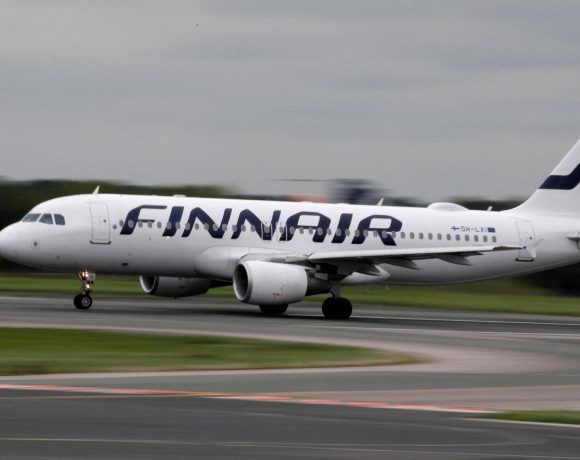
Russia has been increasingly disrupting satellite navigation systems, particularly in regions where its military activity is high, such as the Baltic Sea, the Black Sea, and the eastern Mediterranean. This disruption has affected thousands of civilian flights, with incidents reported by pilots and airlines. Finnair, for instance, had to suspend flights to Tartu, Estonia, due to GPS interference.

While GPS disruption is mainly a nuisance and not an immediate safety threat during flight, it can still pose risks, especially for airports relying solely on GPS navigation like Tartu. The European Union Aviation Safety Agency has noted a significant increase in incidents, with blame squarely placed on Russia by Baltic state officials and online investigators.

The disruption includes jamming GPS signals and spoofing legitimate ones, causing confusion about location. Experts suggest Russia’s motives range from offensive to defensive, testing its ability to immobilize Europe while protecting itself from potential attacks. While Russia has its own navigation system (GLONASS), the interference still poses risks due to society’s heavy reliance on precise GPS signals.

Ultimately, while aircraft may have backup systems, interference with GPS signals disrupts efficiency and safety, requiring a reliance on older, less familiar procedures. There’s concern that if the interference continues, it could lead to more serious consequences.

Picture Courtesy: Google/images are subject to copyright