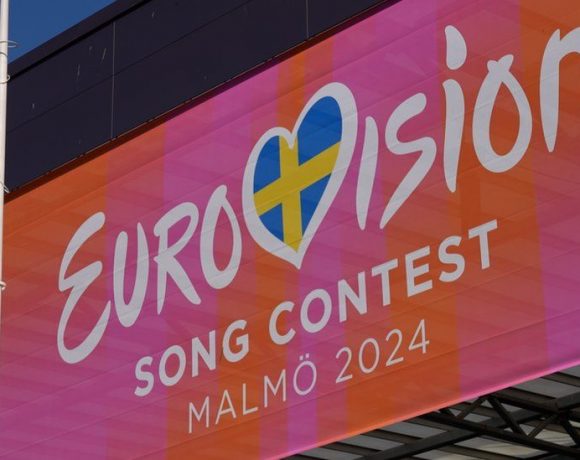
Security measures are being intensified for the Eurovision Song Contest in Malmo, Sweden’s third-largest city, as large demonstrations are expected to coincide with the event. While police and organizers assert they are well-prepared and aiming for a “joyful” occasion, concerns linger amidst heightened tensions.
The annual Eurovision celebration, typically a lighthearted affair of pop music and showbiz, finds itself under a cloud this year due to Israel’s participation amid the conflict in Gaza. With Sweden already facing elevated security challenges, Malmo braces for one of its most extensive policing endeavors.
Upwards of 100,000 visitors are anticipated to flock to the city on Sweden’s southwestern coast for the world’s largest live music competition. Despite the festive atmosphere adorned with colorful Eurovision banners adorning the streets, apprehensions loom large.
The series of festivities kick off on Saturday, with semi-finals scheduled for next Tuesday and Thursday, culminating in the grand final on May 11. An estimated global audience of 200 million viewers is expected to tune in for the four-hour spectacle.
Law enforcement personnel have been mobilized from across Sweden, with reinforcements from neighboring Denmark and Norway. While Swedish police typically carry arms, additional officers will be equipped with larger weapons as a precautionary measure.
Malmo’s police chief, Petra Stenkula, acknowledges the country’s heightened state of alert, citing a “terror level of four out of five.” She notes that protests against Israel’s participation in the competition have taken place in Sweden, including Malmo.
Despite the absence of specific threats to the event, security concerns remain elevated, particularly following a series of Quran-burnings last August that sparked outrage in the Muslim world. An internal police report underscores Sweden as a “priority target” for violent jihadist groups, citing various potential risks including unrest, cyber attacks, and broadcast disruption.
Authorities have deployed extensive surveillance measures, including cameras and drones, while implementing airport-style security checks at venue entrances. Bags are prohibited for guests attending the event.
Malmo’s security director, Per-Erik Ebbestahl, emphasizes the city’s readiness, citing months of planning and collaboration with counterparts in Liverpool, the host of last year’s competition.
While Malmo has previously hosted notable events such as a papal visit and a Holocaust Remembrance conference, the current security landscape presents new challenges, particularly regarding large gatherings and generalized threats towards Sweden.
The sentiment is echoed by Ebba Adielsson, the executive Eurovision producer, who acknowledges the political controversies surrounding this year’s event but hopes they won’t overshadow the festivities. Israeli contestant Eden Golan’s participation has drawn attention, given the politically charged nature of her song.
Tensions are palpable in Malmo, with its diverse population expressing mixed sentiments. While some members of the Jewish community feel nervous, others from the Palestinian community have been vocal in their opposition to Israel’s participation.
Protests against Israel’s involvement in Eurovision are anticipated, with multiple demonstrations planned throughout the week. Police are bracing for potentially large-scale rallies, with measures in place to ensure public safety.
Despite the offstage tensions, Eurovision enthusiasts remain hopeful for a successful and enjoyable event. Amidst the challenges, the spirit of Eurovision prevails, with festivities planned to celebrate the competition’s cultural significance.
Picture Courtesy: Google/images are subject to copyright