featured News

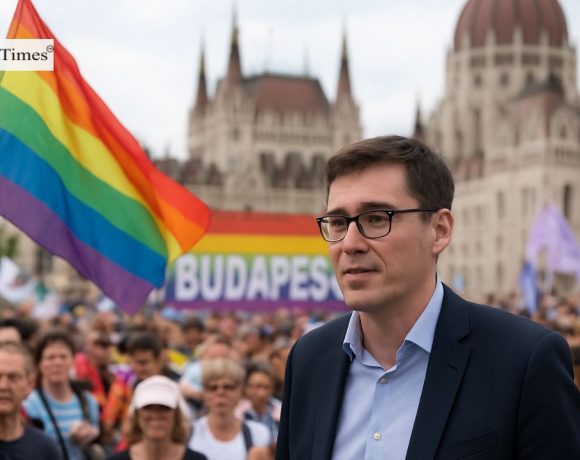
Hungarian police have recommended that prosecutors file charges against Budapest’s liberal mayor, Gergely Karacsony, for his role in organising an LGBTQ+ rights march in June that evolved into a large anti-government demonstration. The June 28 march, originally planned as a Pride event despite a government ban, drew tens of thousands of people and became one of the biggest displays of opposition to Prime Minister Viktor Orban’s nationalist government. The Budapest Chief Prosecution Office confirmed it has received the police investigation documents but did not comment on whether charges will follow.

Karacsony, responding in a video message, said he was proud to defend the freedom of Budapest and was ready to face any legal consequences. He framed the event as an act of political courage aimed at safeguarding democratic rights in the capital. His attempt to classify the march as a municipal event—arguing it did not require a permit—was intended to bypass a new law passed in March that allowed the government to ban Pride marches under the banner of child protection.

Human rights advocates and opposition figures have criticised the Pride ban as part of a broader erosion of civil liberties under Orban, who faces a challenging election next year. Although police initially banned the event, citing the child protection law, the march proceeded peacefully and highlighted growing public resistance to government policies affecting the LGBTQ+ community and democratic freedoms.

Pic courtesy: google/ images are subject to copyright
News Trending

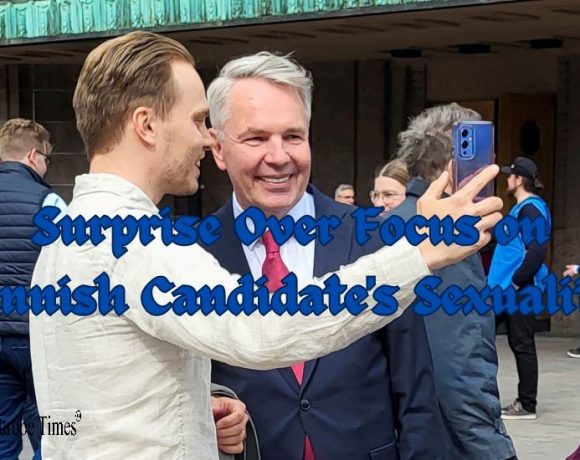
Finnish presidential candidate Pekka Haavisto has expressed surprise and dismay at the sudden focus on his sexuality in the final days of campaigning before Sunday’s election, particularly by journalists from the national broadcaster, Yle. Haavisto, who could become Finland’s first Green and first gay president, noted that while his sexual identity was discussed in his 2012 campaign, it hadn’t been a central topic this time until the second round of voting.

He questioned why his sexuality had become an issue now and suggested that some journalists’ active pursuit of the topic raised questions. This comes after a poll found that a third of voters wouldn’t support him because he is gay. Despite this, Haavisto has been gaining ground on his rival, Alexander Stubb, according to the latest Yle poll, though he still trails 46-54%.

The campaign has also seen debate over nuclear weapons, with Haavisto opposing their storage in Finland, while Stubb advocates for a change in the law. Both candidates have diverse support bases, with Stubb favored among pensioners and Haavisto drawing support from younger voters, making turnout crucial for him.

As the campaign enters its final days, Haavisto continues to engage with voters, particularly focusing on female and young voters. If elected, he aims to prioritize addressing the climate crisis on the global stage, seeking to form an informal coalition to pressure international bodies for urgent action.

Haavisto is surprised by the sudden focus on his sexuality in the campaign’s final days, believes it to be an artificial topic, and remains committed to his platform of climate action and engagement with voters ahead of the election.

Picture Courtesy: Google/images are subject to copyright

News Trending

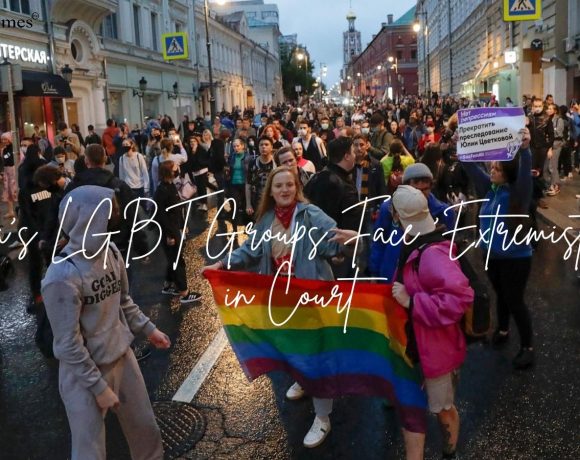
In Moscow, a traditional marriage ceremony showcasing customs from the far north of Russia is part of an exhibition promoting patriotism and “traditional values.” The weddings at the event adhere to the constitutional definition of marriage as a union between a man and a woman, emphasizing the absence of recognition for same-sex unions in Russia.

Over the years, Russia’s LGBTQ+ community has faced increasing pressure from authorities, marked by a law enacted in 2013 prohibiting the “propaganda of non-traditional sexual relations” among minors. These restrictions were expanded to all age groups in Russia last year, leading to the removal of references to LGBTQ+ individuals from various forms of media.

The Russian justice ministry has now sought to label the non-existent “International LGBT public movement” as an “extremist” organization, aiming for a ban. LGBTQ+ activists fear that if the supreme court supports this motion, individuals associated with LGBTQ+ activism could face lengthy prison sentences for allegedly participating in an extremist organization.

Members of the Russian parliament, particularly Vitaly Milonov, argue that the move is not an attack on sexual minorities but is instead aimed at countering the political agenda of an international LGBTQ+ movement. Milonov expresses a desire to ban activities from LGBTQ+ international organizations in Russia and even suggests banning the rainbow flag, considering it a symbol against traditional family values.

The Kremlin, under Vladimir Putin, has embraced an ideology centered on conservative thinking and “traditional family values,” portraying LGBTQ+ activism as a Western threat to Russia. The pressure on the LGBTQ+ community is framed as a defense of the moral fabric of the country.

Some activists believe that the supreme court hearing on labeling the “International LGBT public movement” as extremist is linked to the upcoming presidential election, suggesting that authorities are creating an artificial enemy to appeal to conservative sentiments. LGBTQ+ advocates view this as an attempt to distract the public from pressing issues.

Maxim Goldman, who identifies as non-binary, describes feeling rejected by their own country and reveals plans to leave Russia urgently due to the anticipated crackdown on LGBTQ+ activism. Others, like municipal deputy Sergei Troshin, express concerns about potential legal consequences for advocating LGBTQ+ rights, highlighting the pervasive atmosphere of fear in Russian society.

In summary, Russia’s LGBTQ+ community is facing increased hostility from authorities, with potential legal consequences for activists and a broader societal atmosphere of fear and repression.

Picture Courtesy: Google/images are subject to copyright