
featured News Trending

Germany’s Social Democratic Party (SPD) leadership said the party must focus on advancing promised tax and social welfare reforms following a heavy loss in the Rhineland-Palatinate state election. Co-leaders Finance Minister Lars Klingbeil and Labour Minister Baerbel Bas described the defeat as “catastrophic” but stressed that internal personnel debates should not distract from addressing national challenges.

The vote, which handed victory to Chancellor Friedrich Merz’s Christian Democrats, marks the second setback in a series of five state elections this year and has intensified pressure on the SPD, already struggling after the collapse of Olaf Scholz’s coalition government in 2024. Despite slipping behind the far-right Alternative for Germany in national polls, no significant internal challengers have emerged within the party.

Klingbeil emphasized that the SPD’s response should center on defining a clear strategic and programmatic course rather than replacing leaders. The party’s executive committee, along with ministers and state premiers, will meet Friday to finalize a reform package, which will then be negotiated with coalition partners to tackle pressing issues facing Germany.

Pic courtesy: google/ images are subject to copyright
featured News Trending

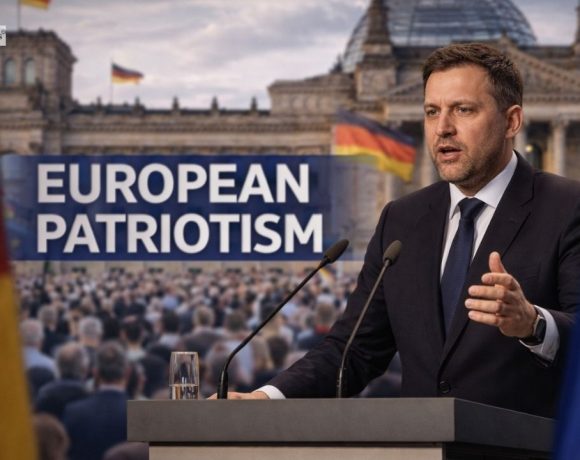
Germany’s finance minister Lars Klingbeil has called for a new era of “European patriotism” to protect the continent’s economic interests amid rising global tensions. Speaking at a lecture in Berlin, Klingbeil proposed that companies receiving state aid should be required to keep jobs within Europe and that public procurement policies should prioritise goods produced in the region.

Klingbeil said Europe must fundamentally rethink its economic strategy as traditional alliances weaken and trade becomes increasingly politicised. He argued that the transatlantic relationship is changing, pointing to signs that the United States is turning away from Europe both politically and culturally. At the same time, he warned that trade is being weaponised through subsidies, tariffs, export controls and industrial overcapacity, placing strain on Germany’s export-driven economy.

To address these challenges, Klingbeil outlined a strategy focused on strengthening European unity, diversifying trade ties beyond the United States and shielding European markets from unfair competition. He said Europe must become more sovereign and resilient, cautioning that relying solely on exports is no longer sufficient in a rapidly shifting global economic order.

Pic courtesy: google/ images are subject to copyright
featured News

Alphabet’s Google has announced plans to invest €5.5 billion ($6.4 billion) in Germany between 2026 and 2029 to strengthen its cloud infrastructure and data centre capacity. The investment includes building a new data centre in Dietzenbach near Frankfurt and expanding its existing facility in Hanau, both located in the state of Hesse.

The initiative is expected to secure around 9,000 indirect jobs, marking a significant boost for Germany’s digital economy. Google Cloud’s Northern Europe vice president Marianne Janik said the investment will directly involve about 100 workers at each site. The move follows a series of major tech partnerships in Germany, including a $1.2 billion AI deal between Deutsche Telekom and Nvidia.

German Finance Minister Lars Klingbeil hailed the announcement as a major signal for Germany’s economic future, noting that no state funds are involved. The government continues to promote the country as a prime business destination amid efforts to modernize infrastructure and revive economic growth.

Pic Courtesy: google/ images are subject to copyright