
featured News Trending

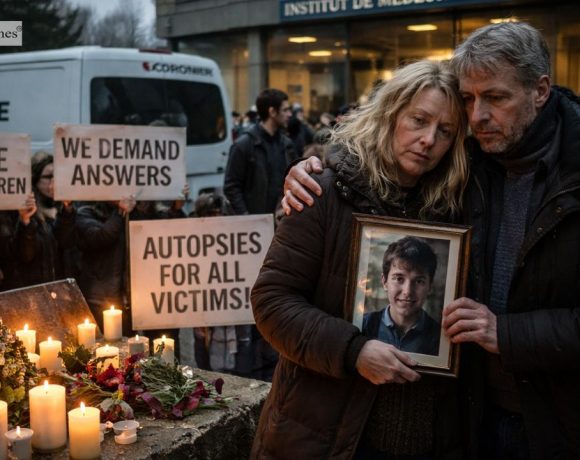
Grieving families of victims killed in a deadly bar fire at the Swiss ski resort of Crans-Montana are protesting what they see as serious failings in the handling of autopsies by local prosecutors. Parents of 17-year-old Trystan Pidoux said they repeatedly requested an autopsy before burying their son, but received no response until medics arrived unexpectedly to take his body on the eve of the funeral, forcing the family to cancel the burial. Only a small number of victims underwent autopsies, and in most cases only after bodies were released, according to sources close to the investigation.

Relatives of several of the 41 victims say the lack of comprehensive autopsies has shaken their confidence in the criminal inquiry into one of Switzerland’s worst modern tragedies. Prosecutors in the Valais canton, who are investigating suspected crimes including negligent homicide, have defended their conduct, saying they are expanding their team and securing evidence. Swiss authorities have urged patience, stressing the independence of the judiciary, even as international scrutiny grows.

Lawyers representing victims’ families say some are now considering requesting exhumations to determine how their loved ones died. Italy, which criticised the Swiss investigation, carried out its own post-mortem examinations on six Italian victims after repatriation. The fire, triggered by sparklers carried inside the bar, spread rapidly and led to deadly crowding at exits, with investigators still examining whether delays in evidence collection may have compromised the case.

Pic courtesy: google/ images are subject to copyright
News Trending

Georgia’s MPs have overturned a presidential veto on the controversial “transparency on foreign influence” bill, commonly referred to as the “foreign agents law,” after several weeks of protests in Tbilisi. The law mandates that media and NGOs receiving over 20% of their funding from abroad must register as “organisations acting in the interest of a foreign power,” undergo stringent audits, or face heavy fines. The vote in a plenary session on Tuesday saw 84 MPs, primarily from the governing Georgian Dream party, in favor, with four votes against and the opposition abstaining.

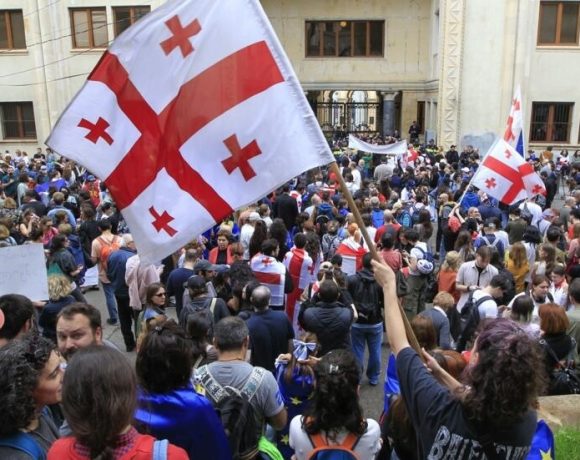
Thousands of Georgians protested outside parliament, waving Georgian and EU flags. The law, initially passed on May 14 and then vetoed by pro-Western President Salome Zourabishvili, is set to take effect in 60 days. The Georgian government argues that the law will enhance transparency and protect against foreign interference. However, opponents, calling it the “Russian law” due to its similarity to existing Russian legislation, believe it aims to suppress dissent ahead of October’s parliamentary elections.

The EU expressed deep regret over the parliament’s decision, warning that the bill could hinder Georgia’s progress within the bloc. Georgia achieved candidate country status in December 2023. Many NGOs have declared they will not comply with the legislation, describing it as “insulting” and “factually incorrect.”

As MPs debated the bill, protesters gathered outside parliament under heavy police presence. Following the vote, demonstrators shouted “slaves!” and “Russians!” Police have frequently used force against protesters, with reports of beatings and intimidation. Despite this, many demonstrators, predominantly young, continue to protest, viewing their future as dependent on aligning with Europe.

Observers believe the passing of the foreign agents law has become crucial for the survival of Georgian Dream, alienating many traditional partners. The US joined the EU in warning of repercussions, with the US State Department announcing travel restrictions on those undermining democracy in Georgia and their families. However, authorities dismissed these warnings, with Tbilisi Mayor Kakha Kaladze asserting that there would be no compromise against national interests.

With limited options left to halt the bill, President Zourabishvili presented a new charter on Monday to move Georgia towards Europe, calling for a new political reality, different elections, and significant reforms to depoliticize the justice system and security services. She invited all opposition parties to sign the charter by June 1 and unite for the parliamentary elections in October.

Picture Courtesy: Google/images are subject to copyright