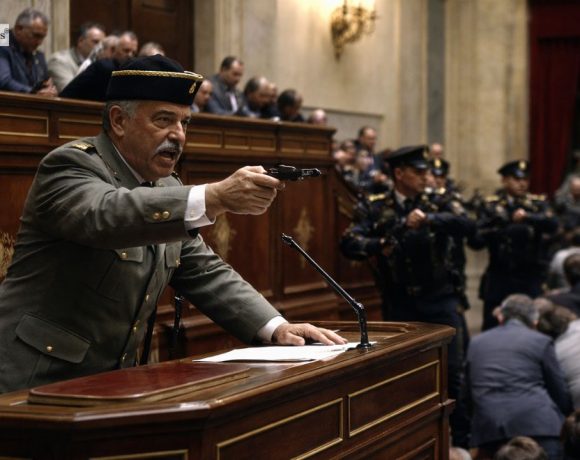
Antonio Tejero, the former Civil Guard officer who led Spain’s failed coup attempt on February 23, 1981, has died at the age of 93. Tejero stormed the Spanish parliament armed with a pistol, ordering lawmakers to the floor and holding them hostage for nearly 17 hours in a bid to reverse the country’s transition to democracy. The dramatic episode, broadcast in part by national television, became one of the most defining moments in modern Spanish history. His death in Alzira, Valencia, was announced by his family through their law firm.
A staunch loyalist of dictator Francisco Franco, Tejero opposed Spain’s democratic reforms following Franco’s death in 1975. The 1981 coup attempt tested the young constitution adopted just three years earlier. Then-King Juan Carlos I played a crucial role in quelling the uprising by delivering a televised address backing the elected government, a move widely credited with safeguarding Spain’s democracy. Tejero was later sentenced to 30 years in prison for his role in the plot.
Born in Malaga in 1932, Tejero rose quickly through the ranks of the Civil Guard but grew increasingly disillusioned as Spain embraced democratic governance. After an earlier failed conspiracy known as “Operation Galaxia,” he became a central figure in far-right opposition to political reforms. Released from prison in 1996, he lived largely out of the public eye, remaining unapologetic about his actions. The bullet holes from the shots fired during the 1981 coup attempt still mark the ceiling of Spain’s parliament, a lasting reminder of the fragile moment in the nation’s democratic transition.
Pic courtesy: google/ images are subject to copyright