
featured News Trending

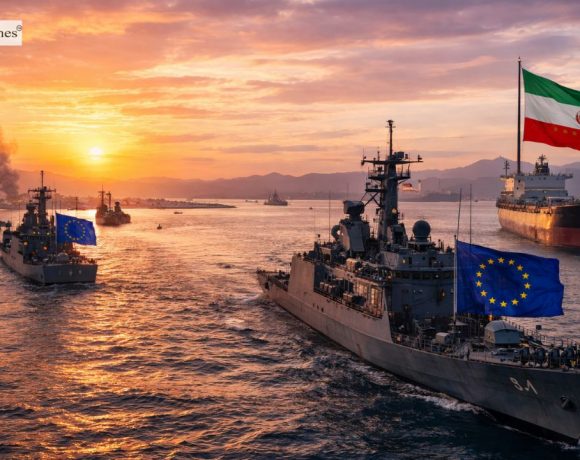
Foreign ministers from the European Union are set to discuss strengthening their naval presence in the Middle East as tensions surrounding Iran disrupt global shipping routes. The talks in Brussels will focus on reinforcing the EU’s Operation Aspides, which was launched in 2024 to protect commercial vessels from attacks by Yemen’s Houthi rebels in the Red Sea.

The ongoing conflict involving Iran has intensified concerns over the security of the Strait of Hormuz, a key passage that handles roughly one-fifth of the world’s oil and liquefied natural gas shipments. Since military strikes by the United States and Israel on Iran in late February, traffic through the strait has been severely disrupted, prompting discussions on whether the EU mission could help restore safe navigation.

However, some European officials remain cautious about expanding the mission’s mandate. Johann Wadephul expressed scepticism about extending the operation to the Strait of Hormuz, arguing that the current mission has not been fully effective in its existing role. Meanwhile, Donald Trump has urged major economies to work together to secure shipping routes, though any change to the EU mission would require approval from all 27 member states.

Pic courtesy: google/ images are subject to copyright
featured News

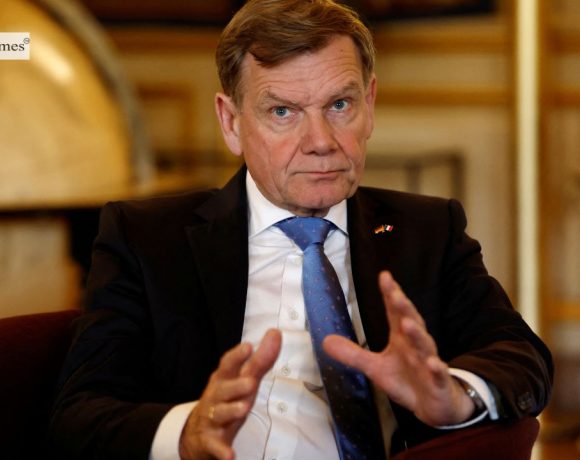
German Foreign Minister Johann Wadephul is visiting China for the first time since assuming office, as Berlin adopts a firmer stance toward Beijing over trade disputes and geopolitical issues, aligning closely with European Union policy. The trip, postponed in October due to China’s lack of engagement, will include meetings with China’s foreign minister, trade minister, and top Communist Party officials. Wadephul emphasized the necessity of “direct, intensive exchange” with China despite sharp differences on global and economic policies.

The discussions will focus on economic relations, including Germany’s increasing concern over China’s restrictions on exports of critical materials such as rare earths and semiconductors. Berlin has recently set up an expert committee to advise parliament on “security-relevant trade relations,” reflecting its push to reduce economic dependence on China. Conservative lawmakers warn that continued unfair trade practices could jeopardize bilateral business ties. Analysts say Germany must balance protecting its own industry while managing relations with its top trading partner.

Wadephul’s visit follows a series of high-level engagements by European leaders, including French President Emmanuel Macron. Alongside trade, the talks will cover key security topics, such as China’s influence over Russia’s war in Ukraine, tensions in the Middle East, and disputes in the South China Sea. Wadephul stressed that China is uniquely positioned to pressure Russia into negotiations that respect Ukraine’s sovereignty, and said Europe expects Beijing to act responsibly in global stability efforts.

Pic courtesy: google/ images are subject to copyright