
featured News Trending

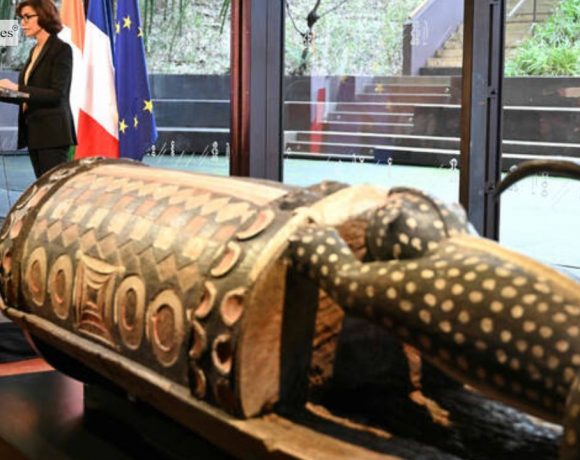
France has repatriated a sacred talking drum, the Djidji Ayôkwé, to Ivory Coast more than a century after it was looted during colonial rule. Seized by French colonial authorities in 1916 and later displayed in Parisian museums, the drum was welcomed back by the Ebrié community at Abidjan International Airport, still in its protective crate. The 3-metre-long, 430kg drum is carved from iroko wood and holds deep cultural and ceremonial significance.

The return of the Djidji Ayôkwé is part of France’s broader effort to repatriate African cultural artefacts, a process initiated in 2017. Ivory Coast’s Culture Minister Françoise Remarck called it a historic moment of justice and remembrance, highlighting the drum’s central role in mobilizing communities, warning of danger, and summoning villagers for ceremonies.

This drum marks the first of 148 objects Ivory Coast is seeking to reclaim from France and other countries. The French government has previously returned Abomey royal treasures to Benin and a historic sabre to Senegal, and a new framework law aims to streamline the restitution of colonial-era artefacts from national collections.

Pic courtesy: google/ images are subject to copyright
News Trending

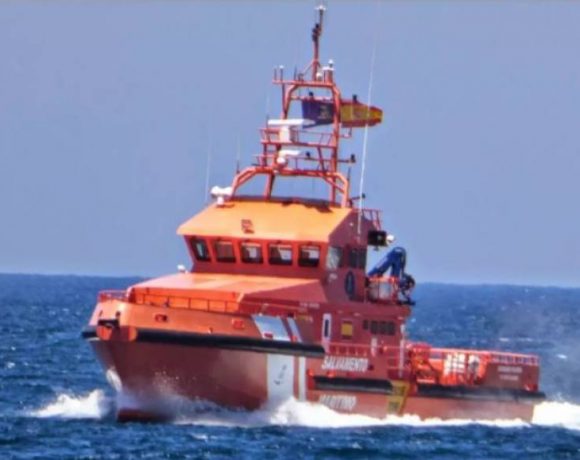
The Spanish coast guard has located a boat carrying around 200 migrants that went missing over a week ago. The boat was found 71 miles south of Gran Canaria, and a coast guard vessel has been dispatched for rescue operations.

The fishing boat had departed from a coastal town in southern Senegal, approximately 1,700km away from Tenerife, with 200 people on board, including many children. Two other similar boats carrying additional migrants are also reported missing, with limited information available. This brings the total number of people missing across the three boats to over 300.

The route from West Africa to the Canary Islands is known to be perilous, and last year alone, at least 559 people died attempting to reach the Spanish islands. The exact number of departures and shipwrecks often goes unreported. The migrants attempting this route typically come from countries such as Morocco, Mali, Senegal, the Ivory Coast, and other sub-Saharan nations.

Despite a decrease in the number of unauthorized arrivals in the Canary Islands in 2022 compared to the previous year, the route remains dangerous, and the International Organization for Migration (IOM) emphasizes that the flows are still high compared to previous years.

Picture Courtesy: Google/images are subject to copyright