
featured News Trending

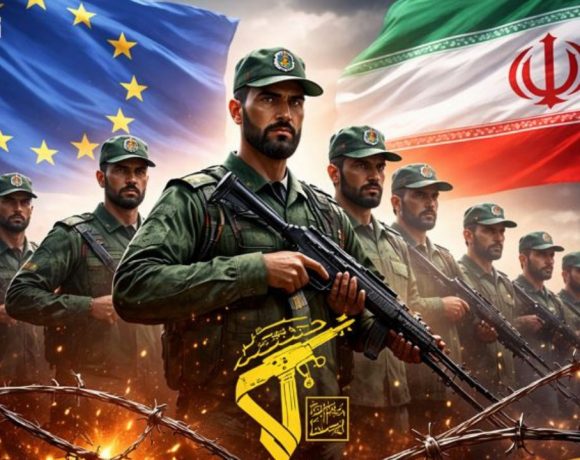
The European Union has added Iran’s Islamic Revolutionary Guard Corps (IRGC) to its list of terrorist organisations, citing the group’s central role in a deadly crackdown on anti-government protests. EU foreign policy chief Kaja Kallas said the move was a response to widespread repression, placing the IRGC alongside groups such as al-Qaeda and Islamic State. Iran condemned the decision, calling it a “strategic mistake”, while human rights groups say thousands of protesters were killed during unrest in December and January.

France, which had previously been cautious over the move due to concerns about severing diplomatic ties with Tehran, backed the decision this week, alongside Italy and other EU states. The bloc also imposed new sanctions on six Iranian entities and 15 senior officials accused of involvement in violent repression, including Iran’s interior minister and senior judicial figures. Those listed face travel bans and asset freezes under EU rules.

The decision comes amid rising tensions between Iran and the West, as the US increases its military presence in the region and pushes Tehran to negotiate over its nuclear programme. US President Donald Trump said he hoped to avoid military action but warned Iran to engage in talks, while Iranian officials said their forces were ready to respond to any aggression. Independent groups estimate the death toll from the protests could exceed 20,000, though Iran disputes those figures.

Pic courtesy: google/ images are subject to copyright
featured News Trending

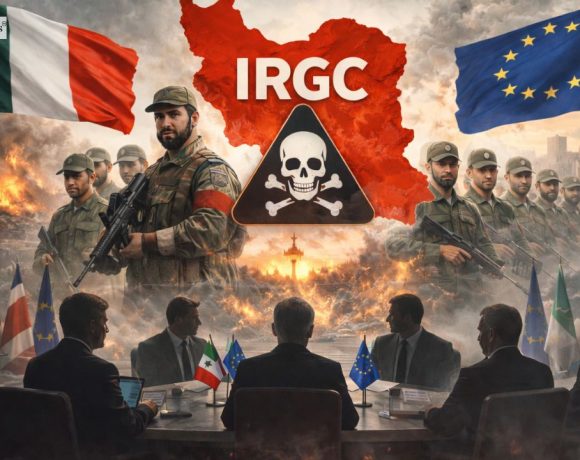
Italy will press its European Union partners this week to designate Iran’s Revolutionary Guard (IRGC) as a terrorist organisation, marking a significant shift in Rome’s stance, Foreign Minister Antonio Tajani said. Italy had previously resisted such a move, but Tajani said Iran’s violent crackdown on recent street protests, which reportedly left thousands dead, demanded a firm response. He said the issue would be raised at a meeting of EU foreign ministers in Brussels.

Tajani said the civilian toll from the protests required decisive action, proposing both the inclusion of the IRGC on the EU’s terrorist list and targeted sanctions against those responsible for what he described as “heinous acts.” A terrorist designation would impose far-reaching legal, financial and diplomatic restrictions on the powerful force, which was established after Iran’s 1979 Islamic Revolution and plays a central role in the country’s military, economy, and missile and nuclear programmes.

The proposal could strain EU–Iran relations, as some member states fear such a step could sever diplomatic ties, undermine efforts to revive nuclear negotiations and complicate the release of EU nationals held in Iran. While the IRGC is already subject to EU human rights sanctions, listing it as a terrorist group would require unanimity among member states, and objections from countries such as France could block the move. Tajani said Italy’s top priority remained the safety of its citizens, adding that staff at Italy’s embassy in Tehran would be sharply reduced.

Pic courtesy: google/ images are subject to copyright
News Trending

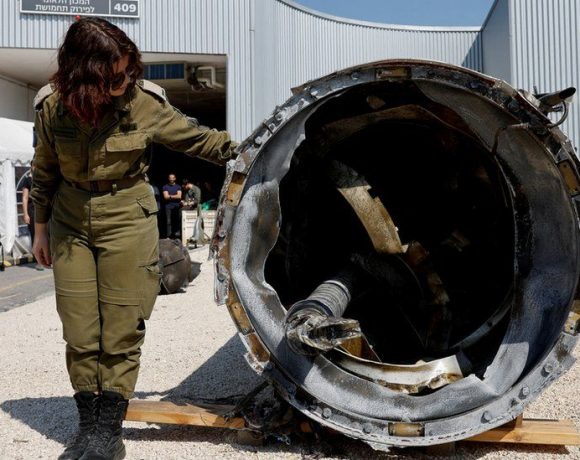
The European Union has expanded sanctions on Iranian drone and missile producers in response to Iran’s recent attack on Israel. European Council President Charles Michel stressed the significance of further isolating Iran, highlighting the need for decisive action.

These new sanctions build upon existing measures implemented by the EU, including penalties for Iran’s involvement in supplying drones to Russia. The decision to escalate sanctions was reached during a summit in Brussels, marking the first gathering of the bloc’s leaders since the attack on Israel.

In the wake of Iran’s assault, which involved a barrage of over 300 missiles and drones from multiple countries, the international community has urged restraint to prevent the situation from spiraling into a wider conflict. Despite calls for caution, Israel has not ruled out a potential response to the aggression.

German Chancellor Olaf Scholz emphasized the importance of de-escalation following the summit, encouraging Israel to leverage diplomatic channels to strengthen its position in the region. Scholz’s remarks reflect a broader sentiment among global leaders to mitigate tensions in the volatile Middle East.

Meanwhile, Israel has appealed to its allies to take robust action against Iran, advocating for sanctions on Tehran’s missile program and the designation of the Islamic Revolutionary Guard Corps (IRGC) as a terrorist organization. However, the EU and UK have not yet followed the United States in designating the IRGC as such.

In addition to EU sanctions, the United States is also considering imposing new penalties on Iran. US Treasury Secretary Janet Yellen highlighted the potential for disrupting Iran’s terrorist financing and targeting its oil exports as areas of focus. Furthermore, US National Security Advisor Jake Sullivan affirmed that Iran’s missile and drone programs, alongside the IRGC and Iranian defense ministry, would be subject to forthcoming sanctions.

Picture Courtesy: Google/images are subject to copyright