featured News Trending

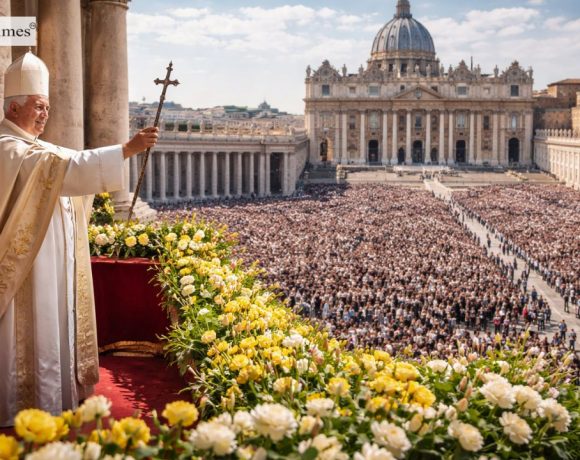
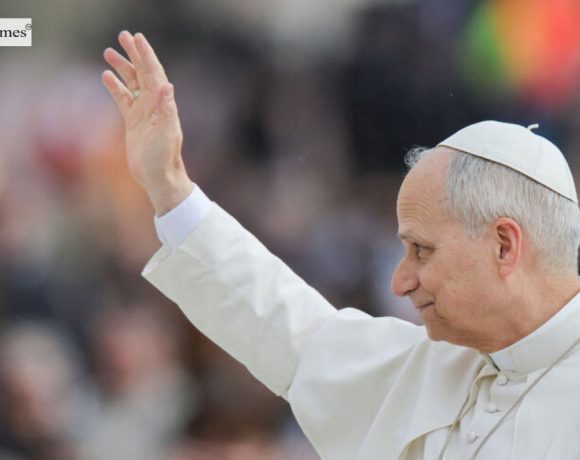
Pope Leo called on journalists to focus on the human suffering caused by war rather than amplifying propaganda or glorifying conflicts. Speaking to broadcasters from Italy’s TG2 news program, the pope emphasized the need to report “through the eyes of the victims” and avoid presenting war like a video game, urging media to act responsibly in portraying the realities of violence.

He cautioned that in times of conflict, information must not become a “megaphone of power” and stressed the importance of verifying news to prevent misleading narratives. While Pope Leo did not specify a particular conflict in his remarks, he has recently called for an immediate ceasefire in the escalating U.S.-Israeli war on Iran, describing the violence as “atrocious.”

The pope’s warning echoes similar concerns voiced by U.S. church leaders, including Chicago Cardinal Blase Cupich, who condemned a White House social media video that spliced Iran war footage with video game and action film clips, calling the content “sickening.” Both leaders underscored the moral responsibility of media and public figures in shaping perceptions of war.

Pic courtesy: google/ images are subject to copyright

featured News Trending

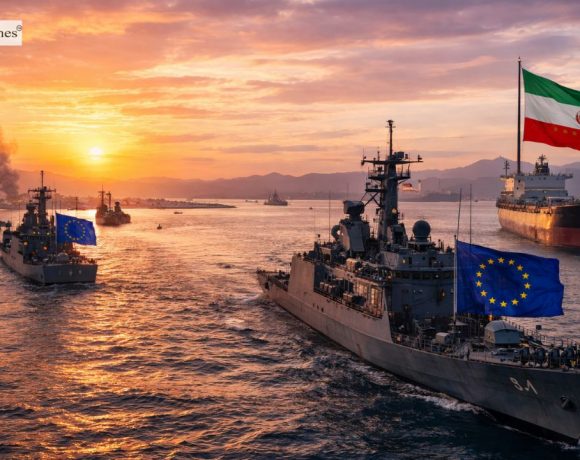
Foreign ministers from the European Union are set to discuss strengthening their naval presence in the Middle East as tensions surrounding Iran disrupt global shipping routes. The talks in Brussels will focus on reinforcing the EU’s Operation Aspides, which was launched in 2024 to protect commercial vessels from attacks by Yemen’s Houthi rebels in the Red Sea.

The ongoing conflict involving Iran has intensified concerns over the security of the Strait of Hormuz, a key passage that handles roughly one-fifth of the world’s oil and liquefied natural gas shipments. Since military strikes by the United States and Israel on Iran in late February, traffic through the strait has been severely disrupted, prompting discussions on whether the EU mission could help restore safe navigation.

However, some European officials remain cautious about expanding the mission’s mandate. Johann Wadephul expressed scepticism about extending the operation to the Strait of Hormuz, arguing that the current mission has not been fully effective in its existing role. Meanwhile, Donald Trump has urged major economies to work together to secure shipping routes, though any change to the EU mission would require approval from all 27 member states.

Pic courtesy: google/ images are subject to copyright
featured News Trending

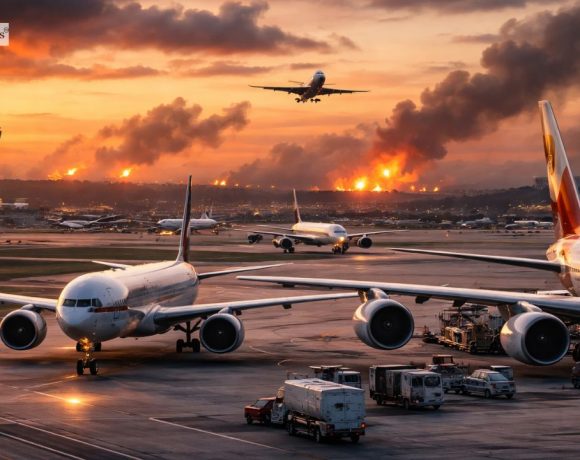
The global airline industry faced fresh volatility on Thursday as rising jet fuel prices and widespread flight disruptions followed the escalating conflict involving Iran and joint strikes by the United States and Israel. Several Middle Eastern airspaces were closed due to missile risks, forcing airlines to cancel or reroute flights. Operations at Dubai International Airport, the world’s busiest international hub, began slowly resuming after coming close to a halt earlier in the week.

Airline stocks showed mixed movement as the crisis affected routes and fuel costs. Shares of carriers such as Cathay Pacific and Qantas Airways recovered slightly, while others like Wizz Air dropped sharply after warning the conflict could cut about $58 million from its profits. Analysts say airlines with strong exposure to Middle Eastern routes are particularly vulnerable as jet fuel prices surge and flight paths become longer due to airspace restrictions.

Meanwhile, airlines including Emirates, Etihad Airways and Qatar Airways have started limited services through safer corridors while governments organize evacuation flights for stranded citizens. More than 17,000 Americans have already returned home, while other countries continue repatriation efforts as the aviation sector closely watches how the conflict around Iran unfolds.

Pic courtesy: google/ images are subject to copyright
featured News Trending

European Union foreign policy chief Kaja Kallas said Iran’s government is undermining its own future by launching indiscriminate attacks across the region. Speaking to reporters, she accused Tehran of pursuing a strategy aimed at spreading instability and escalating conflict in the Middle East, warning that such actions could ultimately backfire on the Iranian leadership.

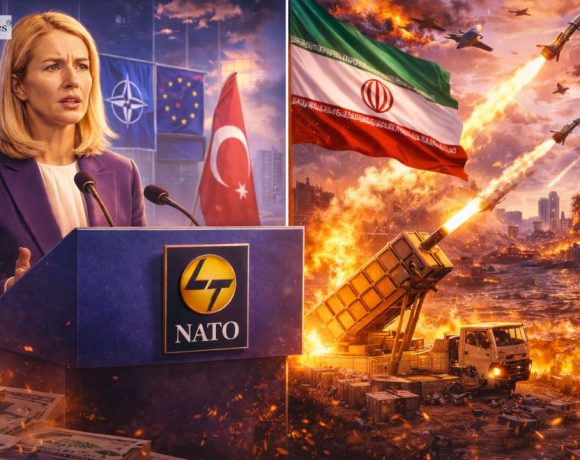
Tensions escalated further after Turkey reported that NATO air defence systems intercepted an Iranian ballistic missile heading toward Turkish airspace. Radosław Sikorski, Poland’s foreign minister, criticised Iran’s actions, saying the country was widening the conflict by targeting nations that were not directly involved in the war.

Kallas also warned that the growing Middle East crisis risks diverting international attention away from the war in Ukraine. While she noted that the conflict could weaken Russia by costing it a regional ally, she cautioned that Moscow might still benefit from rising global oil prices triggered by the escalating tensions.

Pic courtesy: google/ images are subject to copyright
featured News Trending

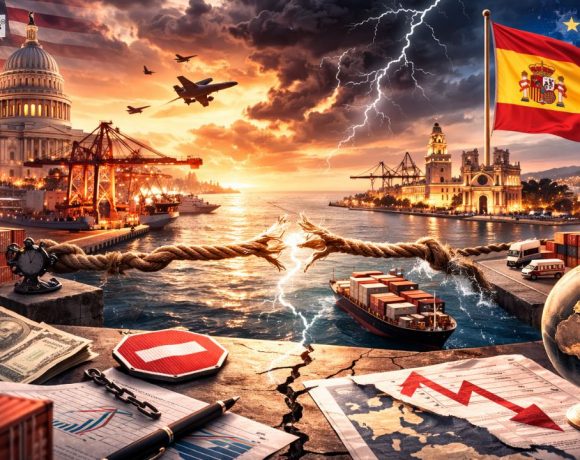
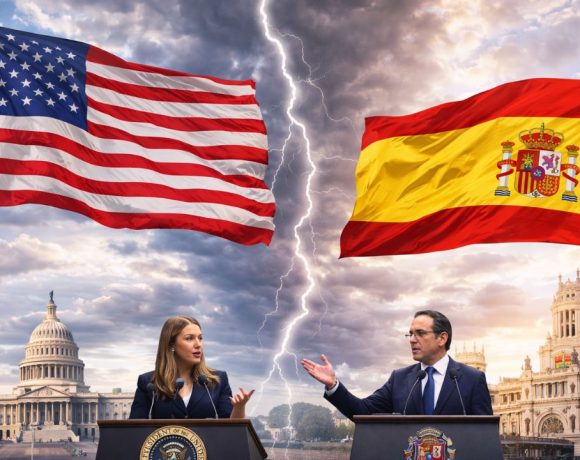
The White House said Spain has agreed to cooperate with the U.S. military after pressure from Donald Trump, but Spanish officials quickly denied any such agreement. Trump had earlier threatened to cut off trade with Spain over its refusal to allow U.S. forces to use military bases in the country for operations linked to strikes on Iran.

White House press secretary Karoline Leavitt told reporters that Spain had “heard the president’s message loud and clear” and had agreed to cooperate with the U.S. military. However, Spain’s foreign minister Jose Manuel Albares rejected the claim, stating that Madrid had not changed its stance and denying that any such deal had been made.

Spain has strongly criticized the U.S.–Israeli attacks on Iran and has refused to allow American aircraft to use joint bases in southern Spain. Prime Minister Pedro Sanchez reiterated the country’s anti-war position, warning that the escalating conflict in the Middle East could trigger a broader global crisis.

Pic courtesy: google/ images are subject to copyright
featured News Trending

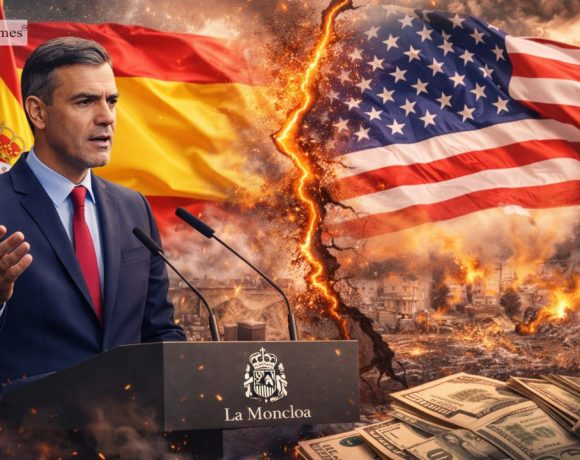
Spanish Prime Minister Pedro Sánchez has firmly rejected US President Donald Trump’s threat to sever trade ties with Spain, reiterating Madrid’s opposition to war and what he described as breaches of international law. In a televised address from the Moncloa Palace, Sánchez said Spain’s position on conflicts in Ukraine, Gaza and Iran could be summed up as “no to war.” Trump had warned he would cut off trade with Spain after Madrid reportedly refused to allow US forces to use the jointly operated bases at Morón and Rota for strikes on Iran, calling Spain a “terrible partner” in NATO.

Sánchez avoided directly mentioning Trump’s trade ultimatum but stressed that “you cannot answer one illegality with another,” warning that escalating military actions risked wider catastrophe. He said Spain was assessing economic measures to shield citizens from the fallout of global tensions. The Spanish leader drew parallels with the 2003 Iraq invasion, recalling the “Azores trio” meeting between former US President George W. Bush, UK Prime Minister Tony Blair and Spain’s then-leader José María Aznar, and argued that intervention had left the world less secure.

European leaders rallied behind Madrid, with French President Emmanuel Macron and European Council President António Costa expressing solidarity. Domestically, Sánchez’s stance may resonate with voters, as recent polling suggests a strong majority of Spaniards hold negative views of Trump. However, uncertainty remains over whether Washington will follow through on its economic threats, adding pressure to Sánchez’s already fragile coalition government amid ongoing political and corruption challenges.

Pic courtesy: google/ images are subject to copyright
featured News Trending

U.S. President Donald Trump has threatened to halt all trade with Spain after Madrid refused to allow American forces to use its military bases for operations linked to strikes on Iran. Speaking during a meeting with German Chancellor Friedrich Merz, Trump said he had instructed U.S. officials to consider cutting off economic dealings with Spain, accusing the NATO ally of failing to support U.S. security objectives and defence commitments.

The dispute follows Spain’s decision to deny the use of the Rota and Moron air bases for Iran-related military missions, prompting the relocation of U.S. aircraft stationed there. Trump also criticised Spain for not meeting proposed NATO defence spending targets and argued that U.S. law could allow trade restrictions or embargoes under emergency powers. However, legal experts noted that imposing a full trade embargo would require declaring Spain an extraordinary national security threat — a move considered difficult to justify.

Spain responded by stressing respect for international law, private business autonomy, and existing European Union trade agreements with Washington. Madrid said it was prepared to manage any economic impact while continuing to support free trade. Spain exports products such as olive oil, auto parts, steel, and chemicals to the U.S., though America currently maintains a trade surplus with Spain, highlighting the broader economic stakes of the escalating diplomatic tension.

Pic courtesy: google/ images are subject to copyright
featured News Trending

Ukrainian President Volodymyr Zelensky has cautioned that escalating conflict in the Middle East could undermine Ukraine’s ability to secure vital air defence systems as it battles Russia’s invasion. He warned that allies, particularly the United States, might divert critical weapons such as Patriot missile systems to protect their own interests or support partners in the Gulf. Zelensky also expressed concern that global attention could shift away from Ukraine, risking reduced political and military backing at a crucial stage of the war.

Kyiv fears that soaring demand for interceptor missiles in the Gulf could create shortages and drive up costs worldwide, complicating Ukraine’s efforts to defend its skies from Russia’s nightly drone and missile strikes. Zelensky recalled that during previous tensions involving Iran, deliveries of air defence systems to Ukraine slowed. At the same time, he acknowledged a potential upside: strikes on Iranian military facilities could limit Tehran’s capacity to supply drones and missiles to Russia, although Moscow now produces modified Shahed drones domestically.

Analysts suggest Russia could benefit from rising global oil prices triggered by instability in the Gulf, potentially strengthening its war finances. Some argue President Vladimir Putin is carefully avoiding deeper involvement in the Middle East to maintain relations with Washington and gain leverage in negotiations over Ukraine. In Kyiv, however, concerns are mounting that prolonged conflict elsewhere may deepen war fatigue among allies, adding to a sense of uncertainty and strain as Ukraine enters another year of full-scale war.

Pic courtesy: google/ images are subject to copyright
featured News Trending

The European Union’s 27 member states have called for “maximum restraint” and full adherence to international law amid escalating hostilities involving Iran. In a statement issued after an emergency meeting of foreign ministers, EU foreign policy chief Kaja Kallas stressed the need to protect civilians and uphold the principles of the UN Charter and international humanitarian law. The appeal followed U.S. and Israeli strikes on Iran and Tehran’s retaliatory attacks on Israel, U.S. forces and Gulf countries, which the EU described as inexcusable violations of sovereignty.

The bloc also voiced concern about the broader regional and economic fallout of the conflict, warning against escalation that could destabilize the Middle East and beyond. It highlighted the importance of keeping critical waterways such as the Strait of Hormuz open, citing risks to global energy supplies and supply chains. Disruptions to oil flows could have significant economic consequences for Europe, which is already grappling with geopolitical uncertainty.

The joint statement reflected differing views within the EU over the U.S.-Israeli military action. While German Chancellor Friedrich Merz signaled caution against criticizing allies, Spanish Prime Minister Pedro Sánchez rejected the strikes as contributing to global instability. Diplomats acknowledged that Europe has limited leverage over the unfolding crisis, despite the potential for serious regional and economic repercussions.

Pic courtesy: google/ images are subject to copyright