featured News Trending

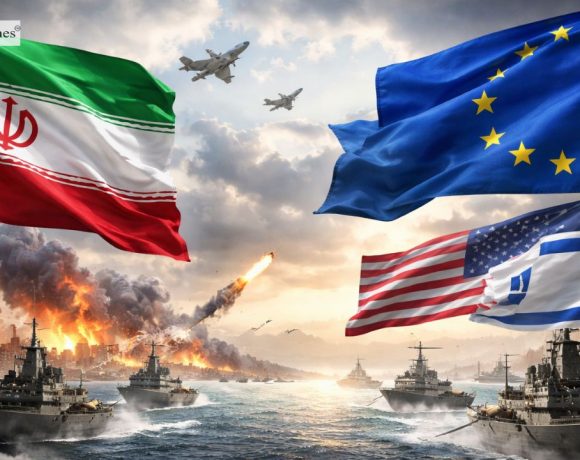
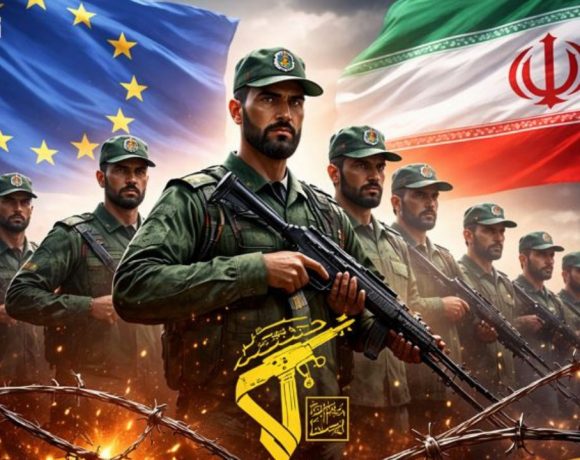
Iran has warned that any European Union country joining military attacks by the United States and Israel would be considered a “legitimate target” for retaliation. Iran’s Deputy Foreign Minister Majid Takht-Ravanchi made the statement during an interview with France 24, stressing that countries supporting the aggression would face direct consequences from Iran.

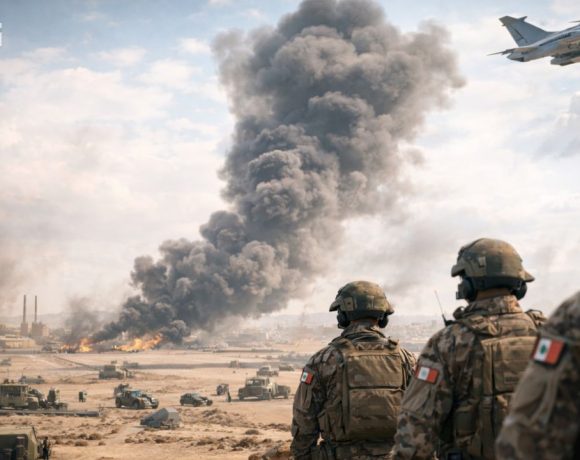
His comments come as tensions continue to escalate in the Middle East. Several EU nations, including France, Greece, and Italy, have deployed warships to the region. While many European leaders have criticized Iranian actions, they have also called for de-escalation and a diplomatic resolution to the conflict.

Meanwhile, German Chancellor Friedrich Merz said Germany is working with international partners to find ways to end the fighting. However, he noted that Berlin shares strategic goals with the United States and Israel regarding the situation with Iran.

Pic courtesy: google/ images are subject to copyright
featured News Trending

France has expressed readiness to assist Gulf countries targeted by Iranian retaliatory attacks, Foreign Minister Jean-Noel Barrot said after a crisis meeting in Paris. Barrot emphasized that any support would be proportionate and aligned with international law’s collective self-defense principles, responding to requests from regional partners.

The French minister criticized the initial Israeli and U.S. strikes on Iran as unilateral actions that should have been debated at the U.N. Security Council to gain legitimacy. He called for Iran to halt its attacks and accept political concessions to pave the way for peace in the region.

A drone strike on a French naval base in Abu Dhabi over the weekend caused limited damage, but no French casualties were reported. France’s statement highlights its commitment to regional security while advocating for diplomatic and multilateral approaches to conflict resolution.

Pic courtesy: google/ images are subject to copyright
featured News Trending

The European Union has added Iran’s Islamic Revolutionary Guard Corps (IRGC) to its list of terrorist organisations, citing the group’s central role in a deadly crackdown on anti-government protests. EU foreign policy chief Kaja Kallas said the move was a response to widespread repression, placing the IRGC alongside groups such as al-Qaeda and Islamic State. Iran condemned the decision, calling it a “strategic mistake”, while human rights groups say thousands of protesters were killed during unrest in December and January.

France, which had previously been cautious over the move due to concerns about severing diplomatic ties with Tehran, backed the decision this week, alongside Italy and other EU states. The bloc also imposed new sanctions on six Iranian entities and 15 senior officials accused of involvement in violent repression, including Iran’s interior minister and senior judicial figures. Those listed face travel bans and asset freezes under EU rules.

The decision comes amid rising tensions between Iran and the West, as the US increases its military presence in the region and pushes Tehran to negotiate over its nuclear programme. US President Donald Trump said he hoped to avoid military action but warned Iran to engage in talks, while Iranian officials said their forces were ready to respond to any aggression. Independent groups estimate the death toll from the protests could exceed 20,000, though Iran disputes those figures.

Pic courtesy: google/ images are subject to copyright
featured News Trending

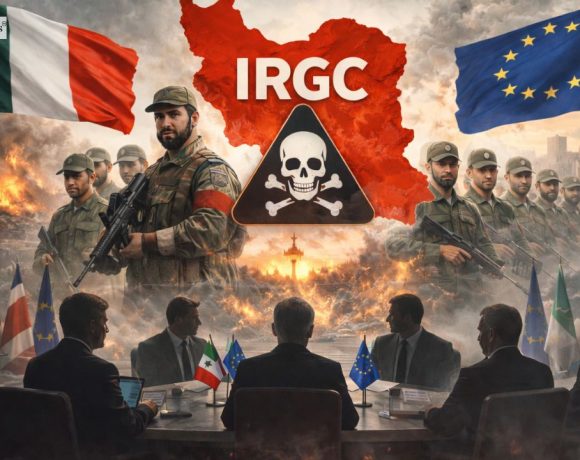
Italy will press its European Union partners this week to designate Iran’s Revolutionary Guard (IRGC) as a terrorist organisation, marking a significant shift in Rome’s stance, Foreign Minister Antonio Tajani said. Italy had previously resisted such a move, but Tajani said Iran’s violent crackdown on recent street protests, which reportedly left thousands dead, demanded a firm response. He said the issue would be raised at a meeting of EU foreign ministers in Brussels.

Tajani said the civilian toll from the protests required decisive action, proposing both the inclusion of the IRGC on the EU’s terrorist list and targeted sanctions against those responsible for what he described as “heinous acts.” A terrorist designation would impose far-reaching legal, financial and diplomatic restrictions on the powerful force, which was established after Iran’s 1979 Islamic Revolution and plays a central role in the country’s military, economy, and missile and nuclear programmes.

The proposal could strain EU–Iran relations, as some member states fear such a step could sever diplomatic ties, undermine efforts to revive nuclear negotiations and complicate the release of EU nationals held in Iran. While the IRGC is already subject to EU human rights sanctions, listing it as a terrorist group would require unanimity among member states, and objections from countries such as France could block the move. Tajani said Italy’s top priority remained the safety of its citizens, adding that staff at Italy’s embassy in Tehran would be sharply reduced.

Pic courtesy: google/ images are subject to copyright
featured News Trending

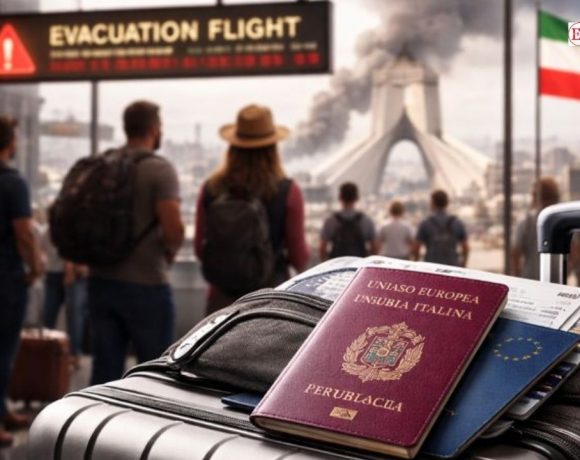
Italy has renewed a strong appeal urging its citizens to leave Iran due to growing security concerns, the foreign ministry said on Wednesday. Around 600 Italians are currently in Iran, most of them based in Tehran, according to the ministry, which said the warning reflects the deteriorating situation in the country.

The appeal comes as Iran’s leadership struggles to contain its most serious domestic unrest since the 1979 Islamic Revolution, amid rising international tensions. Tehran has sought to deter repeated threats of U.S. intervention voiced by President Donald Trump in support of anti-government protesters, adding to regional instability.

Italy’s foreign ministry also said precautionary measures were being taken to protect more than 900 Italian military personnel deployed across the region, including about 500 in Iraq and 400 in Kuwait. Foreign Minister Antonio Tajani chaired a high-level meeting with diplomats, defence officials and intelligence representatives, reaffirming Italy’s condemnation of the violent repression of protests in Iran and what it described as serious human rights violations.

Pic courtesy: google/ images are subject to copyright
featured News

Britain has warned that it will trigger the return of U.N. sanctions on Iran if necessary to prevent Tehran from acquiring a nuclear weapon. This comes as the U.N. Security Council met behind closed doors to address Iran’s rapid uranium enrichment to 60% purity, nearing weapons-grade levels. Western nations argue that such high enrichment is unnecessary for civilian use, while Iran insists its nuclear program remains peaceful. Britain’s deputy U.N. Ambassador James Kariuki emphasized the country’s commitment to taking diplomatic measures, including sanctions, to curb Iran’s nuclear ambitions.

The U.S. and its allies have accused Iran of violating International Atomic Energy Agency (IAEA) obligations and defying the Security Council. Iran, in turn, has condemned the U.S. for what it calls the “weaponization” of the council to escalate economic pressure on Tehran. Meanwhile, China is set to host a meeting with Russia and Iran to discuss the nuclear issue, urging diplomatic efforts to salvage the Joint Comprehensive Plan of Action (JCPOA), the 2015 nuclear deal. China’s U.N. Ambassador Fu Cong warned that maximum pressure tactics would not yield effective results.

With the 2015 U.N. resolution on the Iran nuclear deal expiring in October, Britain, France, and Germany will soon lose the ability to trigger snapback sanctions. Former U.S. President Donald Trump has instructed diplomats to work with allies to reinstate international restrictions before the deadline. As tensions rise, the window for diplomatic negotiations appears to be closing, increasing the risk of renewed sanctions and further geopolitical friction.

Pic Courtesy: google/ images are subject to copyright
featured News

Iran’s foreign ministry has strongly criticized calls from France, Germany, and Britain urging restraint in response to Israel, labeling these demands as lacking political logic and contradicting international law. The European nations issued their appeal after the killing of Ismail Haniyeh, Hamas’s political chief, in Tehran last month, an act for which Tehran and its allies, including Hamas and Hezbollah, hold Israel responsible.

Iran’s foreign ministry spokesperson, Nasser Kanaani, condemned the European stance, arguing that it ignores Israel’s alleged violations of Iranian sovereignty and territorial integrity. He asserted that Tehran remains committed to deterring Israel and urged the European nations to oppose the ongoing conflict in Gaza and Israel’s actions.

Kanaani further criticized the United Nations Security Council and Western governments, blaming their support for Israel as the primary driver behind the ongoing crisis in Gaza. He called on Paris, Berlin, and London to take a firm stand against what he described as Israel’s warmongering in the region.

Pic Courtesy: google/ images are subject to copyright
News Trending

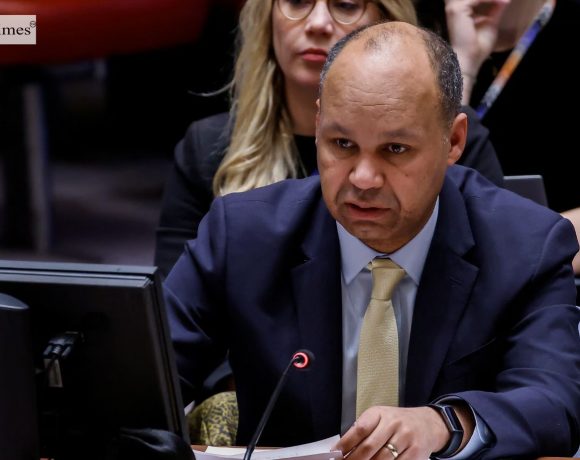
The European Union has expanded sanctions on Iranian drone and missile producers in response to Iran’s recent attack on Israel. European Council President Charles Michel stressed the significance of further isolating Iran, highlighting the need for decisive action.

These new sanctions build upon existing measures implemented by the EU, including penalties for Iran’s involvement in supplying drones to Russia. The decision to escalate sanctions was reached during a summit in Brussels, marking the first gathering of the bloc’s leaders since the attack on Israel.

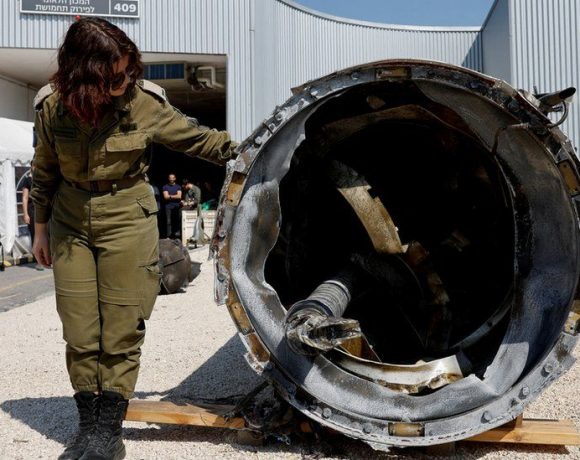
In the wake of Iran’s assault, which involved a barrage of over 300 missiles and drones from multiple countries, the international community has urged restraint to prevent the situation from spiraling into a wider conflict. Despite calls for caution, Israel has not ruled out a potential response to the aggression.

German Chancellor Olaf Scholz emphasized the importance of de-escalation following the summit, encouraging Israel to leverage diplomatic channels to strengthen its position in the region. Scholz’s remarks reflect a broader sentiment among global leaders to mitigate tensions in the volatile Middle East.

Meanwhile, Israel has appealed to its allies to take robust action against Iran, advocating for sanctions on Tehran’s missile program and the designation of the Islamic Revolutionary Guard Corps (IRGC) as a terrorist organization. However, the EU and UK have not yet followed the United States in designating the IRGC as such.

In addition to EU sanctions, the United States is also considering imposing new penalties on Iran. US Treasury Secretary Janet Yellen highlighted the potential for disrupting Iran’s terrorist financing and targeting its oil exports as areas of focus. Furthermore, US National Security Advisor Jake Sullivan affirmed that Iran’s missile and drone programs, alongside the IRGC and Iranian defense ministry, would be subject to forthcoming sanctions.

Picture Courtesy: Google/images are subject to copyright
News Trending

The Munich Rule emphasizes engagement and interaction over lecturing or ignoring one another. However, at the 60th Munich Security Conference (MSC), attention was drawn to the absence of two influential figures: former US President Donald Trump and Russian President Vladimir Putin. Their potential impacts on the transatlantic relationship and global stability were significant topics of discussion, especially in light of Putin’s actions regarding Alexei Navalny and Ukraine.

The conference reflected a world characterized by increasing confrontation and diminishing cooperation, as noted by EU’s Josep Borrell. The theme of “lose-lose” dynamics pervaded discussions, highlighting the deepening geopolitical tensions and economic uncertainties.

David Miliband, CEO of the International Rescue Committee, described the conference as emblematic of a disorderly world marked by impunity, exemplified by Navalny’s situation. Navalny’s wife, Yulia Navalnaya, made a powerful statement condemning Putin’s regime, underscoring the personal stakes involved in global politics.

Russia and Iran’s absence from the conference signaled a lack of interest in meaningful dialogue, contrasting with past confrontational speeches by their representatives. Ukrainian President Volodymyr Zelensky stressed the urgency of Western support amid ongoing conflict, especially with US assistance facing obstacles in Congress.

The Israel-Gaza conflict highlighted the international community’s call for a ceasefire and humanitarian aid, but Israeli delegates emphasized the strategic necessity of their actions against Hamas.

The conference, with its record attendance, showcased the diverse array of global stakeholders grappling with shifting notions of security. While historically a platform for diplomacy, this year’s event primarily focused on dialogue and assessment amid heightened global tensions.

Picture Courtesy: Google/images are subject to copyright

News Trending

In Switzerland, police intervened in a hostage situation on a train near Yverdon, resulting in the fatal shooting of a man who had taken 15 passengers captive. The perpetrator, reported to be a 32-year-old asylum seeker from Iran, armed himself with an axe and a knife before coercing the train driver to stop and enter the carriage with the passengers.

Despite attempts by authorities to negotiate with the hostage-taker, who spoke both English and Farsi, their efforts proved unsuccessful. As negotiations faltered, police, including a special unit from Geneva, surrounded the train and initiated communication with the perpetrator. However, after several hours, the situation escalated when the hostage-taker moved away from the passengers, prompting law enforcement to take decisive action.

When the hostage-taker attacked the police during the intervention, officers responded by using firearms to protect both the hostages and themselves. Regrettably, the confrontation resulted in the fatal shooting of the perpetrator. The motives behind the hostage-taking remain unclear, although witnesses reported that the perpetrator appeared visibly distressed during the ordeal.

Following the resolution of the hostage situation, authorities are providing support to the hostages and their families through the Swiss health service’s psychological department. The man responsible for the incident was originally from Iran and had been residing in an asylum seeker center in Neuchatel. While hostage incidents are rare in Switzerland, past occurrences have been recorded in various settings, including banks and businesses, underscoring the importance of effective law enforcement responses to such crises.

Picture Courtesy: Google/images are subject to copyright