featured News Trending

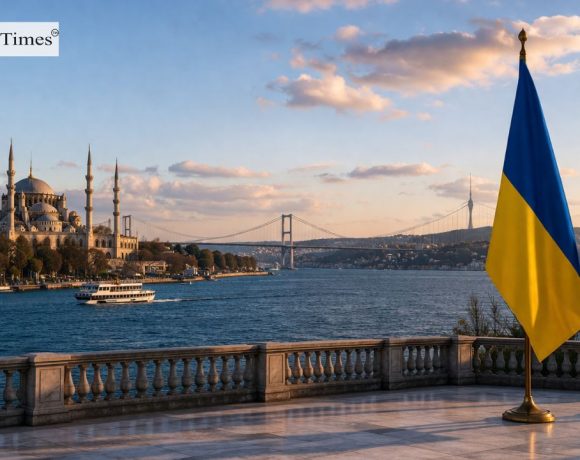
Ukrainian President Volodymyr Zelenskiy arrived in Istanbul for high-level security discussions with Turkish President Recep Tayyip Erdogan, aiming to deepen cooperation on regional stability and defense. Zelenskiy described the talks as “substantive,” emphasizing efforts to strengthen partnerships that protect lives and enhance security across Europe and the Middle East.

The visit comes as Ukraine expands diplomatic outreach to Middle Eastern countries following the escalation of conflict in the region. Kyiv has recently signed security cooperation agreements with Saudi Arabia, the United Arab Emirates, and Qatar, while negotiations with other regional states remain ongoing. Ukrainian officials say the country is sharing expertise gained from its ongoing war with Russia, particularly in countering drone threats.

Alongside political meetings, Zelenskiy is also scheduled to meet Patriarch Bartholomew, the spiritual leader of the Orthodox Christian world. The discussions in Turkey highlight Ukraine’s broader strategy to build international security partnerships and reinforce diplomatic ties amid continued military pressure from Russia and evolving regional tensions.

Pic courtesy: google/ images are subject to copyright
featured News Trending

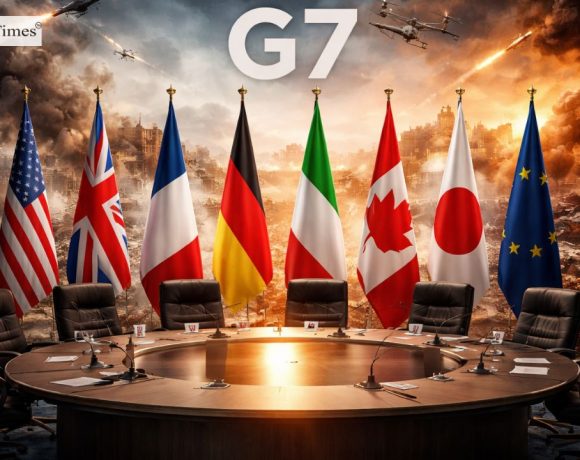
Foreign ministers of the G7 nations have called for an immediate halt to attacks on civilians and civilian infrastructure amid the ongoing Iran war, following a high-level meeting in France. In a joint statement, the ministers stressed the urgent need to reduce harm to civilian populations and protect critical infrastructure affected by the conflict.

The leaders highlighted the importance of coordination and global partnerships to limit the wider impact of the war, including disruptions to energy, trade, fertilizer supplies, and global supply chains. They warned that continued instability could trigger economic shocks and affect countries far beyond the conflict region.

The G7 also emphasized the need to ensure safe and uninterrupted navigation through the Strait of Hormuz, a key global energy route, while reaffirming their commitment to regional stability and international cooperation. The group includes the United States, Britain, Canada, France, Germany, Italy, Japan, and the European Union.

Pic courtesy: google/ images are subject to copyright
featured News Trending

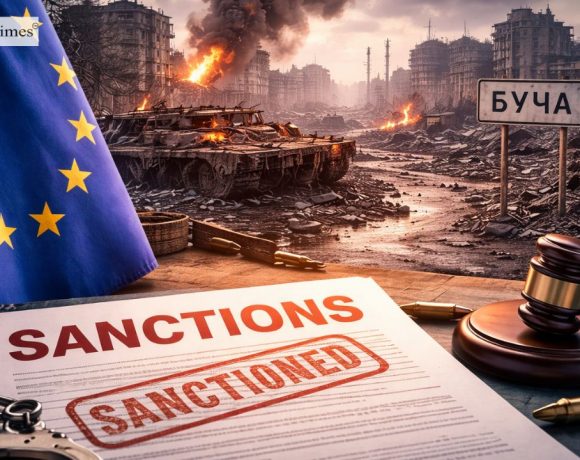
The European Union is set to impose sanctions on nine individuals accused of involvement in alleged war crimes linked to the killings in Bucha, Ukraine, French Foreign Minister Jean-Noel Barrot said ahead of an EU foreign ministers’ meeting in Brussels. The move forms part of ongoing European efforts to hold individuals accountable for actions during Russia’s invasion of Ukraine.

Ukraine has stated that more than 1,400 civilians were killed in Bucha, a town near Kyiv, during a 33-day occupation by Russian forces in the early phase of the 2022 invasion. The sanctions are expected to target individuals allegedly connected to these events, reinforcing the EU’s stance on accountability and international law violations linked to the conflict.

In addition to the nine individuals, the EU plans to sanction several alleged Kremlin propagandists accused of spreading disinformation. Among them is Franco-Russian national Adrien Bocquet, whom Barrot described as a recruiter of foreign fighters and a figure involved in promoting narratives supporting the war and influencing audiences across Europe and Africa.

Pic courtesy: google/ images are subject to copyright
featured News Trending

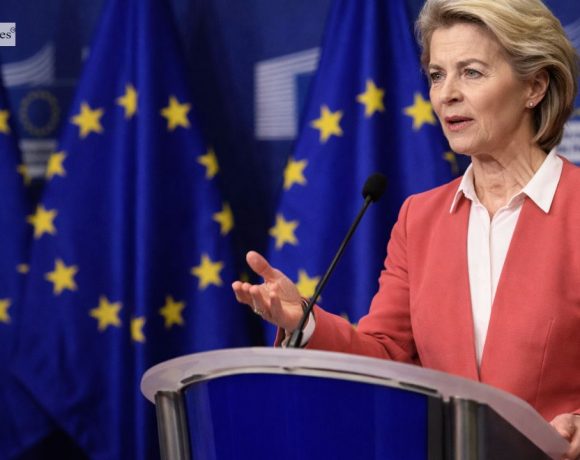
The European Union must be prepared to assert its power more strongly in a changing geopolitical landscape, Ursula von der Leyen, President of the European Commission, said on Monday. Speaking at a conference for EU ambassadors in Brussels, she warned that the bloc can no longer rely solely on the global “rules-based” system to safeguard its interests.

Von der Leyen said the EU will continue to support the international framework it helped build with allies but must recognise that those rules alone may not protect it from emerging threats. She emphasised that Europe needs to be ready to defend its interests more proactively in an increasingly complex and uncertain global environment.

She also urged the bloc to reassess whether its institutions and decision-making structures—designed in a post-war era of stability and multilateral cooperation—remain effective today. According to von der Leyen, the EU must determine if its systems strengthen or weaken its credibility as a geopolitical actor amid rapidly evolving global challenges.

Pic courtesy: google/ images are subject to copyright
featured News Trending

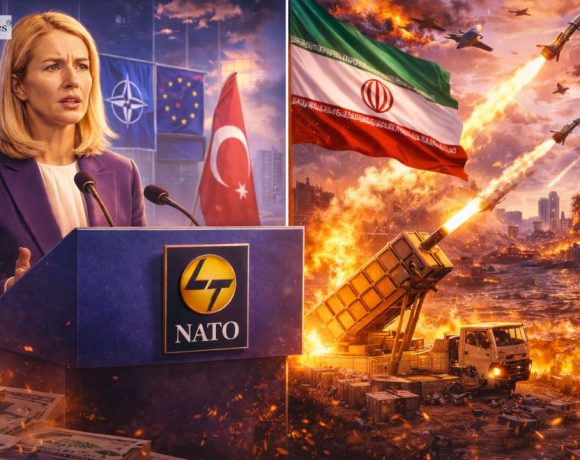
European Union foreign policy chief Kaja Kallas said Iran’s government is undermining its own future by launching indiscriminate attacks across the region. Speaking to reporters, she accused Tehran of pursuing a strategy aimed at spreading instability and escalating conflict in the Middle East, warning that such actions could ultimately backfire on the Iranian leadership.

Tensions escalated further after Turkey reported that NATO air defence systems intercepted an Iranian ballistic missile heading toward Turkish airspace. Radosław Sikorski, Poland’s foreign minister, criticised Iran’s actions, saying the country was widening the conflict by targeting nations that were not directly involved in the war.

Kallas also warned that the growing Middle East crisis risks diverting international attention away from the war in Ukraine. While she noted that the conflict could weaken Russia by costing it a regional ally, she cautioned that Moscow might still benefit from rising global oil prices triggered by the escalating tensions.

Pic courtesy: google/ images are subject to copyright

featured News Trending

Denmark is facing a complex geopolitical challenge as it defends Greenland at a time when the Arctic territory is steadily moving towards independence. While recent statements from the Trump administration that “all options are open” for taking control of Greenland have prompted strong European support for Copenhagen, the crisis highlights a paradox: Denmark is expending diplomatic capital to protect a territory whose population increasingly wants self-rule and whose political leaders are open to dealing directly with Washington.

Greenland’s strategic importance — sitting between Europe and North America and hosting key elements of the U.S. missile defence system — gives Denmark significant relevance in Arctic geopolitics. However, that leverage could disappear if Greenland chooses independence, a right formally recognised in 2009. Analysts warn Denmark could end up paying a high diplomatic and financial price to resist U.S. pressure, only to see Greenland eventually chart its own path. Trump’s renewed interest has also accelerated internal debates in Greenland, where all major parties favour independence, differing only on timing and method.

The issue also carries a heavy economic burden. Denmark provides substantial annual funding to Greenland and has announced major new Arctic defence spending, even as Greenland’s economy stagnates. Prime Minister Mette Frederiksen must balance domestic politics, alliance relations with the U.S., and international law, while acknowledging Greenlanders’ right to decide their future. As tensions rise, Denmark is left defending both its sovereignty and its credibility, amid growing uncertainty over how long the union with Greenland will last.

Pic courtesy: google/ images are subject to copyright
featured News

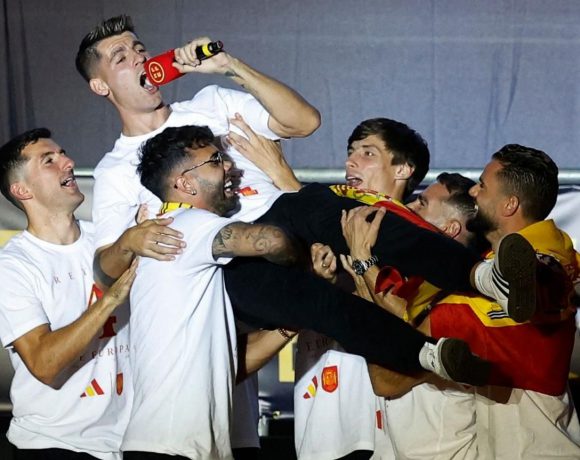
At the victory celebrations in Madrid, players from Spain’s men’s Euro 2024 winning team led chants of “Gibraltar is Spanish.” Midfielder Rodri, who also plays for Manchester City, was among those participating. The Gibraltar Football Association formally complained to Uefa, calling the chants “extremely provocative and insulting.”

Gibraltar, a British territory since the 18th century, is located at Spain’s southern tip. Spain has long sought its return.

The chants occurred as tens of thousands of Spanish fans gathered in central Madrid to celebrate the team’s 2-1 victory over England in the final. Fans dressed in Spain’s red and yellow cheered as the players toured the city in an open-top bus. The parade concluded in Cibeles Square, where the European Championship trophy was presented. Rodri, alongside right-winger Lamine Yamal, was seen chanting “Gibraltar is Spanish” on stage, a chant later led by team captain Alvaro Morata.

The Gibraltar FA expressed its concern in a statement, condemning the Spanish team’s actions as having “no place in football.”

Gibraltar, a British Overseas Territory with a population of just over 34,000, was ceded to Britain in 1713 under the Treaty of Utrecht. Despite referendums confirming its people’s preference for British rule, Spain continues to claim the territory. Border policing disagreements have arisen since Gibraltar’s departure from the EU with Brexit.

Gibraltar, a Uefa member since 2013, fielded its own team in Euro 2024, finishing last in Group B with no points and a significant 14-0 loss to France, the former champions’ largest win.

Picture Courtesy: Google/images are subject to copyright
featured News

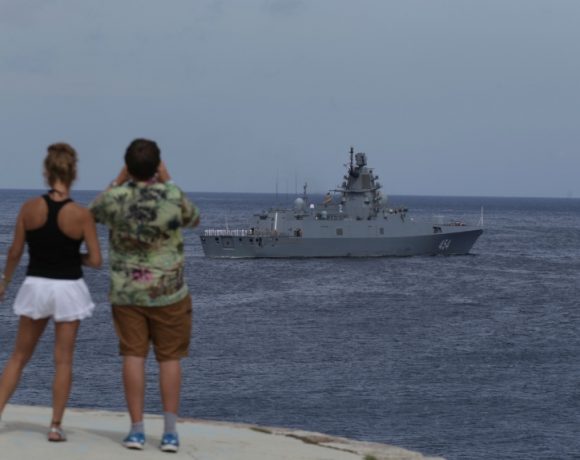
A fleet of Russian warships departed from the port of Havana after a five-day stay, during which they conducted planned military exercises. The fleet, which included a nuclear-powered submarine and a frigate, had been anchored in Havana Bay, approximately 90 miles (145km) from Florida, USA. The United States stated that it viewed the visit as non-threatening but closely monitored the vessels. In response, the US stationed its submarine, the USS Helena, at Guantanamo Bay Naval Base in Cuba.

As the Russian vessels departed on Monday, locals reportedly waved Russian flags. Cuban President Miguel Díaz-Canel visited the frigate during its stay and interacted with the sailors. Cuba’s foreign ministry assured that none of the visiting vessels carried nuclear weapons and emphasized that the visit posed no threat to the region.

However, Russia’s defense ministry highlighted that both the Admiral Gorshkov frigate and the Kazan submarine were equipped with advanced weaponry, including hypersonic missiles like the Zircon, and had recently conducted missile drills in the Atlantic. The visit was seen as a symbolic show of support for Cuba’s communist government and its ally Venezuela, potentially indicating the warships’ next destination.

While Russia and Cuba have a history of military cooperation, the timing of these exercises drew attention due to ongoing tensions following Russia’s invasion of Ukraine in 2022. Some observers interpreted the operation as Moscow’s way of asserting itself amidst international scrutiny.

Picture Courtesy: Google/images are subject to copyright

News Trending

Spain has demanded a public apology after Javier Milei, Argentina’s president, implied that the wife of Spanish Prime Minister Pedro Sánchez, Begoña Gómez, was corrupt during a far-right rally in Madrid. Although not directly naming her, Milei’s remarks were aimed at Ms. Gómez, whom he associated with corruption, saying, “When you have a corrupt wife, let’s say, it gets dirty.”

The controversy follows an investigation launched in April by a Spanish court into Ms. Gómez over allegations of influence peddling, which an opposition party had raised. The right-wing anti-corruption group making the allegations has since conceded they might be unfounded, and prosecutors called for the dismissal of the case last month due to a lack of evidence.

In response to Milei’s remarks, Spain’s foreign minister, José Manuel Albares, demanded an apology and warned that Spain might cut diplomatic ties with Argentina if none was forthcoming. Albares stated that Milei’s comments insulted both Spain and its leader.

However, Argentina’s Interior Minister Guillermo Francos stated that no apology would be issued by Argentina. Instead, he insisted that Spain should apologize for past remarks made about Milei. This follows a recent incident where a Spanish minister suggested that Milei had used drugs, which Milei condemned as slanderous.

The diplomatic tensions between Spain and Argentina have intensified since Milei, known for his contentious remarks about other world leaders, assumed office. He has previously labeled Brazil’s President Inacio Lula da Silva as an “angry communist” and Mexico’s President Andrés Manuel López Obrador as “ignorant.”

Picture Courtesy: Google/images are subject to copyright

News Trending

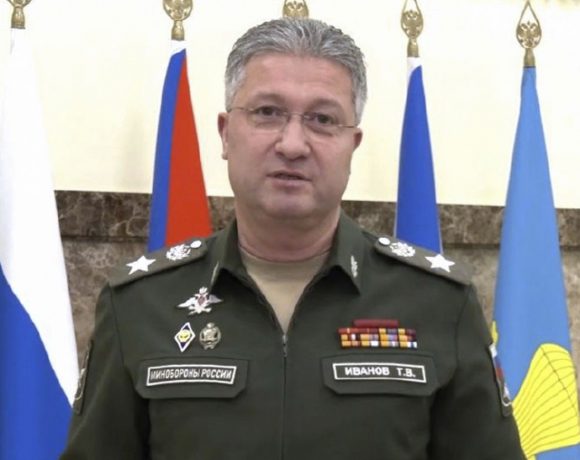
Recent events have once again brought attention to the issue of corruption within Russia’s government, particularly within its military. Timur Ivanov, a deputy defence minister, is facing serious accusations of accepting large-scale bribes. His denial of these charges comes at a time when Russia is grappling with systemic corruption, especially within its military projects.

The allegations against Ivanov have drawn scrutiny from activists who have long criticized corruption in Russia’s corridors of power. His close relationship with Defence Minister Sergei Shoigu adds complexity to the situation, highlighting the interconnectedness of Russia’s political and military spheres.

Rumors of treason surrounding Ivanov’s arrest add further intrigue to the case. Despite Kremlin’s dismissal of such claims, speculation persists, leaving the public seeking clarity amidst official statements and media reports.

Accusations from the Anti-Corruption Foundation linking Ivanov to malpractices in Ukraine’s occupied territories shed light on the human cost of corruption in conflict zones.

As Ivanov faces legal proceedings, the potential consequences, both legally and politically, are significant. The case underscores the widespread nature of corruption within Russia’s government and its impact on global politics, as evidenced by international sanctions against Ivanov.

Beyond Ivanov’s individual fate, the case raises questions about Russia’s ability to combat corruption within its military leadership and institutions. The fallout from this high-profile case may test the resilience of Russia’s governance structures in addressing endemic corruption.

Picture Courtesy: Google/images are subject to copyright