

featured News Trending

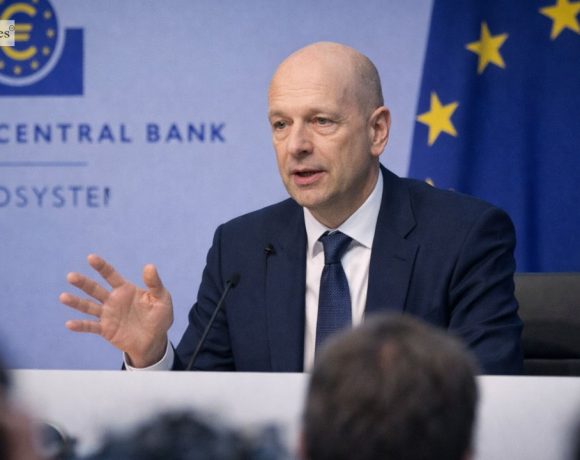
European Central Bank policymaker and Lithuanian central bank governor Gediminas Simkus said the ECB’s current policy stance is appropriate, with inflation at target and interest rates in a neutral zone, but warned that fresh shocks could disrupt this balance. Speaking to Reuters, Simkus highlighted persistent global uncertainty driven by geopolitical tensions, particularly the risk of Russian military aggression in eastern Europe, alongside trade frictions and other external pressures.

Simkus stressed that the ECB must ensure its systems are resilient to such risks, including safeguarding cash distribution and payment infrastructure in case of heightened security threats. He noted that countries bordering Russia face unique challenges, ranging from cyberattacks to airspace incursions, and argued that central banks must remain operationally prepared. He also added that banks need to be ready for longer-term risks such as climate change.

On monetary policy, Simkus said interest rates are firmly on hold at the ECB’s February meeting, as modest inflation fluctuations around 2% are normal. However, he cautioned against signalling future moves, saying the next rate change could equally be a hike or a cut. Emphasising flexibility, he said the ECB should avoid overreacting to short-term data swings and instead focus on broader economic trends, as shocks tend to affect growth before feeding into inflation.

Pic courtesy: google/ images are subject to copyright
featured News Trending

The European Central Bank (ECB) should be careful about taking preemptive policy action in response to rising uncertainty, Austrian central bank chief Martin Kocher said in an interview with German outlet Platow. Kocher noted that while geopolitical risks have intensified recently, central banks should avoid committing to policy moves before risks clearly materialise.

Kocher pointed to heightened global uncertainty driven partly by fresh geopolitical tensions, including threats of new U.S. trade measures. However, he cautioned that acting too early—especially when inflation risks are not clearly tilted in one direction—could lock policymakers into a difficult position and complicate communication. “Some risks can be addressed in advance, but many cannot,” he said.

He added that over the past six months, risks had shifted “slightly to the positive,” with modestly improved euro zone growth expectations and stable financial markets. While acknowledging recent developments, Kocher said it was too soon to reassess the broader outlook. Financial markets currently expect the ECB to keep interest rates unchanged through 2026.

Pic courtesy: google/ images are subject to copyright

News Trending

A prominent think tank, the Economic and Social Research Institute (ESRI), has projected solid growth for Ireland’s domestic economy in the next couple of years, driven by decreasing inflation and rising wages. They anticipate a 2.3% growth in modified domestic demand (MDD) for this year, followed by a 2.5% increase next year. MDD is a metric that filters out the influence of multinational corporations on Ireland’s economy. In 2023, MDD only saw a modest 0.5% growth due to factors like inflation and higher interest rates dampening spending and investment.

Despite a strong post-pandemic recovery, Ireland’s economic momentum slowed notably in 2023, partly due to increased inflation which hindered household finances. The ESRI noted a lack of real pay growth during 2022 and 2023. Real pay, adjusted for inflation, is a key indicator of changes in living standards. Both the ESRI and Ireland’s Central Bank anticipate an increase in real pay this year.

Traditionally, Gross Domestic Product (GDP) serves as the primary measure of economic performance; however, Ireland’s GDP is heavily skewed by multinational activities. Official data indicated a 3.2% contraction in Irish GDP in 2023. Usually, Irish GDP overestimates economic growth, but recent trends have shown the opposite, partly due to decreased sales and exports from US pharmaceutical companies’ Irish operations post-pandemic. The ESRI anticipates a recovery in Irish GDP over the next two years, driven by global trade improvements.

The ESRI also underscored the pressing need for Ireland to address well-documented infrastructure challenges, particularly in areas like housing, renewable energy, and public transport. Notably, plans for an underground rail link connecting Dublin Airport to the city center have reached the public planning hearings stage after more than two decades since the project’s inception.

Picture Courtesy: Google/images are subject to copyright