
featured News

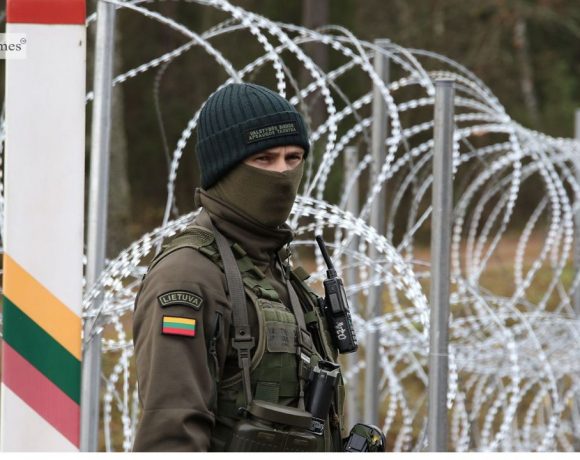
Lithuania has declared a state of emergency after a surge of smuggler balloons crossing from Belarus repeatedly disrupted national airspace and forced the temporary closure of Vilnius Airport. Authorities say the balloons, allegedly used to transport illegal cigarettes, represent a “hybrid attack” that threatens both civil aviation and national security. Belarus denies any involvement, accusing Lithuania of staging provocations, while President Alexander Lukashenko dismissed the situation as exaggerated and “politicised”.

The Lithuanian government has asked parliament to grant expanded powers to the military, allowing them to support police and border guards during the emergency period. If approved, the army would be allowed to restrict movement, search vehicles and people, control access to designated areas, and detain suspects using force when necessary. The measures will remain in place until the government lifts the state of emergency.

The tensions follow previous border disputes between the neighbouring states. Lithuania has twice imposed emergencies in recent years — once in 2021 over allegations that Belarus was sending migrants across the border, and again in 2022 after Russia’s invasion of Ukraine heightened fears of regional instability. The European Commission recently condemned the balloon incidents as an “unacceptable hybrid attack” by Belarus.

Pic courtesy: google/ images are subject to copyright
featured News

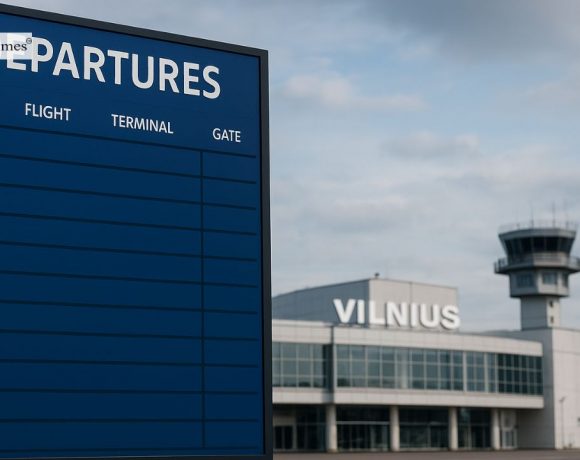
Vilnius Airport in Lithuania halted flight operations for the second time on Wednesday after suspected balloons were detected in its airspace, airport authorities said. The country has witnessed repeated disruptions in recent months due to similar sightings. Officials claim the balloons are used by smugglers transporting cigarettes from neighbouring Belarus.

Lithuanian authorities have also accused Belarusian President Alexander Lukashenko of allowing the activity to continue, calling it a “hybrid attack.” Belarus, a close ally of Russian President Vladimir Putin, has repeatedly denied such claims, instead accusing Western nations of waging a hybrid war against Belarus and Russia.

Vilnius Airport, located roughly 30 kilometres from the Belarus border, has been forced to suspend operations more than ten times since early October because of balloon-related incidents. Authorities continue to monitor the situation as the disruptions affect both security and passenger travel.

Pic courtesy: google/ images are subject to copyright
featured News

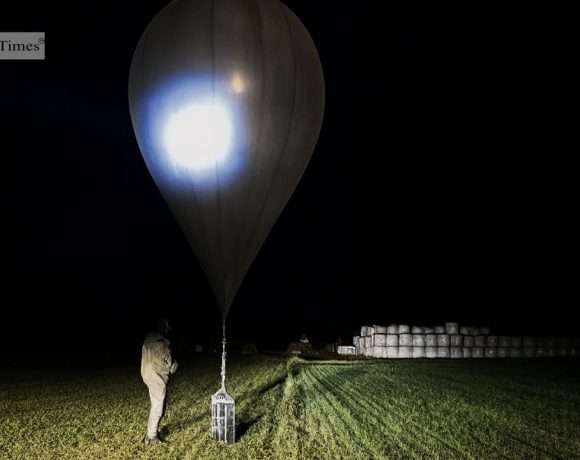
Lithuania’s Vilnius Airport was forced to halt operations for over an hour on Thursday evening after balloons used by smugglers once again appeared on radar systems, triggering an airspace safety alert. The National Crisis Management Centre confirmed that flights resumed shortly after the objects cleared the area. This comes just hours after Lithuania reopened its border crossings with Belarus, which were earlier shut due to repeated airspace disruptions.

The Lithuanian government has accused smugglers of flying balloons from Belarus carrying contraband cigarettes, describing the activity as a form of “hybrid attack” orchestrated by the regime of Belarusian President Alexander Lukashenko. Prime Minister Inga Ruginiene’s office warned that if such incursions continue, Lithuania may be forced to close all border checkpoints again as a security measure.

Belarus has dismissed the allegations, with Lukashenko calling Lithuania’s response a “crazy scam” and accusing Western nations of waging hybrid warfare against Belarus and Russia. Authorities in Vilnius noted that air traffic disturbance reports had declined in recent weeks, but Thursday’s balloon-triggered closure marked a renewed incident amid ongoing regional tensions.

Pic Courtesy: google/ images are subject to copyright
News Trending

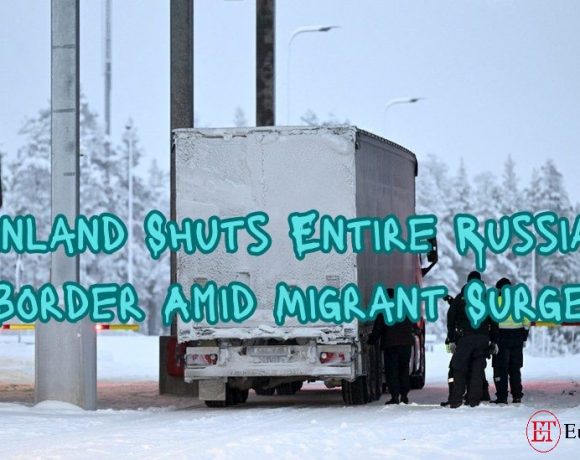
Finland has decided to close the majority of its border crossings with Russia, accusing Moscow of actively aiding migrants in their entry into the country. With seven out of eight road posts already closed due to a notable increase in crossings, the last remaining crossing, situated in the Arctic Circle, is set to be shut for a two-week period.

The Finnish government asserts that Russia is orchestrating the movement of asylum seekers towards Finland as part of what they describe as an “influence operation” and a “hybrid attack.” Prime Minister Petteri Orpo emphasized the government’s commitment to putting an end to these crossings, citing concerns for national security.

In November, Finland saw a surge in the number of asylum seekers, totaling around 900 individuals, who entered the country from Russia. These asylum seekers come from various countries, including Morocco, Pakistan, and Syria. The Finnish government’s response to this influx has been a gradual closure of more border posts. The decision has raised concerns from Finland’s non-discrimination ombudsman, who fears that the closures may compromise the right to seek asylum under international law, particularly considering the remote location of the last remaining border crossing, approximately 900 kilometers north of the capital.

Despite the closures, the Finnish government maintains that asylum seekers arriving by boat and air can still seek asylum. However, advocates worry that the decision to close official crossing points may lead asylum seekers to attempt illegal crossings through the vast forests and rivers that make up the lengthy border between Finland and Russia.

With the arrival of winter, there are heightened concerns about the safety of such attempts. Advocates also emphasize the importance of providing assistance to those in need on the Russian side of the border and urge authorities to avoid pushing individuals crossing illegally back into Russia.

Picture Courtesy: Google/image are subject to copyright