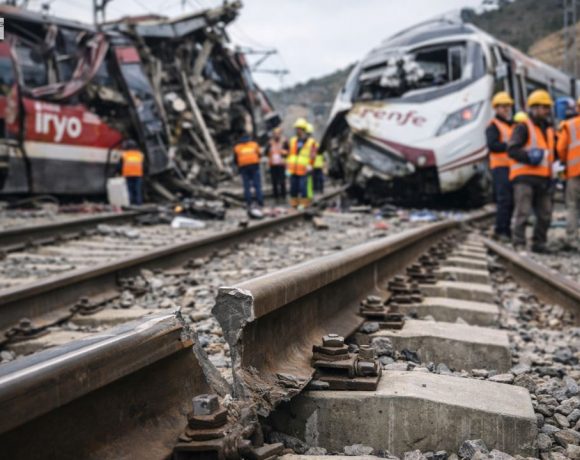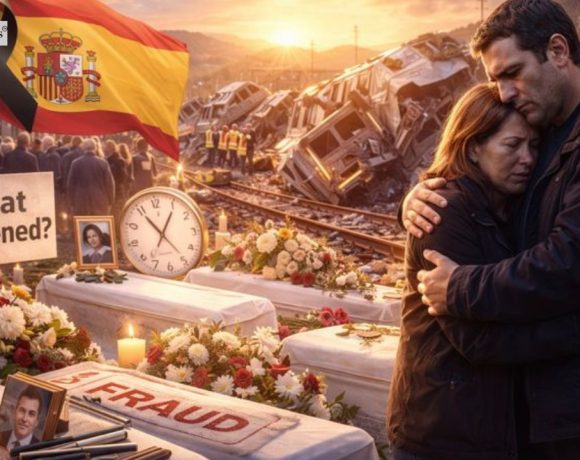
Spain held emotional tributes on Thursday for the 45 people killed in a devastating high-speed train collision, as grieving families vowed to uncover the truth behind one of Europe’s deadliest rail disasters. At a funeral mass in the southern city of Huelva, relatives and survivors gathered, some still bearing visible injuries. King Felipe VI and Queen Letizia attended the service, where families stressed that only full accountability would help them heal.
The crash occurred on January 18 near the village of Adamuz, when a train travelling from Malaga to Madrid derailed and was struck seconds later by another train heading in the opposite direction. Authorities said a fracture in the rail may have caused the initial derailment, with as little as nine to 20 seconds between the two incidents. The tragedy has intensified scrutiny of Spain’s railway safety standards and government investment in maintenance, especially after other rail-related incidents reported the same week.
Speaking at the service, Liliana Saenz, who lost her mother, said the families would continue seeking answers to ensure such a disaster never happens again. She told mourners that the 45 families would give up everything they own for just 20 seconds to change the outcome. Prime Minister Pedro Sanchez and Transport Minister Oscar Puente did not attend the funeral, further fuelling public debate over responsibility and oversight.
Pic courtesy: google/ images are subject to copyright