featured News

Spain will establish a nationwide network of climate shelters in public buildings to help people cope with extreme heat before next summer, Prime Minister Pedro Sánchez announced at a climate conference in Madrid. Highlighting that prolonged heatwaves and droughts are becoming the “new normal”, Sánchez said the shelters will provide safe, cool spaces accessible to everyone during periods of intense heat.

The government-backed shelters will be prioritised in areas most affected by rising temperatures and will complement existing regional initiatives in Catalonia, the Basque Country and Murcia. Barcelona already operates around 400 climate shelters in air-conditioned venues such as libraries, museums, sports centres and shopping malls, offering seating and free drinking water, particularly for vulnerable groups.

Sánchez also unveiled additional climate measures, including funding for flood prevention and €20 million earmarked for wildfire prevention plans in small towns. Spain faced its hottest summer on record in 2025, with temperatures exceeding 45°C, more than 3,800 heat-related deaths, and over 400,000 hectares destroyed by wildfires, underscoring the urgency of long-term climate adaptation.

Pic courtesy: google/ images are subject to copyright

News Trending

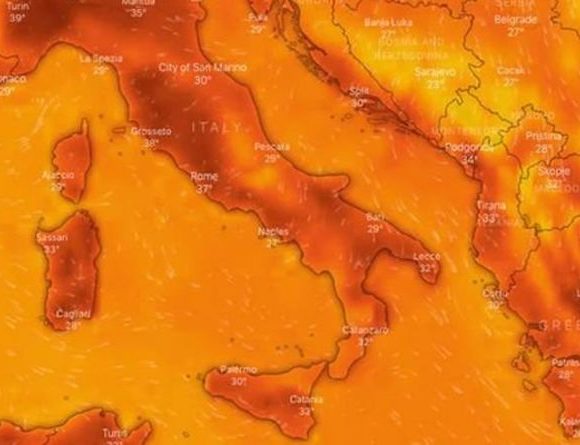
A heatwave in Europe has led to red alerts for extreme heat in most of Italy’s major cities. The high temperatures, expected to peak on Wednesday, have put 23 cities on high alert.

The heatwave is affecting millions of people in the northern hemisphere and is accompanied by wildfires in Greece and the Swiss Alps. The heatwave is caused by a high-pressure system bringing warmer air from the tropics, while a jet stream remains stuck over central Europe.

The extreme heat is forecasted to continue through Wednesday in southern Europe, with temperatures exceeding 40°C (104°F). Italy’s health ministry has activated “heat codes” in emergency rooms to handle the increase in heat-related illnesses.

There has been a 20% rise in patients admitted with symptoms such as dehydration, exhaustion, and heat stroke. Record-breaking temperatures of 41.8°C (107.2°F) were recorded in Rome. Red alerts are also in place in Spain, Greece, and parts of the Balkans. The heatwave is expected to continue into August, according to the World Meteorological Organization.

Other parts of the world, including the US and China, are also experiencing extreme heatwaves. Climate change is cited as a significant factor in the increasing frequency and intensity of heatwaves.

Picture Courtesy: Google/images are subject to copyright

Global Climate News Trending

Italy is currently experiencing extreme heat, leading to red alerts being issued for 15 cities, including Rome, Florence, and Bologna. This heatwave is part of a larger trend of increasing temperatures and longer heatwaves globally due to global warming.

The European Space Agency (ESA) predicts that Italy, Spain, France, Germany, and Poland may face extreme conditions, with potential record temperatures. Greece has already been experiencing temperatures of 40°C or higher, leading to the closure of tourist attractions like the Acropolis. There are concerns about the increased risk of wildfires in Greece and other areas with high winds.

Central parts of Europe, including Germany and Poland, are also affected by high temperatures. In contrast, the UK is experiencing heavy showers and cooler weather due to the southern shift of the jet stream. The current heatwave in Italy, named Cerberus, is expected to be followed by another heatwave called Charon, pushing temperatures above 40°C.

Heatwaves are also occurring in other parts of the world, including the US, China, North Africa, and Japan. The increasing frequency and intensity of extreme weather events due to global warming have become the new normal, according to the World Meteorological Organization.

Picture Courtesy: Google/images are subject to copyright