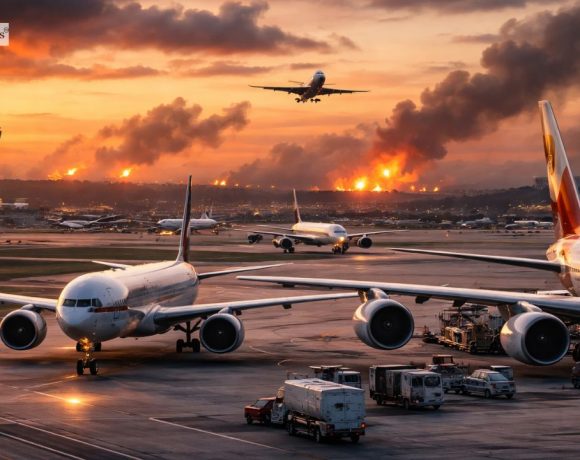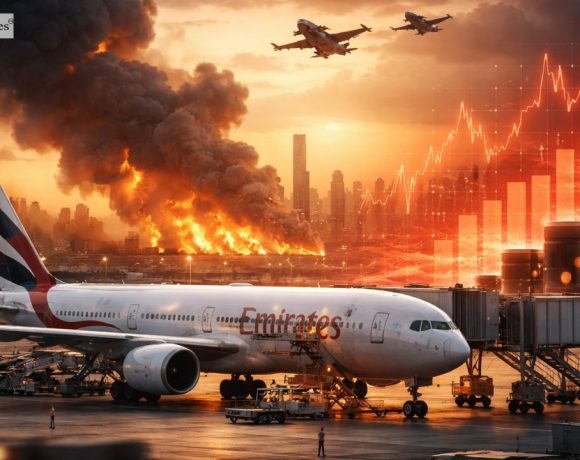
Airline shares across Asia tumbled on Monday as soaring oil prices and the escalating U.S.-Israeli war with Iran disrupted travel and raised operating costs. Crude oil jumped 20% to its highest level since July 2022, driving up jet fuel prices and intensifying financial pressure on carriers already struggling with limited airspace and supply chain challenges. Analysts warned that uncertainty for airlines has surged further amid the geopolitical crisis.
Travel disruptions have left tens of thousands of passengers stranded, with many paying premium rates for last-minute flights, overland journeys, or private charters. Since February 28, more than 37,000 flights to and from the Middle East have been cancelled. Airlines such as Qantas, Cathay Pacific, Japan Airlines, Korean Air, China Southern, and China Eastern saw share declines ranging from 4% to over 10%, while Indian carriers IndiGo and SpiceJet fell 7.5% and 5.6%, respectively.
Airlines are forced to reroute flights, carry extra fuel, and make additional refueling stops to navigate the restricted airspace safely. Governments and airports, including Australia, Oman, and Turkey, have issued travel advisories and restricted certain flights. Meanwhile, pilots report increased mental stress due to prolonged conflicts, shrinking air corridors, and military drone threats, compounding operational challenges for carriers across the region.
Pic courtesy: google/ images are subject to copyright