News Trending

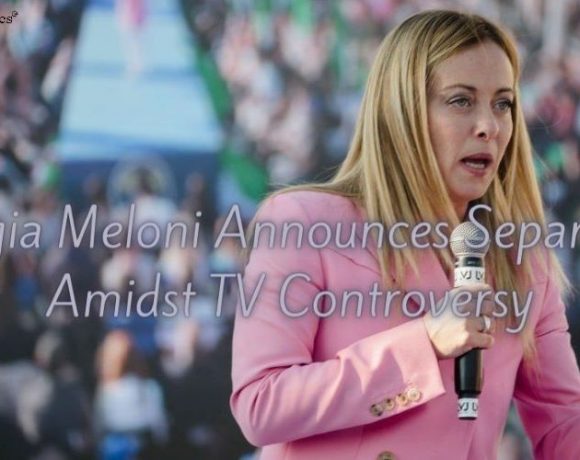
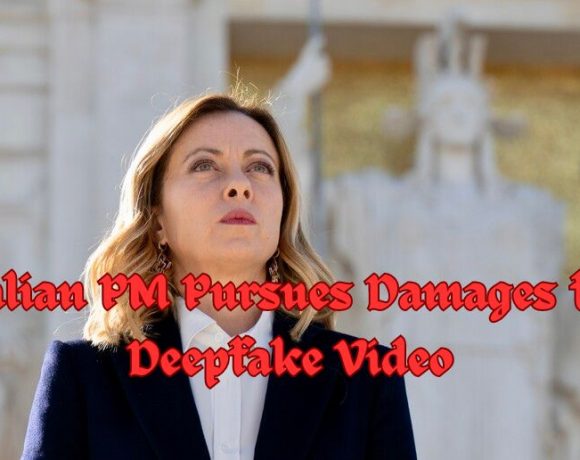
Giorgia Meloni, Italy’s new far-right leader, emphasised her goal to stop migrant boats from crossing the Mediterranean in her first speech to MPs. She reiterated her campaign promise to stop boats leaving North Africa for Italy, saying, “We must end illicit departures and human trafficking.”

Italy has always served as a hub for unauthorised immigrants travelling to Europe. This year, more than 77,000 people have attempted the extremely risky crossing into Italy, placing stress on nearby communities. The Brothers of Italy party is led by Ms. Meloni, 45, who was elected as leader of a right-wing alliance.

She addressed the lower house of parliament, “We do not seek in any way to dispute the right to asylum for individuals escaping wars and persecutions. In terms of immigration, what we want to accomplish is make it impossible for people traffickers to choose who gets into Italy.

She referred to herself as a “underdog” and acknowledged the responsibility of becoming the first female leader of her nation while paying thanks to the many Italian women who had come before her in “breaking this ultimate glass ceiling.”

She was greeted with a standing ovation and cries of “Giorgia, Giorgia”.

Even though the Meloni government was only sworn in on Saturday, it has already reverted to a stance taken in 2018–19 by one of its parties, the far-right League.

Matteo Piantedosi, the new interior minister, threatened to restrict ports to two rescue boats carrying hundreds of migrants just before the prime minister spoke, claiming that the Ocean Viking and Humanity1 were breaking the law.

Mr. Piantedosi was instrumental in the prior policy that forbade migrant-carrying rescue boats from arriving in Italian ports. That ultimately led to the League’s leader, Matteo Salvini, facing charges of kidnapping and obstructing the arrival of the rescue vessel Open Arms transporting 147 migrants in Sicily in 2019.

Picture Courtesy: Google/images are subject to copyright

News Trending

In an election that is being widely watched around Europe, Italians will decide whether to elect their most right-wing administration since World War Two. Giorgia Meloni, the leader of the far-right Brothers of Italy party, is attempting to unite two other right-leaning parties in order to become the nation’s first female prime minister.

She dislikes being associated with Italy’s fascist past despite having softened her image. Up to 23:00, nearly 51 million Italians may use their right to vote (21:00 GMT). Long lines were observed at some polling places in Rome by lunchtime, when turnout had reached over 19%, a level similar to that of the previous election four years prior.

Enrico Letta, the leader of the center-left, was Ms. Meloni’s main opponent. Matteo Salvini, a supporter of the far-right, voted in Milan. There are 4.7 million foreign voters and 2.6 million first-time voters. When the polls close, exit polls will be released, and the results will be available hours later.

One voter hailed her “strong character,” while another claimed she had voted to keep the extreme right out, in the southern Rome neighbourhood of Garbatella, where the Brothers of Italy leader grew up. Emma stated, “I don’t want to win; it’s not who I want to win.”

Giorgia Meloni has toned down her rhetoric towards Europe and supports Western sanctions against Russia.

But she continues to support the old fascist adage, “God, fatherland, and family,” which was popularised by Benito Mussolini.

A unity administration led by Mario Draghi, a well-liked former head of the European Central Bank, governed Italy for a year and a half. One of the few party leaders who steadfastly declined to participate was Giorgia Meloni.

The primary goal of the Draghi administration was to implement the reforms that were agreed upon as part of the EU’s eye-watering €200 billion (£178 billion) in grants and loans for post-Covid recovery. Meloni wants those measures to be reviewed in light of the energy crisis because by July the administration had disintegrated. Additionally, she has expressed a desire to “protect” Italy’s national interests within the EU. It seems sense that many European leaders are anxiously monitoring this vote.

Picture Courtesy: Google/images are subject to copyright