
News Trending

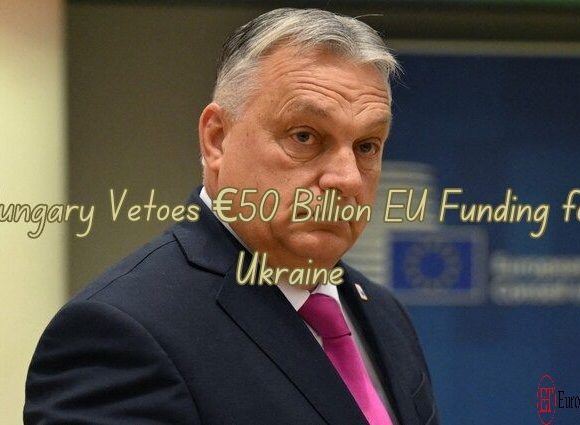
Hungary, led by Prime Minister Viktor Orban, has blocked €50 billion in EU aid for Ukraine, a move that comes just hours after EU leaders reached an agreement to begin membership talks. Orban, known for maintaining close ties with Russia, announced the veto, citing opposition to additional financial support for Ukraine. While the EU leaders unanimously agreed on aid and wider budget proposals, Hungary’s objection led to the postponement of aid negotiations until early next year. Despite Hungary’s stance, the EU proceeded with granting membership talks to Ukraine, Moldova, and candidate status to Georgia.

The decision to block aid raises concerns for Ukraine, which heavily relies on EU and US funding in its ongoing struggle against Russian forces. This setback comes at a time when Ukraine is also seeking approval for a $61 billion US defense aid package, facing delays due to disagreements among US lawmakers. The potential implications for Ukraine’s counter-offensive against Russian forces, especially with the arrival of winter, heighten anxieties about the country’s ability to resist the occupation.

President Zelensky of Ukraine expressed gratitude for the EU’s decision on membership talks, despite the aid block. The EU’s move to include Ukraine and Moldova in accession talks was celebrated as a “victory” by Zelensky, who emphasized the importance of the decision for both countries. Moldova’s President Maia Sandu also welcomed the development, acknowledging the shared path to EU accession with Ukraine. Germany’s Chancellor Olaf Scholz praised the decision as a “strong sign of support,” highlighting that both Ukraine and Moldova belonged to the “European family.”

Prime Minister Orban, in a video message on Facebook, distanced himself from his EU counterparts, labeling Ukraine’s membership as a “bad decision” and reiterating Hungary’s opposition to providing substantial funds to Ukraine. The EU’s decision to open accession talks does not guarantee immediate membership for Ukraine, as the process involves passing numerous reforms and adhering to EU standards, a journey that can span several years. Despite the challenges, the EU’s commitment to engaging in talks signals a significant step toward fulfilling Ukraine’s Euro-Atlantic aspirations.

Picture Courtesy: Google/images are subject to copyright
News Trending

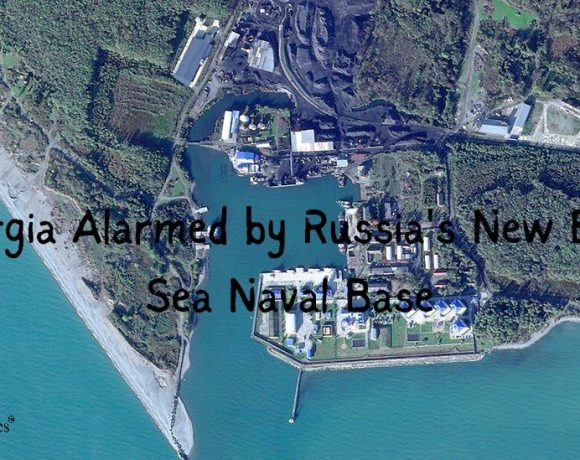
In early November, 50 opposition MPs in Georgia urged NATO and EU member states to unite against Russia’s plan to establish a permanent naval base in Abkhazia, a breakaway region. The move has raised concerns that it could involve Georgia in Russia’s conflict in Ukraine and disrupt Tbilisi’s plans for a Black Sea port. Abkhazia, though internationally recognized as part of Georgia, has been under Russian and separatist control since the 1990s.

Georgia’s foreign ministry condemned Russia’s plan as a violation of sovereignty, but officials downplayed the immediate threat. Satellite imagery suggests ongoing dredging and construction at the port, indicating potential infrastructure for larger cargo ships. Some fear the base could involve Georgia in a conflict between Russia and Ukraine.

The head of Georgia’s Foreign Relations Committee emphasized the government’s focus on immediate threats, such as Russian forces near the occupation line. Despite assurances, concerns exist that the naval base could impact Georgia’s mega-infrastructure project—a deep-sea port in Anaklia, crucial for the Middle Corridor, a fast route between Asia and Europe avoiding Russia.

The Anaklia project was canceled in 2020, with accusations that the government yielded to Moscow’s interests. The cancellation led to international arbitration. The government maintains plans to revive the deep-sea port.

While Georgia has a pro-EU population, its government has a complex relationship with Moscow. Accusations of a pro-Russian stance were labeled “absurd,” citing EU agreements and aspirations. However, the delicate situation underscores Georgia’s vulnerability due to its history of conflicts with Russia and lack of NATO security.

Georgia alleges Russia is using the naval base to pressure against EU integration. A decision on Georgia’s EU candidate status is expected at a December summit. Officials assert Russia aims to undermine Georgia’s stability and European integration, showcasing its influence in the South Caucasus.

Picture Courtesy: Google/images are subject to copyright
News Trending

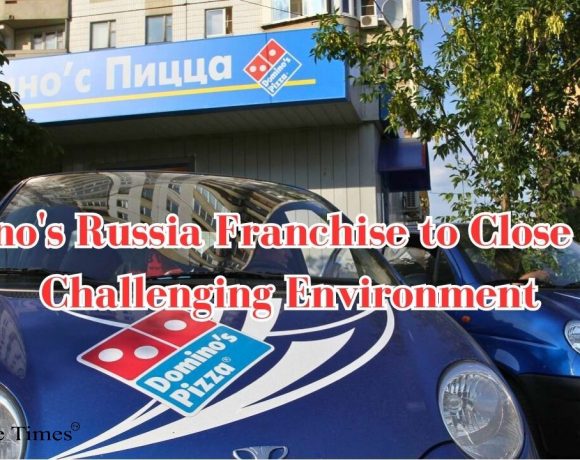
The owner of the Domino’s Pizza franchise in Russia has announced plans to close its branches and file for bankruptcy, signaling an end to its operations due to the challenging business environment in the country.

DP Eurasia, which operates 171 Domino’s Pizza outlets in Russia, has decided not to proceed with the sale of its pizza chain’s shops in the face of increasing difficulties. This move comes in the wake of Western companies disengaging from Russia following the Ukraine invasion and economic sanctions.

While some businesses have chosen to exit, others, including Domino’s, have faced criticism for remaining. DP Eurasia owns 68 of the Domino’s Pizza shops in Russia and franchises 103 to local operators. The company’s presence in Russia will be terminated as a result of this decision.

DP Eurasia, which also holds master franchise rights for Domino’s in Turkey, Russia, Azerbaijan, and Georgia, had been evaluating its options after sanctions were imposed. The Russian economy has been impacted by sanctions since the conflict in Ukraine in February 2022, leading to several well-known companies shuttering their operations.

Pressure was applied to other major brands like McDonald’s and Coca-Cola to follow suit. Some companies, such as Unilever, have defended their continued operations in Russia, citing complexities and potential takeovers by the Russian state.

Despite this, Domino’s Pizza Inc., the American multinational and master franchisor, clarified that it had ceased supporting the Russian market through its subsidiaries since early 2022.

Picture Courtesy: Google/images are subject to copyright