
featured News Trending

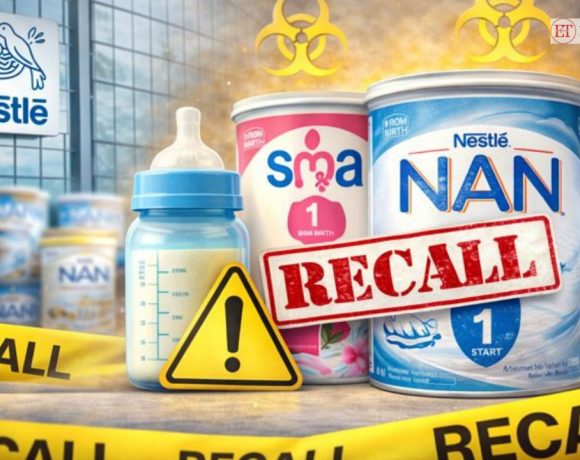
Nestle announced a major recall of some batches of its infant nutrition products, including SMA, BEBA, and NAN formulas, across Europe, Turkey, and Argentina due to potential contamination with cereulide, a toxin produced by certain strains of Bacillus cereus. The recall, which began on a smaller scale in December, comes after testing revealed an issue with an ingredient supplied by a leading vendor. No illnesses have been reported in connection with the recalled products.

The Swiss food giant is activating alternative suppliers for the affected ingredient, ramping up production at multiple factories, and accelerating the distribution of unaffected products to maintain supply. Cereulide cannot be destroyed by boiling water or typical formula preparation, and can cause rapid-onset food poisoning symptoms such as vomiting and stomach cramps, according to the UK Food Standards Agency.

Austria’s health ministry stated that the recall involves over 800 products from more than 10 factories, marking the largest recall in Nestle’s history. The company’s investigation traced the contaminated ingredient back to a factory in the Netherlands, though it was used across multiple production sites internationally. Nestle is working to minimize supply disruption while ensuring safety.

Pic courtesy: google/ images are subject to copyright
featured News Trending

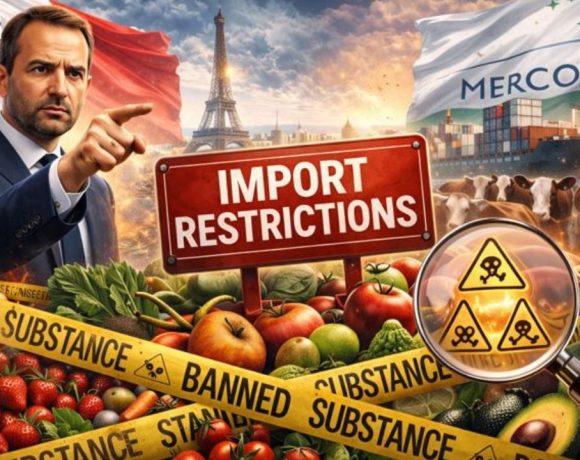
France has announced stricter checks on a range of food imports in response to protests by farmers who argue they face unfair competition from countries with weaker agricultural regulations. The move comes as opposition grows in France to a proposed European Union trade agreement with the South American Mercosur bloc, as well as concerns over livestock disease controls.

Agriculture Minister Annie Genevard said the new measures aim to ensure imported food meets EU standards, particularly regarding the use of banned pesticides and fungicides. France will soon issue a decree suspending imports of products found to contain prohibited substances, including mancozeb, glufosinate, thiophanate-methyl and carbendazim. Fruits and vegetables such as melons, apples, cherries, strawberries, grapes and potatoes will only be sold if they show no traces of these chemicals.

Prime Minister Sebastien Lecornu said any imported product failing to meet these standards would be barred from entering France. While Germany and Spain support the Mercosur deal, critics in France fear it would lead to cheaper imports, especially beef, that do not comply with EU environmental and food safety rules. The government said protecting farmers, public health and fair competition is non-negotiable and urged the European Commission to extend similar rules across the EU.

Pic courtesy: google/ images are subject to copyright