featured News Trending

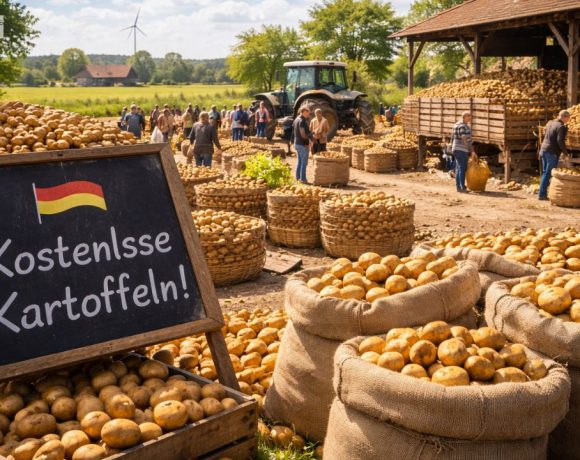
A German farm in the eastern state of Saxony has begun giving away millions of potatoes for free after a bumper harvest left the market oversupplied. Dubbed “the great potato rescue,” the initiative aims to prevent around four million kilograms of surplus potatoes from going to waste. Since mid-January, truckloads of potatoes have been transported to Berlin, where residents, food banks, schools and churches have benefited from the giveaway.

Germany, the European Union’s largest potato producer, saw last year’s harvest saturate the market, prompting Osterland Agrar to seek alternatives after a customer contract was cancelled. Partnering with the Berliner Morgenpost newspaper and eco-search engine Ecosia, organisers said the project was about highlighting the value of potatoes as food rather than discarding them. The farm has already distributed about 500,000kg across Germany and Ukraine and can store the remaining stock until mid-year.

The campaign has not been without controversy. The Brandenburg Farmers’ Association criticised the initiative as a “disgusting PR stunt,” warning it could disrupt local markets and devalue food. Despite mixed reactions, the potato giveaway has drawn widespread attention, reflecting Germany’s long-standing culinary love for the humble tuber. Funding for the Berlin operation is now running low, with only one more delivery expected once weather conditions improve.

Pic courtesy: google/ images are subject to copyright
featured News Trending

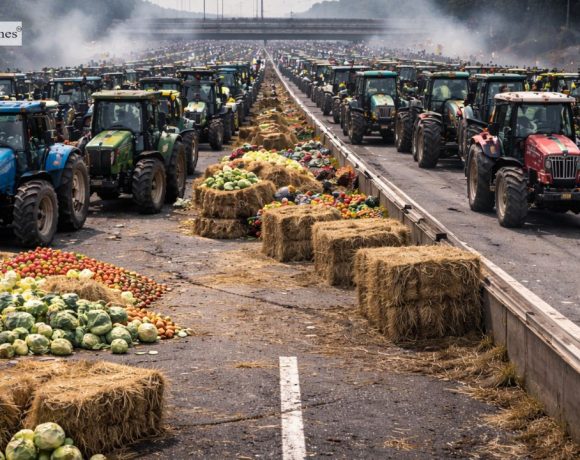
French farmers intensified their protests on Monday by stopping trucks and checking imported food at key transport hubs, including the country’s largest container port at Le Havre and on a major motorway north of Paris. The actions were aimed at opposing the EU-Mercosur free-trade deal, which farmers say would expose them to unfair competition from cheaper agricultural products imported from South America and beyond.

The pressure has grown since most European Union member states approved the deal last week, despite France voting against it. Farmers’ unions argue that imported goods often do not meet the same environmental, health and labour standards required of European producers, making it difficult for them to compete on price. Protesters at Le Havre said they had already spotted products such as mushrooms and sheep offal from China entering the supply chain.

Protests also spread to other parts of the country, with farmers blocking fuel depots, ports and transport routes in regions including La Rochelle, Bayonne and the French Alps. Unions plan to bring tractors into Paris for a major demonstration, followed by another rally in Strasbourg later this month, as they seek to persuade the European Parliament to reject the Mercosur agreement.

Pic courtesy: google/ images are subject to copyright
Art News Trending

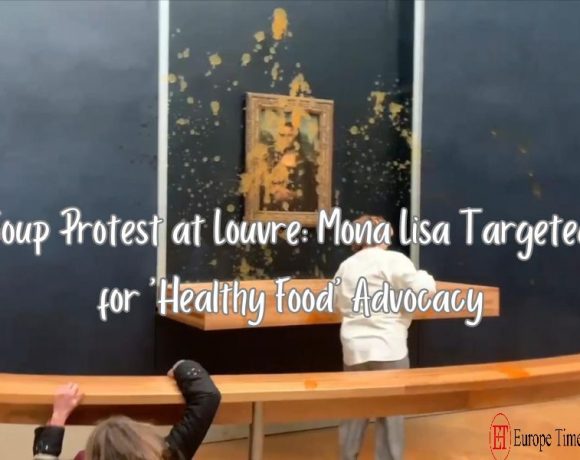
Environmental protesters targeted the iconic Mona Lisa at the Louvre in Paris, throwing soup at the protected artwork to emphasize their call for the right to “healthy and sustainable food.” The 16th Century masterpiece by Leonardo da Vinci, housed behind protective glass, remained undamaged despite the unconventional protest.

Video footage captured two female protesters, affiliated with a group called Riposte Alimentaire (Food Counterattack), tossing liquid at the painting and raising questions about the perceived prioritization of art over the fundamental right to nutritious food. The protesters, clad in T-shirts reading “food counterattack,” stood in front of the artwork, asserting concerns about the agricultural system and the challenges faced by farmers.

The Louvre promptly assured the public that the painting was unharmed, thanks to the security measures in place. The Salle des Etats, where the Mona Lisa is displayed, was evacuated, and the room reopened to visitors after cleaning at 11:30 local time. The museum announced its intention to file a complaint regarding the incident.

The group Riposte Alimentaire released a statement, posted on social media platform X, explaining that the protest was part of their broader efforts to integrate “food into the general social security system.” They argued that the current food model stigmatizes the most vulnerable and fails to respect the fundamental right to food. The group proposed the issuance of a monthly food card worth €150 (£128) for citizens to use on food.

France’s Minister for Culture, Rachida Dati, condemned the act, stating that “no cause” could justify targeting the Mona Lisa, emphasizing the painting’s status as part of the heritage for future generations. The incident occurred amid ongoing farmer protests in Paris, where demonstrators sought relief from rising fuel costs and simplified regulations, blocking key roads in and out of the city.

The Mona Lisa, housed in the Louvre since the early 1950s, has been shielded behind safety glass. In 2019, the museum installed a more transparent form of bulletproof glass to enhance its protection. This incident echoes a 2022 event when an activist threw cake at the painting, urging people to “think of the Earth.” The Mona Lisa’s history includes a notorious theft in 1911, with recovery two years later after the perpetrator attempted to sell it in Italy.

Picture Courtesy: Google/images are subject to copyright

News Trending

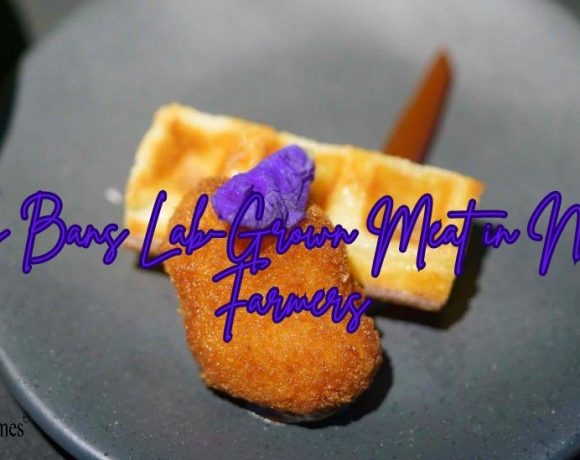
Italian Members of Parliament have given their approval to a law that bans the production, sale, or import of lab-grown meat or animal feed, a move championed by the right-wing government under the banner of defending Italian culinary traditions. Agriculture Minister Francesco Lollobrigida asserted that Italy has become the first nation to shield itself from the perceived social and economic risks associated with synthetic food. The parliamentary vote prompted both support and opposition, leading to a physical altercation between farmers and some MPs.

Despite the scuffle, the bill passed with a majority of 159 votes in favor and 53 against. Violating the law could result in fines of up to €60,000. Presently, the impact of the law is limited, as lab-grown meat has only been approved for human consumption in Singapore and the United States. The European Union has yet to give the green light to lab-grown meat, categorized as “novel foods.” If EU approval is granted, Italy’s new law may face challenges from the European Commission.

The legislation, initiated in response to a petition organized by the Coldiretti lobby group, prohibits synthetic foods produced from animal cells without causing harm to the animal. Additionally, it restricts producers from using meat-related terms on labels to describe plant-based protein. Critics argue that there is nothing synthetic about lab-grown meat, as it is created by growing natural cells without genetic modification.

The passage of this law marks a victory for Italy’s Agriculture Minister, who, a year ago, pledged to prevent “synthetic food” from entering Italian dining tables. Minister Lollobrigida praised MPs for supporting the new law, emphasizing the preservation of the relationship between food, land, and human labor that has endured for millennia. However, the petition behind the legislation faced condemnation from critics such as Prof Elena Cattaneo, a lifelong senator and bioscience specialist, who denounced it as an emotive leaflet that oversimplified the distinction between natural and cultivated foods.

Picture Courtesy: Google/images are subject to copyright