
featured News

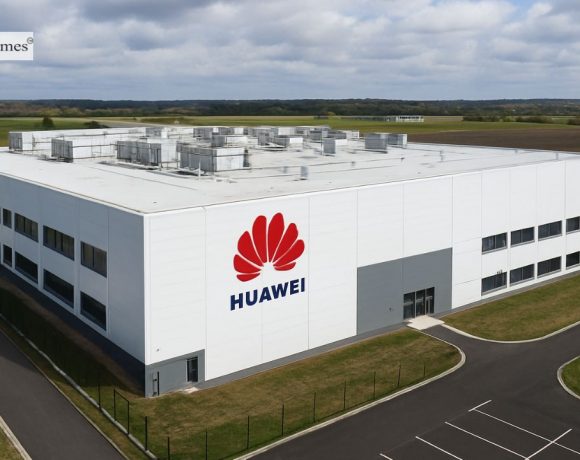
Huawei is reassessing the future of its newly completed manufacturing plant in eastern France as slow 5G deployment and growing restrictions on Chinese telecom equipment reshape its European plans. The €200 million facility near Strasbourg, finished in September, remains unused, with officials and executives suggesting the company is undecided about proceeding. The plant was meant to produce wireless base-station equipment and create up to 500 jobs, marking Huawei’s first manufacturing site in Europe.

Europe’s political climate has shifted significantly since the project was announced, with several governments toughening their stance on Chinese technology. Germany recently moved to ban Chinese components from future 6G networks, while broader EU measures aim to phase out Chinese telecom equipment. These developments, combined with sluggish 5G uptake, have placed Huawei in a difficult strategic position. Local authorities also cancelled a previously agreed €800,000 subsidy due to persistent uncertainty around the project’s future.

Sources say Huawei is considering “all options,” including selling the 52,000-square-metre site, with industrial groups already touring the facility. Security concerns and policy shifts have slowed the company’s ambitions in Europe despite its 35–40% market share in 4G and 5G equipment. While its European prospects dim, Huawei is experiencing strong growth in other sectors such as smartphones and smart-driving technology, prompting analysts to suggest the company may redirect resources where demand is rising fastest.

Pic courtesy: google/ images are subject to copyright
News Technology Trending

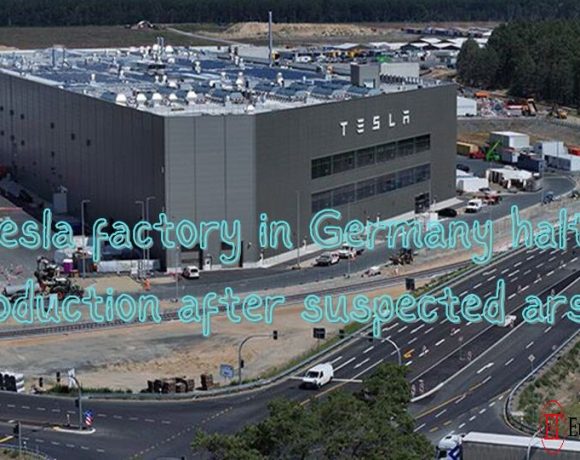
Tesla’s car factory in Berlin came to a standstill on Tuesday following a suspected arson attack in the vicinity. The incident occurred when an electricity pylon near the plant caught fire, resulting in power disruptions within the factory premises and neighboring towns. Despite ongoing protests by environmental activists against the factory’s expansion, they denied any involvement in the fire incident.

Although the fire did not reach Tesla’s factory itself, it caused damage to the electricity pylon and high-voltage wires nearby. The company took precautions by sending its workers home, ensuring the safety of its building. Authorities, including Brandenburg’s Interior Minister, emphasized the seriousness of the act of sabotage but urged against premature speculation regarding the perpetrators.

The situation has escalated against the backdrop of environmental concerns, with around 100 activists camping in the adjacent forest to protest against the factory’s expansion plans. Their primary objection revolves around the potential deforestation required for the expansion project. Despite assertions from environmental groups like Robin Wood denying any involvement in the fire, tensions remain high.

Tesla’s ambition to double the size of its only European plant is met with resistance from environmental activists. Currently, the factory produces approximately 500,000 cars annually, with plans for expansion aimed at doubling this output. However, the disruption caused by the recent incident has left production in limbo, with uncertainty surrounding when operations will resume.

Picture Courtesy: Google/images are subject to copyright