featured News Trending

Manufacturing activity in the euro zone weakened further in December, ending 2025 in deeper contraction as demand faltered and new orders declined, private surveys showed. The HCOB Eurozone Manufacturing PMI fell to 48.8 from 49.6 in November, its lowest level in nine months and below the 50 mark separating growth from contraction for a second consecutive month. Germany recorded the weakest performance among major economies, while Italy and Spain also slipped back into contraction, highlighting broad-based weakness across the region.

France offered a rare bright spot, with its manufacturing PMI rising to a 42-month high, while Britain saw factory activity expand at its fastest pace in 15 months, supported by a recovery in demand. Economists warned, however, that euro zone manufacturers remain cautious heading into 2026, as slowing demand and subdued confidence continue to weigh on output and investment.

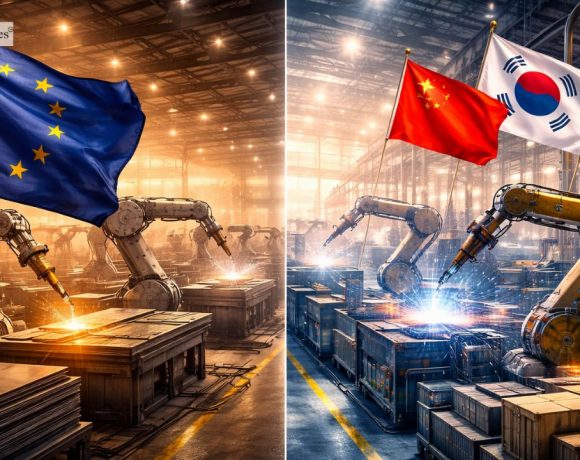
In contrast, Asia’s factory powerhouses closed the year on a stronger footing, supported by a rebound in exports and rising demand for artificial intelligence-related products. Manufacturing activity in Taiwan and South Korea returned to expansion territory in December after months of decline, driven by a surge in new orders. Most Southeast Asian economies maintained solid growth, while China also showed signs of an unexpected turnaround, reinforcing optimism that Asia’s export-driven manufacturing sector may start the new year with renewed momentum.

Pic courtesy: google/ images are subject to copyright
News Trending

A prominent think tank, the Economic and Social Research Institute (ESRI), has projected solid growth for Ireland’s domestic economy in the next couple of years, driven by decreasing inflation and rising wages. They anticipate a 2.3% growth in modified domestic demand (MDD) for this year, followed by a 2.5% increase next year. MDD is a metric that filters out the influence of multinational corporations on Ireland’s economy. In 2023, MDD only saw a modest 0.5% growth due to factors like inflation and higher interest rates dampening spending and investment.

Despite a strong post-pandemic recovery, Ireland’s economic momentum slowed notably in 2023, partly due to increased inflation which hindered household finances. The ESRI noted a lack of real pay growth during 2022 and 2023. Real pay, adjusted for inflation, is a key indicator of changes in living standards. Both the ESRI and Ireland’s Central Bank anticipate an increase in real pay this year.

Traditionally, Gross Domestic Product (GDP) serves as the primary measure of economic performance; however, Ireland’s GDP is heavily skewed by multinational activities. Official data indicated a 3.2% contraction in Irish GDP in 2023. Usually, Irish GDP overestimates economic growth, but recent trends have shown the opposite, partly due to decreased sales and exports from US pharmaceutical companies’ Irish operations post-pandemic. The ESRI anticipates a recovery in Irish GDP over the next two years, driven by global trade improvements.

The ESRI also underscored the pressing need for Ireland to address well-documented infrastructure challenges, particularly in areas like housing, renewable energy, and public transport. Notably, plans for an underground rail link connecting Dublin Airport to the city center have reached the public planning hearings stage after more than two decades since the project’s inception.

Picture Courtesy: Google/images are subject to copyright

News Trending

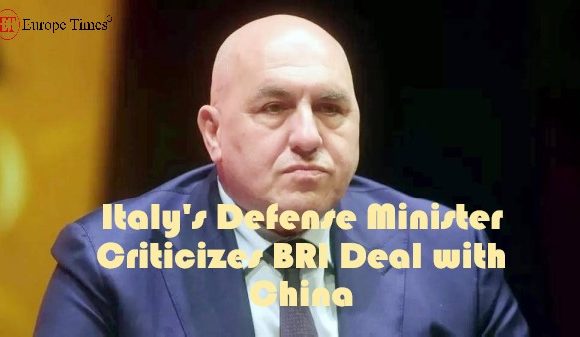
Italy’s Defense Minister, Guido Crosetto, criticized the country’s decision to join China’s Belt and Road Initiative (BRI), calling it “improvised and atrocious.” Crosetto claimed that the initiative had not effectively boosted Italy’s exports, making China the primary beneficiary.

In 2019, Italy became the first developed economy to join the BRI, a move that was met with criticism from its Western allies. The BRI aims to connect China with Europe and other regions through infrastructure projects, but critics view it as a means for China to expand its influence.

Crosetto expressed the need to find a way to withdraw from the BRI without damaging relations with Beijing. Prime Minister Giorgia Meloni had previously mentioned the possibility of talks with China about potential withdrawal. The deal is set to be automatically renewed in March 2024 unless Italy formally requests to withdraw by December of this year.

China has been actively campaigning to persuade Italy to renew the agreement, emphasizing the mutually beneficial cooperation and fruitful results achieved through the BRI.

Picture Courtesy: Google/images are subject to copyright