
featured News

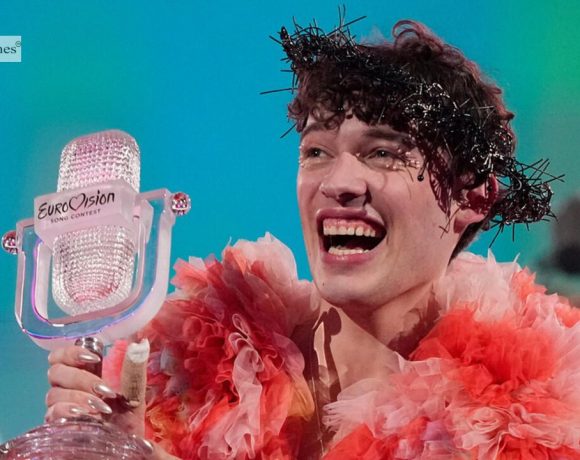
Swiss singer Nemo, the first non-binary performer to win Eurovision in 2024, has announced they are returning their trophy in protest against Israel’s continued participation in the contest. Nemo cited a “clear conflict” between Israel’s involvement and Eurovision’s stated values of “unity, inclusion and dignity,” referencing a UN report on the situation in Gaza. The 26-year-old shared a video placing the trophy in a box to be sent back to the European Broadcasting Union (EBU) headquarters in Geneva.

The announcement follows growing tensions over Israel’s participation, which led five countries—Iceland, Spain, Ireland, Slovenia, and the Netherlands—to declare they will boycott next year’s event. Eurovision organizers expressed sadness over Nemo’s decision but emphasized respect for their stance. The singer clarified that their protest is aimed at the political use of Eurovision rather than individual artists.

Nemo’s decision highlights the ongoing controversies surrounding the competition, including voting disputes and allegations of political influence. While Israel has welcomed its continued inclusion as a symbol of solidarity, the boycotts and protests mark the biggest crisis in Eurovision’s history, with next year’s 70th anniversary edition planned in Vienna amid heightened scrutiny.

Pic courtesy: google/ images are subject to copyright
News Trending

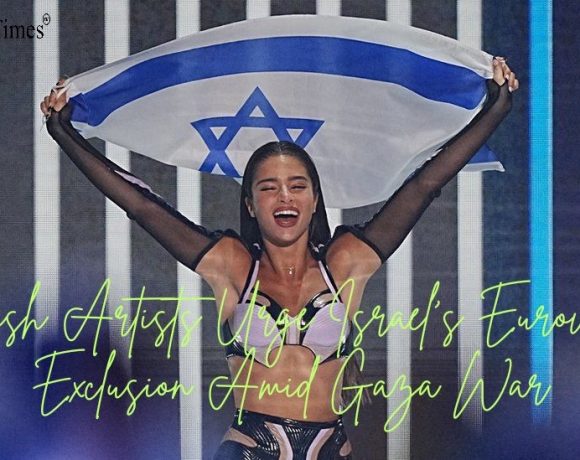
Over 1,400 Finnish music industry professionals have signed a petition urging the exclusion of Israel from the Eurovision Song Contest due to alleged “war crimes” in Gaza. They are also calling for Finland to withdraw from the competition if Israel is not banned. The petition highlights concerns about Israel participating in Eurovision to enhance its image, and it follows similar demands made by Icelandic musicians to their broadcaster Rúv.

Yle, the Finnish broadcaster, is currently monitoring the stance of the European Broadcasting Union (EBU), the organizer of Eurovision. Signatories accuse Yle of double standards, pointing to its prompt call for a ban on Russia from the 2022 contest. Yle’s response suggests that the situation in Israel and Gaza is not considered equivalent to the inter-state aggression seen in the Russia-Ukraine conflict, according to Ville Vilén, a Yle representative.

The EBU has affirmed Israel’s participation in Eurovision, emphasizing that the event is for broadcasters, not governments, and that Israel’s public broadcaster, Kan, complies with all competition rules. Yle plans to engage with the petition’s authors, and the EBU has previously stated that Eurovision is a non-political event, with Israel’s participation spanning 50 years.

This year’s Eurovision is scheduled to take place in Malmö, Sweden, and the UK will be represented by pop star Olly Alexander. Alexander faced criticism for endorsing a statement accusing Israel of genocide, with Israel dismissing the arguments as “absurd” and attributing them to anti-Israel bias. The Gaza conflict, mentioned in the context of the petition, has resulted in a significant loss of lives, displacement, and humanitarian challenges in the region.

Picture Courtesy: Google/images are subject to copyright