featured News Trending

Russia has launched a new recruitment drive aimed at university students, offering lucrative financial packages to join its growing drone units involved in the Ukraine conflict. Universities across the country are promoting these opportunities, highlighting benefits such as academic leave, free accommodation, and substantial salaries. Officials say the initiative is part of efforts to strengthen technologically skilled divisions rather than a broader military mobilisation.

The move reflects the increasing importance of drone warfare, with operators and engineers playing a critical role on the battlefield. Institutions like Far Eastern Federal University and others are actively encouraging students to enlist, offering payments that far exceed typical local earnings. While authorities insist participation is voluntary, some reports suggest students may face indirect pressure, though this has not been independently verified.

At the same time, regional authorities are expanding recruitment efforts beyond campuses. In the Ryazan region, companies have been assigned quotas to supply workers for military service, signaling a wider push to sustain troop numbers. Despite ongoing recruitment, Russian officials maintain that enlistment levels remain strong and sufficient for current military needs.

Pic courtesy: google/ images are subject to copyright

featured News Trending

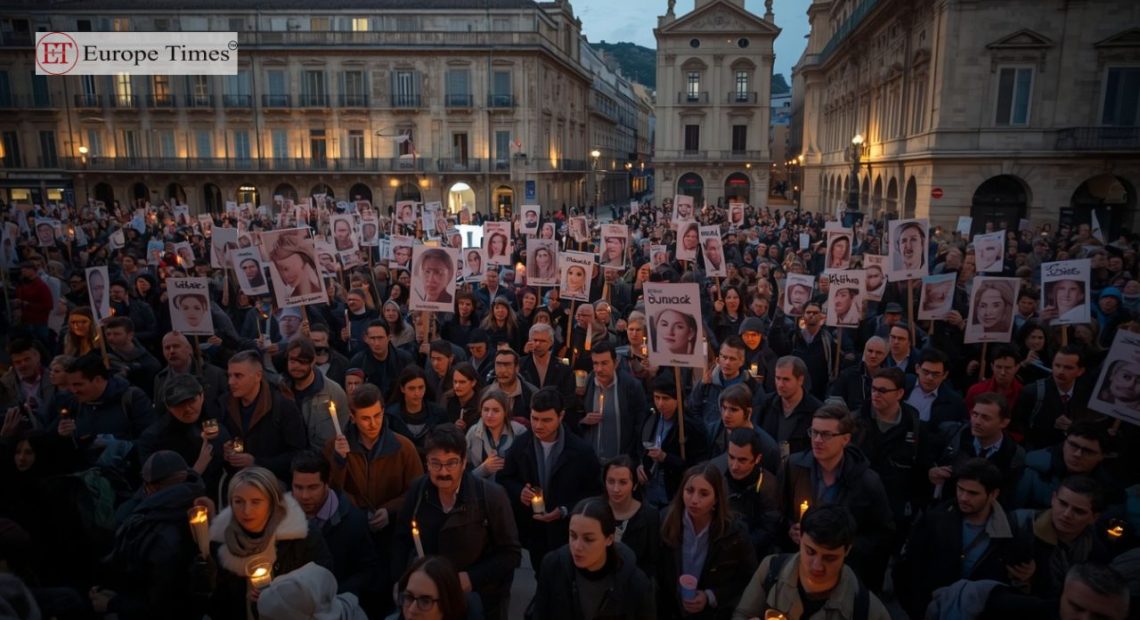
Relatives of the 57 victims killed in Greece’s deadliest train disaster gathered in large numbers at a courtroom in Larisa as the long-awaited trial officially resumed. Many families struggled to enter the overcrowded venue, with some saying they were “packed like sardines” while others were unable to clearly follow proceedings. The crash, which occurred in February 2023 near Tempi, involved a head-on collision between a passenger train travelling from Athens to Thessaloniki and a freight train, killing mostly young students.

The tragedy, widely referred to in Greece as the “Tempi crime,” has become a symbol of alleged negligence and systemic failures within the country’s railway system. Thirty-six defendants, including railway officials and a station master accused of failing to prevent the collision, are on trial in a case expected to last years and involve hundreds of witnesses. Families argue the disaster could have been avoided if safety upgrades funded by the European Union had been implemented on time.

Public anger intensified after the crash site was cleared within days, raising accusations of a cover-up, which authorities deny. Despite nationwide protests and political pressure, no politicians are among the accused, adding to the frustration of victims’ relatives seeking accountability. With thousands of pages of evidence and hundreds of lawyers involved, the trial is expected to be one of the most complex legal proceedings in Greece’s modern history.

Pic courtesy: google/ images are subject to copyright

featured News Trending

Intel has announced plans to spend $14.2 billion to repurchase the 49% stake in its Ireland semiconductor manufacturing facility that it previously sold to Apollo Global Management. The move will restore full ownership of the Leixlip-based plant as the company strengthens its financial position and benefits from rising demand for processors driven by artificial intelligence growth. Following the announcement, Intel’s shares surged more than 10%.

Apollo had acquired the stake in 2024 for $11.2 billion, providing Intel with crucial funding during a period of financial pressure as it expanded manufacturing operations in Europe and the United States. Since then, the chipmaker has undergone restructuring under CEO Lip-Bu Tan, including cost cuts and asset sales, alongside major investments from partners and government support aimed at reviving its competitiveness in the semiconductor market.

Intel said the buyback will be financed through existing cash reserves and about $6.5 billion in new debt, with expectations that the deal will improve profitability and credit strength from 2027 onward. The Ireland facility, known as Fab 34, produces advanced chips using Intel 4 and Intel 3 technologies, and the company is now focusing on developing its next-generation 18A manufacturing process to expand future production and potential external partnerships.

Pic courtesy: google/ images are subject to copyright

featured News

Global pharmaceutical companies are delaying the launch of new medicines in Europe as they navigate pricing uncertainties driven by U.S. policy changes under President Donald Trump. The U.S. government has been pushing to lower prescription drug costs by linking them to prices in other developed markets, particularly Europe, through a “most-favoured-nation” pricing model. As a result, drugmakers are hesitating to introduce products in lower-priced European markets to avoid impacting their pricing power in the significantly larger U.S. pharmaceutical market.

Industry leaders and data indicate a noticeable slowdown in European drug launches since the policy shift. According to research by GlobalData, new medicine launches in Europe dropped by around 35% in the ten months following the U.S. executive order compared to the previous period. Executives, including those from European Federation of Pharmaceutical Industries and Associations, say companies are increasingly cautious, with some postponing or reassessing launch strategies amid ongoing uncertainty about how U.S. pricing benchmarks will evolve.

The ripple effects are also being felt across European healthcare systems, where governments traditionally negotiate lower drug prices. Some companies have already delayed or withdrawn products from certain markets, while others prioritize launching in the U.S. first. Experts warn that this trend could widen the gap in access to innovative treatments between regions, as pharmaceutical firms adopt a more strategic, wait-and-watch approach in response to shifting global pricing dynamics.

Pic Courtesy: google/ images are subjet to copyright

featured News Trending

Inflation increased to at least 2.5% across four German states in March, driven largely by rising energy prices linked to the ongoing U.S.-Israeli conflict with Iran. In North Rhine-Westphalia, Germany’s most populous state, annual inflation climbed to 2.7% from 1.8% in February. Similar increases were recorded in Bavaria, Baden-Wuerttemberg and Lower Saxony, signalling a likely nationwide rise in inflation figures expected later in the day.

Economists surveyed by Reuters predict Germany’s harmonised inflation rate will reach 2.8% in March, up from 2.0% the previous month. Analysts warn that while energy costs are currently the main driver, broader price increases may follow. Berenberg Bank chief economist Holger Schmieding said higher transport costs and potential fertiliser shortages could push food prices higher, with inflation possibly exceeding 3% if the conflict continues.

A survey by the Ifo institute showed German companies increasingly expect to raise prices due to rising production and transport expenses. The data comes ahead of eurozone inflation figures, with markets anticipating further monetary tightening by the European Central Bank. Investors now expect up to three interest rate hikes this year as policymakers respond to mounting inflation pressures.

Pic courtesy: google/ images are subject to copyright

featured News Trending

Three paintings by renowned French artists Pierre-Auguste Renoir, Paul Cézanne and Henri Matisse have been stolen from a museum in northern Italy, police confirmed on Monday. The artworks, estimated to be worth around $10 million in total, were taken from the Fondazione Magnani Rocca near the city of Parma during the night of March 22–23.

According to Italy’s Carabinieri police, thieves forced entry through the museum’s main entrance and stole Cézanne’s Tasse et Plat de Cerises, Renoir’s Les Poissons, and Matisse’s Odalisque sur la Terrasse. Italian broadcaster Rai reported the value of the stolen works at about 9 million euros, though authorities have not officially confirmed the figure.

Museum officials said the robbery was completed in less than three minutes, suggesting a highly planned operation. The Fondazione Magnani Rocca houses a prestigious private collection assembled by late musicologist Luigi Magnani, featuring masterpieces by artists including Titian, Francisco Goya, Claude Monet, Peter Paul Rubens and Giorgio Morandi.

Pic courtesy: google/ images are subject to copyright

featured News Trending

Russia has expelled a British diplomat, accusing him of engaging in economic espionage and activities threatening national security. The Federal Security Service (FSB) said the diplomat, a second secretary at the British embassy in Moscow, was involved in intelligence-gathering efforts, including attempts to obtain sensitive economic information through informal meetings with Russian experts.

The move comes amid heightened tensions between Moscow and London during the ongoing Ukraine conflict, with Russia increasingly portraying Britain as a primary adversary. Russian authorities warned citizens to avoid contact with British diplomats, cautioning that such interactions could lead to serious legal consequences. The Russian Foreign Ministry also lodged an official protest with Britain’s diplomatic mission.

Britain has not immediately responded to the latest expulsion, though it has previously rejected similar accusations as baseless. Diplomatic relations between Russia and Western nations remain strained, with increased surveillance, travel restrictions on diplomats, and mutual claims of harassment. Western officials describe diplomatic postings in Moscow as increasingly difficult amid rising geopolitical tensions.

Pic courtesy: google/ images are subject to copyright

featured News Trending

Global airlines are raising ticket prices and reducing flight capacity as soaring oil prices sharply increase operating costs, creating uncertainty for the industry’s profitability. The sudden spike in jet fuel prices, triggered by geopolitical tensions in the Middle East, has forced carriers to rethink pricing strategies and route planning, even as higher travel costs threaten to weaken consumer demand.

Before the conflict-driven fuel surge, airlines had projected record global profits of $41 billion in 2026. However, the doubling of jet fuel prices has disrupted those expectations, prompting airlines such as United Airlines, Air New Zealand, and SAS to introduce fare hikes, fuel surcharges, and capacity cuts. Analysts warn airlines face a difficult balance — raising fares to offset costs while potentially lowering prices later to stimulate demand if travelers cut back on spending.

Despite record passenger traffic in recent years, supply-chain issues and delayed aircraft deliveries limit airlines’ ability to reduce costs through fleet upgrades. Low-cost carriers may be hit hardest as price-sensitive travelers shift to cheaper transport alternatives. Experts say financially stronger airlines with solid balance sheets are better positioned to withstand the ongoing oil shock, while weaker carriers could face mounting financial pressure.

Pic courtesy: google/ images are subject to copyright

featured News Trending

British Finance Minister Rachel Reeves will urge G7 counterparts to avoid unilateral trade measures while the Iran war continues, warning that such actions could threaten global energy security. Speaking at a meeting with finance and energy ministers, she stressed that collective action is crucial to maintain resilience and avoid shifting pressure onto partners.

Reeves emphasized that protectionism and new trade barriers could disrupt supply chains, raise costs, and exacerbate the economic fallout from the conflict. She called for cooperation to ensure the flow of energy and goods and to help reduce bills over time.

The ongoing war in Iran, initiated by the U.S. and Israel on February 28, has already caused thousands of casualties and triggered unprecedented disruptions to global energy markets, affecting economies worldwide.

Pic courtesy: google/ images are subject to copyright

featured News Trending

Italy’s market regulator Consob has ruled that all three slates of nominees submitted for the board of Monte dei Paschi di Siena (MPS) are fully legitimate, according to a source familiar with the matter. The decision follows a complaint filed by MPS’s current board over a slate presented by small investor PLT Holding, which aims to secure another term for CEO Luigi Lovaglio.

Consob, working closely with the European Central Bank, dismissed the complaint and confirmed that none of the candidate lists violate regulations. The regulator also clarified that its decision is final, aiming to remove uncertainty after MPS previously described its discussions with authorities as preliminary.

The ruling comes ahead of the April 15 shareholder vote to appoint a new board and CEO, with governance advisers preparing voting recommendations. While PLT supports Lovaglio’s continuation, the current MPS board is backing Fabrizio Palermo, CEO of utility company Acea, and a third slate has been submitted by fund manager association Assogestioni.

Pic courtesy: google/ images are subject to copyright