
featured News Trending

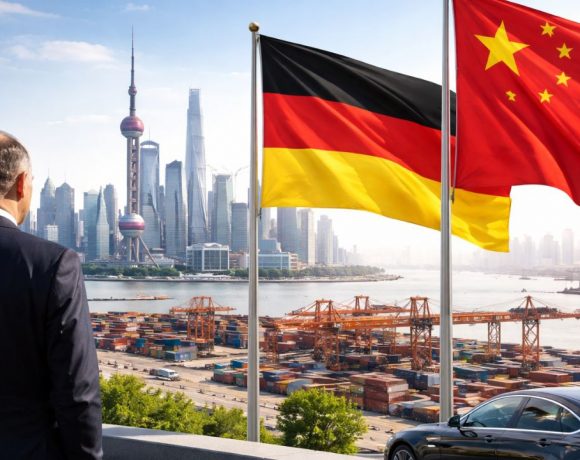
German Chancellor Friedrich Merz has embarked on his first official visit to China, leading a delegation of senior German business leaders, including heads of Volkswagen, BMW, and Mercedes-Benz. The trip aims to strengthen economic ties as Germany faces growing trade deficits and competitive pressures from China’s booming electric vehicle industry. Merz’s visit comes amid concerns over supply chain vulnerabilities and global economic rivalry.

China, Germany’s largest trading partner in 2025, has reversed years of trade surpluses, leaving Germany with a deficit of nearly €90 billion. German officials warn that export controls, overcapacity, and rising competition from Chinese firms have created a challenging environment for German manufacturers, prompting calls for Merz to negotiate better terms for industry.

During his visit, Merz is scheduled to meet President Xi Jinping and Prime Minister Li Qiang, signing economic agreements and visiting major facilities, including a Mercedes-Benz EV plant and Siemens Energy site. The trip reflects Germany’s strategic effort to balance trade relations with China while addressing EU measures protecting local industries from underpriced imports.

Pic courtesy: google/ images are subject to copyright
featured News

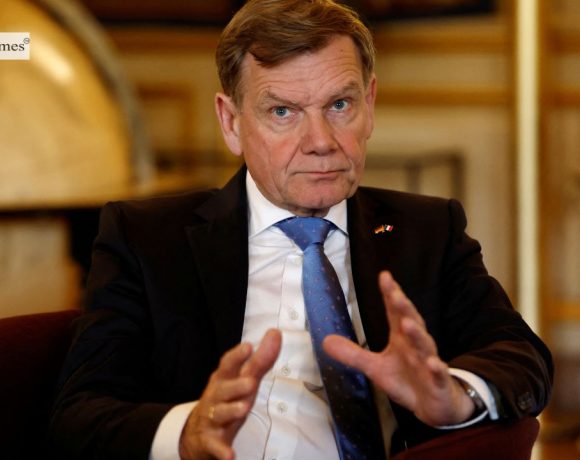
German Foreign Minister Johann Wadephul is visiting China for the first time since assuming office, as Berlin adopts a firmer stance toward Beijing over trade disputes and geopolitical issues, aligning closely with European Union policy. The trip, postponed in October due to China’s lack of engagement, will include meetings with China’s foreign minister, trade minister, and top Communist Party officials. Wadephul emphasized the necessity of “direct, intensive exchange” with China despite sharp differences on global and economic policies.

The discussions will focus on economic relations, including Germany’s increasing concern over China’s restrictions on exports of critical materials such as rare earths and semiconductors. Berlin has recently set up an expert committee to advise parliament on “security-relevant trade relations,” reflecting its push to reduce economic dependence on China. Conservative lawmakers warn that continued unfair trade practices could jeopardize bilateral business ties. Analysts say Germany must balance protecting its own industry while managing relations with its top trading partner.

Wadephul’s visit follows a series of high-level engagements by European leaders, including French President Emmanuel Macron. Alongside trade, the talks will cover key security topics, such as China’s influence over Russia’s war in Ukraine, tensions in the Middle East, and disputes in the South China Sea. Wadephul stressed that China is uniquely positioned to pressure Russia into negotiations that respect Ukraine’s sovereignty, and said Europe expects Beijing to act responsibly in global stability efforts.

Pic courtesy: google/ images are subject to copyright