
featured News Trending

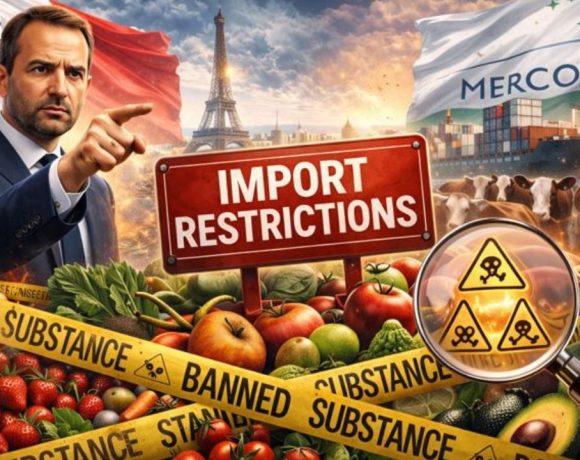
France has announced stricter checks on a range of food imports in response to protests by farmers who argue they face unfair competition from countries with weaker agricultural regulations. The move comes as opposition grows in France to a proposed European Union trade agreement with the South American Mercosur bloc, as well as concerns over livestock disease controls.

Agriculture Minister Annie Genevard said the new measures aim to ensure imported food meets EU standards, particularly regarding the use of banned pesticides and fungicides. France will soon issue a decree suspending imports of products found to contain prohibited substances, including mancozeb, glufosinate, thiophanate-methyl and carbendazim. Fruits and vegetables such as melons, apples, cherries, strawberries, grapes and potatoes will only be sold if they show no traces of these chemicals.

Prime Minister Sebastien Lecornu said any imported product failing to meet these standards would be barred from entering France. While Germany and Spain support the Mercosur deal, critics in France fear it would lead to cheaper imports, especially beef, that do not comply with EU environmental and food safety rules. The government said protecting farmers, public health and fair competition is non-negotiable and urged the European Commission to extend similar rules across the EU.

Pic courtesy: google/ images are subject to copyright
featured News

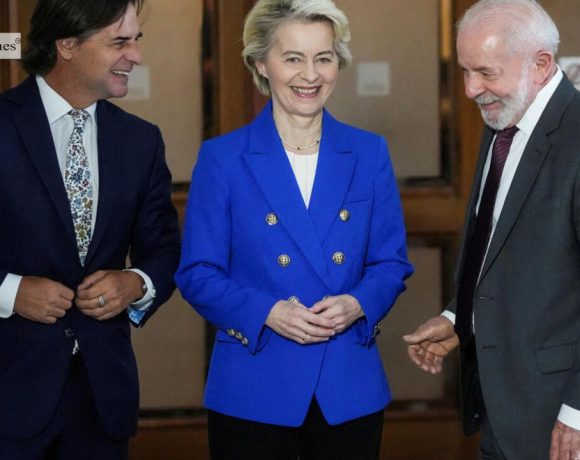
The European Union and Germany are making an urgent push to persuade Italy to support a long-delayed free trade agreement with South America’s Mercosur bloc, warning the deal could collapse if it is not signed soon. The pact, negotiated over 25 years, would be the EU’s largest trade agreement in terms of tariff reductions, but faces resistance from several member states, according to a senior EU lawmaker.

While Germany, Spain and Nordic countries back the agreement, arguing it would boost exports hit by U.S. tariffs and reduce reliance on China for key raw materials, opposition is mounting elsewhere. France and Poland have raised strong objections, citing concerns that cheap agricultural imports—particularly beef—could harm European farmers. With Poland firmly opposed and France seeking delays, attention has shifted to Italy as the decisive swing vote.

European Parliament trade committee chair Bernd Lange said the deal would fail without Italy’s backing, noting high-level talks involving Italy’s prime minister, Germany’s chancellor and the European Commission president. Although Commission President Ursula von der Leyen hopes to sign the deal in Brazil this weekend, approval from EU governments is still required. Lawmakers warn that if the agreement is not finalised this year, Mercosur countries may abandon negotiations and seek partnerships elsewhere.

Pic courtesy: google/ images are subject to copyright