
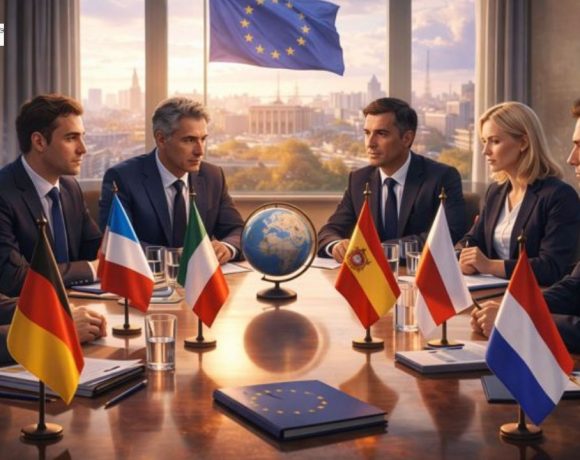
Ministers from six major European economies, including Germany, France, Poland, Spain, Italy, and the Netherlands, pledged to take the lead in advancing projects stalled by the EU’s slow decision-making processes. The virtual meeting followed criticism from the Trump administration over the EU’s lengthy deliberations, with leaders emphasizing the need to strengthen Europe’s competitiveness and defense capabilities amid geopolitical uncertainty. German Finance Minister Lars Klingbeil described the group as a flexible coalition, open to additional countries joining in the future.
While no concrete decisions were made, the ministers agreed to focus on key areas such as creating a capital markets union, enhancing the international role of the euro, coordinating defense investments, and securing critical minerals through joint purchasing and trade partnerships. The discussions underscored the growing emphasis on European sovereignty in light of global challenges from the U.S., Russia, and China. Officials stressed that the initiative would allow faster progress on crucial projects without requiring unanimous agreement from all 27 EU members.
The move reflects a broader push within Europe to adopt a “two-speed” approach, enabling smaller groups of countries to act independently on policy areas where consensus is difficult. German Chancellor Friedrich Merz and French leaders have long advocated for this strategy to accelerate economic and strategic initiatives, including trade deals and energy policies. Polish Finance Minister Andrzej Domański noted that Europe must act faster to respond to ongoing economic and geopolitical changes, signaling a shift toward more agile and pragmatic decision-making within the EU.
Pic courtesy: google/ images are subject to copyright