featured News

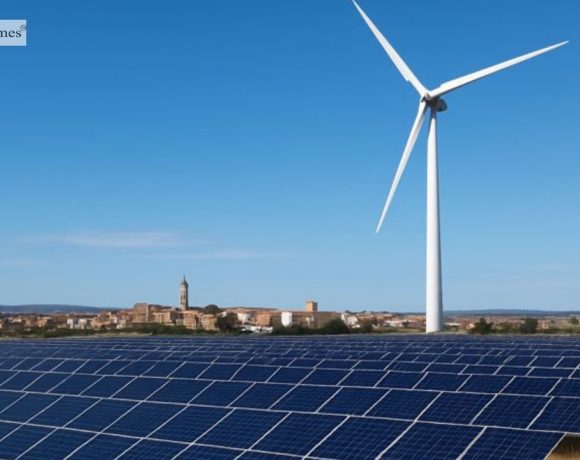
Spain has emerged as one of Europe’s renewable energy leaders, now generating over half of its electricity from wind and solar power. Regions such as Aragón, dotted with wind turbines and solar farms, symbolise this transition. The shift has also attracted major foreign investment, including a €4bn battery factory near Figueruelas backed by China’s CATL and Stellantis, reinforcing Spain’s reputation as a clean energy hub and supporting the government’s goal of sourcing 81% of electricity from renewables by 2030.

However, Spain’s strong commitment to renewables has recently been questioned following a major blackout in April that affected large parts of Spain and Portugal. While opposition leaders blamed an over-reliance on green energy, the government and grid operator Red Eléctrica denied any direct link, citing technical anomalies and unresolved system issues. Despite this, Spain has since leaned more on natural gas, fuelling debate over whether the country’s energy mix is sufficiently balanced.

The controversy has revived calls to rethink plans to shut down Spain’s nuclear power plants between 2027 and 2035. Nuclear industry leaders and opposition parties argue that nuclear energy provides stability alongside renewables, especially when weather-dependent sources fall short. With political uncertainty growing and the possibility of a change in government, Spain’s long-term energy strategy now stands at a crossroads, even as renewable-driven investment continues to transform local economies like Figueruelas.

Pic courtesy: google/ images are subject to copyright
featured News Trending

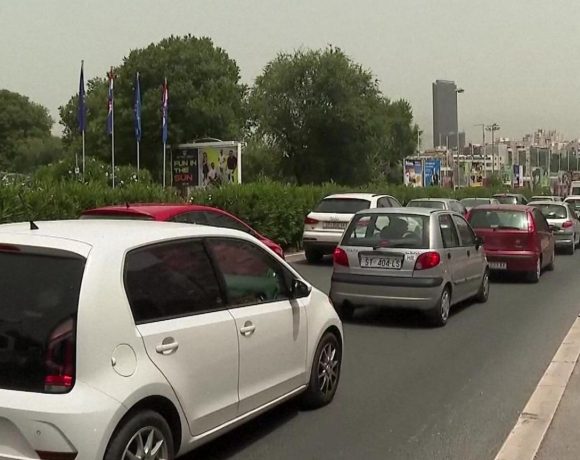
On Friday, four Balkan countries—Albania, Bosnia, Montenegro, and significant parts of the Croatian coast—experienced simultaneous power outages lasting several hours amid a summer heatwave. The blackouts, which began at 13:00 local time (11:00 GMT), were triggered by a surge in power demand as residents used air conditioning to cope with the high temperatures, which approached 40°C.

In Bosnia and Croatia, the outages disrupted traffic lights, leading to transportation chaos in major cities such as Sarajevo and Split. Montenegro’s capital, Podgorica, saw even water pumps cease operation. Power suppliers managed to largely restore electricity by the evening but were still investigating the cause of the failure within the interconnected power systems of the four nations.

The power loss affected Croatia’s tourism sector, with Dubrovnik’s restaurants, pubs, and supermarkets closing and leaving tourists in disarray. Montenegro’s Energy Minister, Sasa Mujovic, attributed the blackouts to a sudden spike in power consumption due to the heat. Reports from Montenegro’s Vijesti TV mentioned a fire in a power transmission line near the Bosnian border, though its connection to the blackouts was unclear.

In Albania, power was restored within half an hour, but officials warned of a high risk of further outages due to continued high energy usage. The western Balkans are transitioning from coal-based energy production, a major source of greenhouse gas emissions, to solar energy. However, industry officials indicate that the aging power infrastructure is not yet fully equipped to handle this shift.

Picture Courtesy: Google/images are subject to copyright