featured News

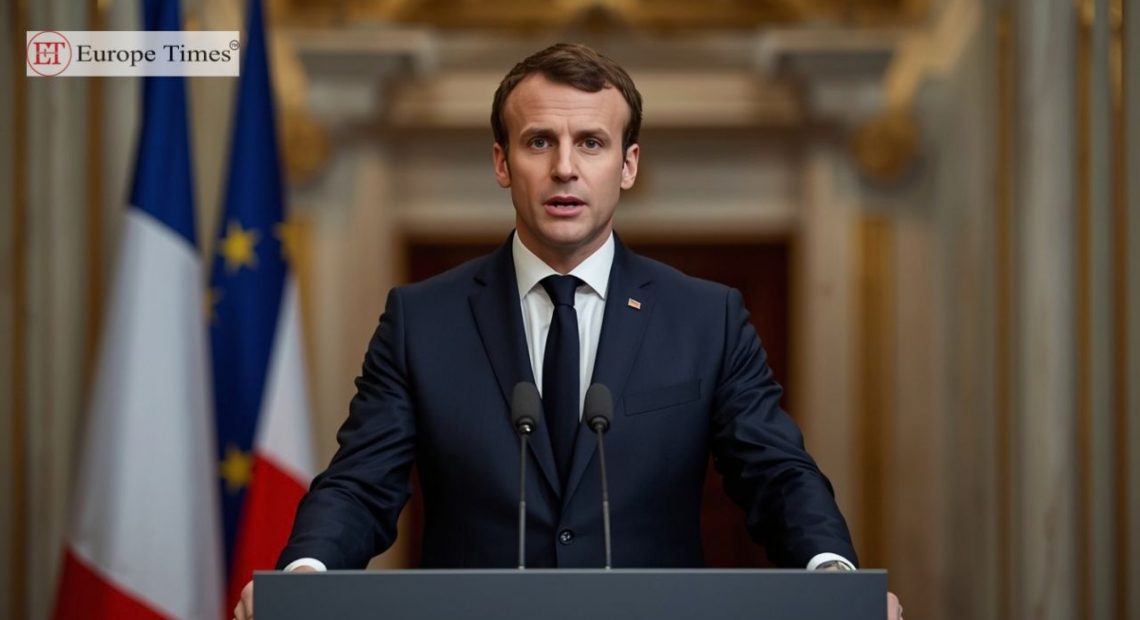
French President Emmanuel Macron reaffirmed that unity between Europe and the United States remains crucial in supporting Ukraine. Speaking during a visit to China, Macron dismissed suggestions that he had questioned Washington’s commitment to Kyiv, insisting there was “no mistrust” and underscoring that transatlantic cooperation is vital on the issue.

Macron welcomed the peace efforts led by the U.S. but highlighted that Europe must play a leading role alongside Washington. He noted that the United States “needs Europeans to lead these peace efforts,” reinforcing his stance that a collaborative approach is required to secure a sustainable resolution to the conflict.

The comments followed a report published by Germany’s Spiegel, alleging that Macron and German Chancellor Scholz were skeptical of U.S. diplomatic efforts. Macron strongly denied the claims, stating that an enduring peace would only be possible through joint efforts by Europe, the United States, Canada, Australia and Japan. “There is no scenario,” he said, “where peace in Ukraine is achieved without shared responsibility.”

Pic courtesy: google/ images are subject to copyright

featured News

French President Emmanuel Macron announced on Thursday a new voluntary youth military service set to begin by mid-2026, aiming to strengthen the nation’s defense in the face of “accelerating threats” worldwide. Open to 18- and 19-year-olds, the program will last 10 months, offer pay, and initially engage 3,000 participants on French soil, expanding to 10,000 by 2030. The initiative is part of a broader European trend, aligning France with countries like Germany and Denmark, and will cost an estimated 2 billion euros ($2.32 billion).

Macron emphasized that the program is not a return to conscription, which was abolished by Jacques Chirac in 1996, but rather a “hybrid army model” combining national service youth, reservists, and the active military. Participants could integrate into civilian life, continue as reservists, or join the armed forces full-time. France also plans to expand its pool of reservists to 100,000 by 2030, up from around 47,000 today, with total military strength reaching approximately 210,000.

The announcement comes amid controversy sparked by comments from General Fabien Mandon, France’s armed forces chief, who suggested that France may need to endure losses in the face of Russian aggression. Macron clarified that the youth program would not involve sending French volunteers to Ukraine, while political figures defended Mandon’s blunt remarks as a necessary warning to the public.

Pic Courtesy: google/ images are subject to copyright

featured News

French Prime Minister Sebastien Lecornu has pressed lawmakers to pass the 2026 national budget before the end of the year, following the lower house’s rejection of key tax provisions. The bill now moves to the Senate, where a review will begin immediately, amid rising political tensions within France’s fragmented parliament.

Lecornu said there is still time to reach consensus and called on opposition groups to avoid blocking the legislative process. With President Emmanuel Macron’s minority government facing intense pressure from both the far right and far left, any setback could trigger a no-confidence vote that may topple the prime minister. He said he would meet party leaders in the coming days to negotiate a compromise.

Once the Senate debates the proposal, a joint committee will attempt to reconcile differences between the two chambers before a final vote in the lower house. Lecornu stressed that the government is determined to keep next year’s deficit below 5% of GDP, despite major revisions expected to the initial plan, which includes over €30 billion in deficit reduction primarily through spending cuts and selective tax increases.

Pic Courtesy: google/ images are subject to copyright

featured News

As France marks ten years since the deadly Bataclan attacks, the nation faces renewed reminders of the enduring jihadist threat. Authorities have arrested Maëva B, a 27-year-old French convert linked to Salah Abdeslam, the only surviving attacker from November 2015, on suspicion of plotting a violent act. The arrest underscores the persistence of home-grown extremism, even as large-scale terror plots have diminished following the fall of the Islamic State.

The coordinated Paris attacks on 13 November 2015 killed 130 people and wounded hundreds more, becoming a defining moment in France’s modern history. Since then, intelligence agencies have strengthened counter-terror capabilities, yet experts warn of “ambient jihadism” — a decentralized, ideology-driven threat fueled by social networks, political polarization, and global conflicts like the Israel-Gaza war.

Thursday’s national commemorations include tributes at attack sites, the opening of a memorial garden, and the illumination of the Eiffel Tower in France’s tricolour. Survivors continue to share how their lives were forever altered, while Abdeslam’s offer to participate in “restorative justice” has drawn outrage from victims’ families, who insist terrorism cannot be treated as an ordinary crime.

Pic Courtesy: google/ images are subject to copyright

featured News

Almost a year after his arrest at Algiers airport, French-Algerian novelist Boualem Sansal, 81, has been pardoned by the Algerian presidency and allowed to leave the country. Sansal, who has been at the center of a tense diplomatic row between Paris and Algiers, departed for Germany on a military plane to receive medical treatment for prostate cancer.

The release came after German President Frank-Walter Steinmeier directly appealed to Algerian President Abdelmadjid Tebboune, leveraging his trusted relationship with the Algerian leader. French President Emmanuel Macron thanked Tebboune for the “act of humanity,” highlighting France’s respectful and calm approach in securing Sansal’s freedom.

Sansal had been sentenced to five years in prison in July for remarks deemed to undermine national unity, having long been critical of the Algerian government. His pardon was granted on humanitarian grounds due to his advanced age and fragile health, overriding earlier unsuccessful appeals from France.

Pic Courtesy: google/ images are subject to copyright

featured News

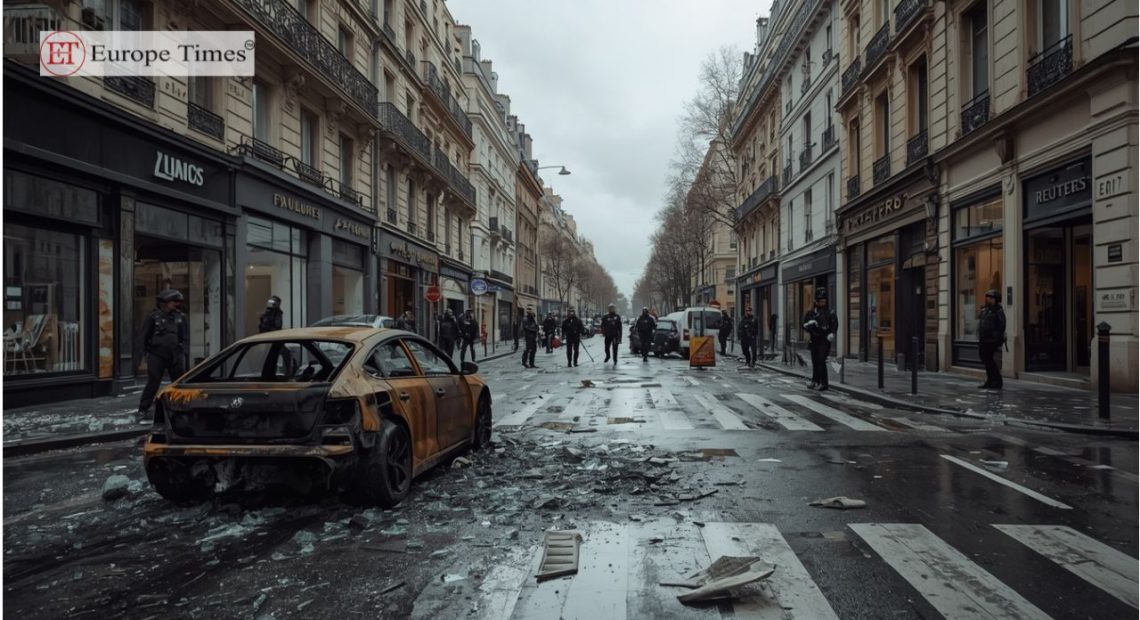
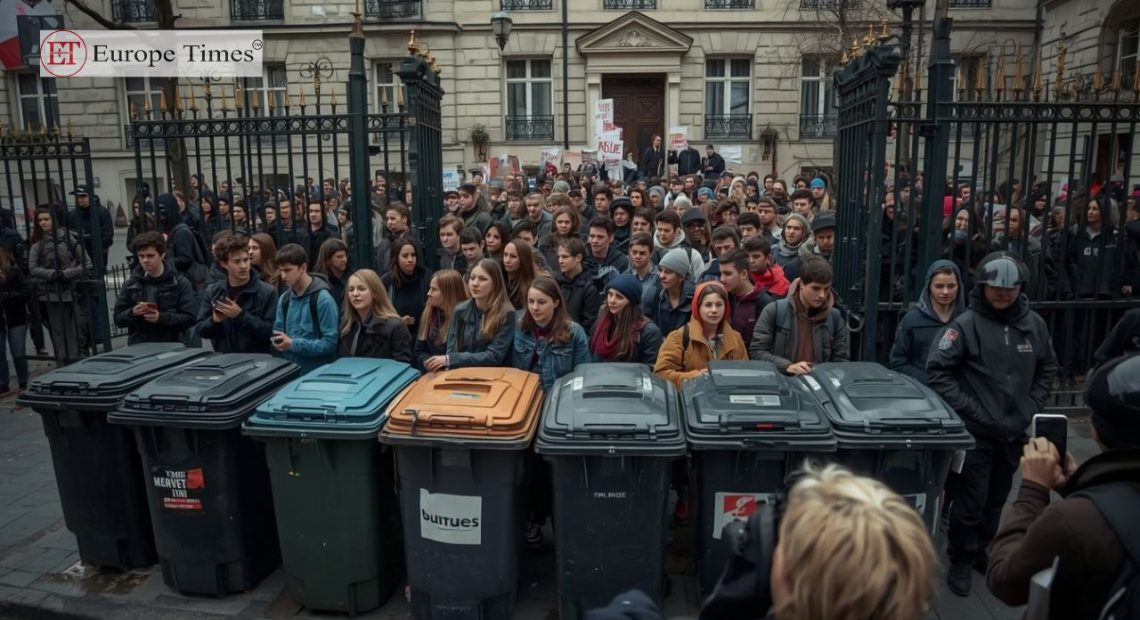
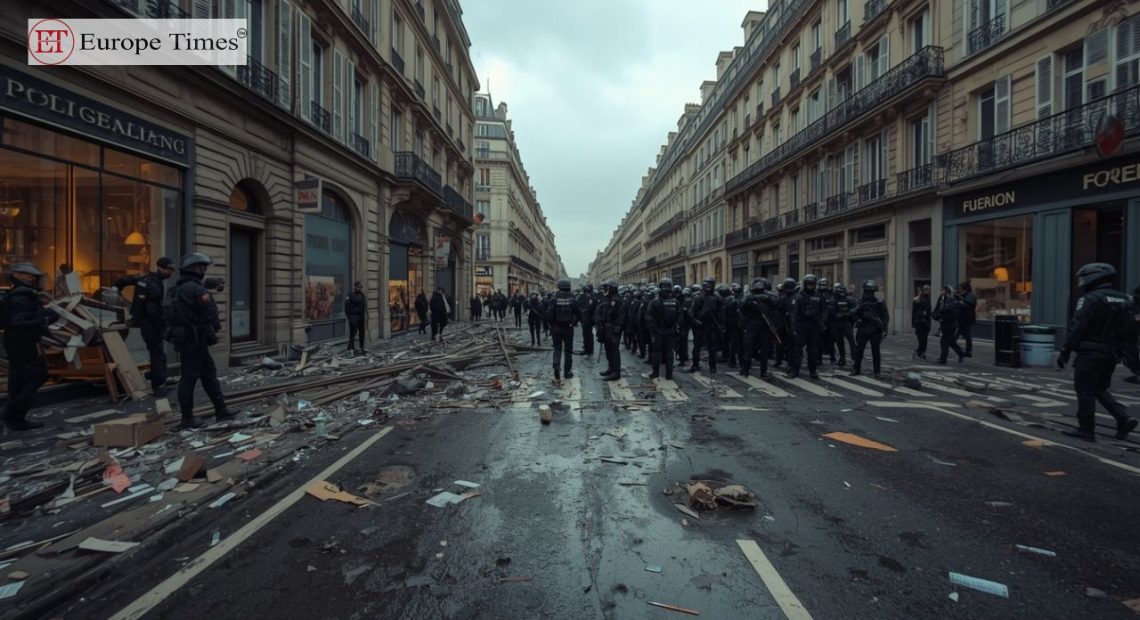
Hundreds of thousands of people across France took to the streets on Thursday in nationwide protests against looming austerity measures, demanding President Emmanuel Macron and his new Prime Minister Sebastien Lecornu scrap planned budget cuts. Teachers, train drivers, hospital staff, and pharmacists joined the strikes, while students blocked dozens of high schools, calling for more public spending and higher taxes on the wealthy.

Union leaders warned the government to heed the anger on the streets, with CGT chief Sophie Binet declaring, “It’s the streets that must decide the budget.” The Interior Ministry had anticipated up to 800,000 demonstrators, and major disruptions were reported in schools and regional train services. Sporadic clashes broke out in cities including Nantes and Lyon, where police used tear gas and several people were injured.

Macron’s administration faces mounting pressure between protesters demanding social fairness and investors alarmed by France’s deficit, which nearly doubled the EU’s ceiling last year. Lecornu, who replaced ousted prime minister François Bayrou after his failed €44 billion budget squeeze plan, has signaled openness to compromise but must navigate a divided parliament. Over 80,000 security personnel were deployed nationwide, with police confirming more than 90 arrests by evening.

Pic Courtesy: google/ images are subject to copyright

featured News

French President Emmanuel Macron has announced plans to name a new prime minister in the coming days following the resignation of Michel Barnier after a no-confidence vote in parliament. The unprecedented move, which saw Barnier ousted just three months into his tenure, highlights the political deadlock in France’s parliament, where left, center, and far-right blocs are deeply divided. Macron criticized opposition parties for forming an “anti-republican front” but vowed to remain in office until the end of his mandate in 2027.

Talks are underway with political leaders to form a new government, with the Socialist Party showing openness to a fixed-term administration while rejecting the continuation of “Macronism.” The no-confidence vote against Barnier was triggered by his use of special powers to push through a budget, a decision that united the far-right National Rally and the left-wing New Popular Front. Macron acknowledged public criticism over his earlier decision to call snap elections, which led to the current parliamentary impasse.

The political uncertainty looms as France prepares for the high-profile reopening of Notre-Dame Cathedral this weekend, a milestone marking its reconstruction after the devastating 2019 fire. Macron cited the event, along with the successful hosting of the 2024 Olympics, as symbols of France’s resilience. Speculation is rife over who will take the reins as prime minister, with Defense Minister Sébastien Lecornu and centrist François Bayrou among the potential candidates.

Pic Courtesy: google/ images are subject to copyright

featured News

French President Emmanuel Macron has firmly rejected the possibility of forming a government led by the left-wing New Popular Front (NFP), which emerged as the largest party in last month’s legislative elections. Macron emphasized that France requires institutional stability and expressed doubts about the NFP’s ability to secure a confidence vote in Parliament. The NFP, which has proposed civil servant Lucie Castets as its prime ministerial candidate, responded by calling for street protests and Macron’s impeachment.

In the fragmented political landscape, no single group has achieved a majority, with the NFP securing over 190 seats, Macron’s centrist Ensemble alliance 160 seats, and the far-right National Rally (RN) 140 seats. As a result, France has been led by a caretaker government during the Paris Olympics. Macron has indicated his intention to continue consultations with party leaders to resolve the impasse, urging the left to collaborate with other political forces.

The NFP’s reaction has been notably severe, with accusations of an “anti-democratic coup” and warnings of a “serious crisis” from its leaders. Despite the pressure, Macron has not mentioned the hard-left France Unbowed movement (LFI), a significant component of the NFP. The NFP’s call for Castets to be considered for prime minister remains unfulfilled, as Macron and other political figures, including RN leaders and potential candidates like Bernard Cazeneuve and Xavier Bertrand, navigate the complex political scenario.

Pic Courtesy: google/ images are subject to copyright

featured News Trending

A lavish lobster dinner for King Charles cost the French president’s office €475,000 (£400,000), according to a report from the country’s audit office. During President Emmanuel Macron’s September visit, guests enjoyed a menu featuring blue lobster, crab, and a variety of cheeses.

The Cour des Comptes, in its annual financial report, highlighted that increased spending on state receptions had left their budget €8.3 million in deficit. It emphasized the need for the Elysée to make “significant efforts” to restore financial balance.

Out of the total dinner cost, more than €165,000 was allocated to catering, with an additional €40,000 spent on drinks. The star-studded guest list included actor Hugh Grant, football manager Arsène Wenger, and Rolling Stones’ Mick Jagger, who were served blue lobster and crab, followed by Bresse poultry with mushroom gratin. A cheese course featured French Comté and British Stichelton blue, and dessert included a rose macaroon cookie filled with rose petal cream, raspberries, and lychees.

This extravagant banquet at the Palace of Versailles was part of King Charles’ three-day state visit to France, intended to strengthen the alliance between the two nations. Originally scheduled for March, the visit was delayed due to widespread protests over pension reforms.

The report also noted a July 2023 banquet for Indian Prime Minister Narendra Modi at the Louvre, which cost €412,000. As a result of the increased spending, including state receptions, overall expenditures rose by 14% compared to the previous year, while revenue for the presidency increased by only 6.5%.

Picture Courtesy: Google/images are subject to copyright

featured News

French President Emmanuel Macron has announced that he will postpone naming a new government until after the Paris Olympics conclude on August 11. This decision follows a proposal from the New Popular Front (NFP), a left-wing coalition that emerged as the largest group in France’s parliament after recent elections. The NFP has put forward Lucie Castets, a relatively unknown civil servant, as their candidate for prime minister.

Macron stated that appointing a new prime minister before mid-August would “create disorder” amid the ongoing Olympics, which start with an opening ceremony in central Paris on Friday. The left-wing coalition has criticized Macron’s delay, accusing him of undermining the outcome of the recent legislative elections.

Macron had previously accepted the resignation of Prime Minister Gabriel Attal due to significant losses for their centrist party in the elections. Attal and his team are continuing in a caretaker role until a new government is formed.

In France, the president is expected to appoint a prime minister who can secure a majority in the National Assembly. Currently, no single party holds a majority, but the NFP, with at least 182 of 577 seats, is in a strong position. The NFP’s choice, Lucie Castets, a 37-year-old economist with a background in finance and public services rather than politics, was presented just before Macron’s scheduled television interview.

Macron emphasized that the key issue is not the specific nominee but the formation of a majority in the Assembly. He plans to appoint a prime minister with the widest possible support. The delay has provoked a strong reaction from NFP members, who accuse Macron of attempting to disregard the results of the elections and deny the will of the people.

Picture Courtesy: Google/images are subject to copyright