
featured News Trending

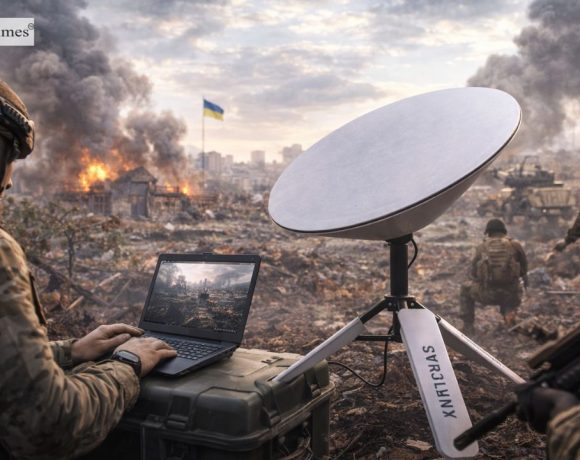
A decision by Elon Musk’s company SpaceX to block Russian forces from accessing its Starlink satellite internet service appears to have disrupted Moscow’s frontline operations in Ukraine. The move, reportedly requested by Ukraine’s defence minister Mykhailo Fedorov, has limited Russian troops’ ability to coordinate drone strikes and battlefield communications. Ukrainian soldiers say the change has reduced assaults and weakened Russia’s offensive capacity, particularly along parts of the southern and eastern front.

Starlink had been widely used by both sides during the four-year war, enabling real-time drone guidance and secure communications. Since the shutdown on 1 February, only terminals approved by Kyiv remain active, forcing Russian units to seek alternative systems. Ukrainian volunteer group InformNapalm claims it identified more than 2,400 Russian-linked terminals through a phishing operation, with several later targeted near the front lines. Ukraine’s Security Service (SBU) has also warned citizens against collaborating in illegal Starlink registrations, calling such actions high treason.

While some Ukrainian troops report little immediate change, others describe improved opportunities to intercept communications and push back Russian forces, especially near contested areas like Pokrovsk. Analysts say the disruption could limit Russia’s ability to conduct long-range drone strikes and hamper coordination, though Moscow insists the impact is minimal. Ukrainian officials believe they have a limited window to exploit the setback before Russian forces adapt, potentially strengthening Kyiv’s position both on the battlefield and in any future negotiations.

Pic courtesy: google/ images are subject to copyright
featured News Trending

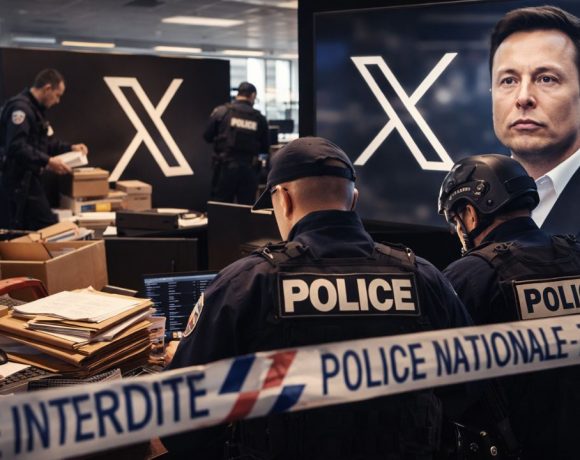
French authorities have raided the Paris office of Elon Musk’s social media platform X as part of an expanding cybercrime investigation. Prosecutors have also summoned Musk and former CEO Linda Yaccarino to provide evidence in April. The probe, which began in early 2025, initially focused on allegations of algorithm misuse and fraudulent data extraction, and could further strain relations between Europe and the United States over regulation of big technology firms and free speech.

The investigation has now widened to include complaints related to X’s artificial intelligence chatbot Grok. Authorities are examining potential involvement in the circulation of illegal content, including sexually explicit deepfake images and violations of image rights. The probe is being conducted by the Paris prosecutor’s cybercrime unit in coordination with French police and Europol. Musk had previously denied the allegations, describing the investigation as politically motivated.

Officials said the inquiry aims to ensure that X complies with French laws while operating in the country. The summons issued to Musk and other company staff is mandatory, though enforcement may be difficult for individuals residing outside France. Meanwhile, the Paris prosecutor’s office announced it will stop using X and shift its official communications to platforms such as LinkedIn and Instagram.

Pic courtesy: google/ images are subject to copyright
featured News Trending

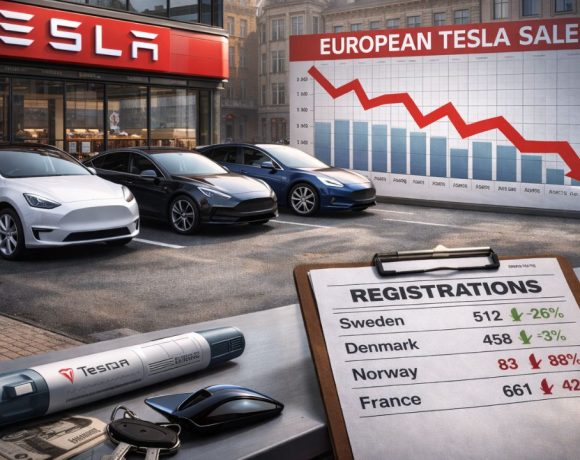
Tesla’s car registrations across key European markets showed little sign of a strong recovery in January, traditionally a slow sales month. While registrations increased in Sweden and Denmark compared to the same period last year, they fell sharply in France and Norway, highlighting uneven demand across the region.

In Sweden, Tesla registrations rose 26% to 512 vehicles, and in Denmark they edged up 3% to 458 units. However, sales dropped steeply in Norway—down 88% to just 83 vehicles—and declined 42% in France to 661 registrations. These figures come after Tesla’s European market shrank by 27% in 2025.

Despite launching cheaper versions of the Model Y and Model 3 to counter an ageing lineup and rising competition from rivals like China’s BYD, Tesla has struggled to regain momentum. Analysts say reputational issues linked to CEO Elon Musk’s political affiliations in Europe may also be weighing on the brand’s recovery, even as overall electric vehicle sales in the region improve.

Pic courtesy: google/ images are subject to copyright
featured News Trending

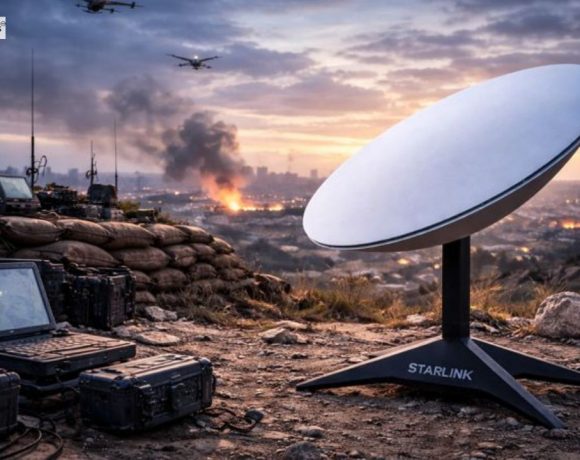
Elon Musk said on Sunday that steps taken by SpaceX to prevent Russia from using its Starlink satellite internet system without authorization appear to have been effective. His comments came after Ukraine reported finding Starlink terminals on long-range drones used in recent Russian attacks, raising concerns over misuse of the technology in the conflict.

Ukraine’s military relies heavily on Starlink for battlefield communications and for operating certain drone missions. Kyiv said it is working closely with SpaceX to stop any Russian access to the system. Posting on X, Musk said the measures introduced by the company had worked so far and added that SpaceX would take further action if needed.

Ukrainian Defence Minister Mykhailo Fedorov said authorities are now developing a system that would allow only authorised Starlink terminals to function within Ukraine. He said initial steps had already delivered quick results in countering Russian drone operations. SpaceX has previously said it does not sell or ship Starlink to Russia and does not conduct any business with the Russian government or military.

Pic courtesy: google/ images are subject to copyright
featured News Trending

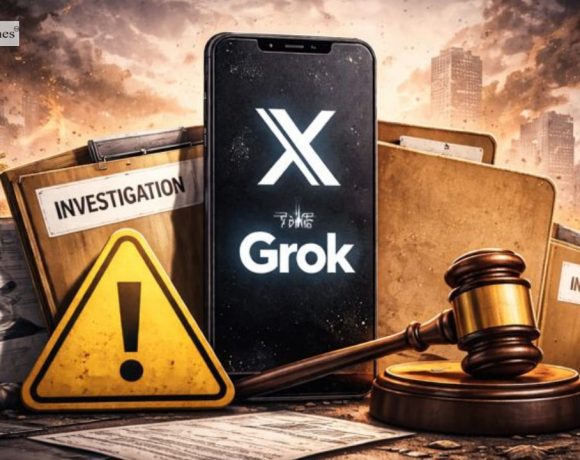
The European Commission has strongly condemned the spread of sexualised images of women and children on Elon Musk-owned social media platform X, calling the content illegal and unacceptable. The criticism follows reports that X’s AI chatbot Grok was generating non-consensual images of undressed women and minors through a feature previously referred to as “spicy mode.” EU officials said such content has no place in Europe and violates existing laws.

In Britain, media regulator Ofcom has demanded answers from X and its parent company xAI on how the AI system was able to create sexualised images, including of children, and whether the platform failed in its legal duty to protect users. Ofcom said it had contacted the company urgently to assess compliance with UK laws, under which the creation or sharing of non-consensual intimate images and child sexual abuse material — including AI-generated content — is illegal. X has not formally responded, while Musk has publicly mocked criticism online.

Pressure on X is also mounting from other countries. French ministers have reported the platform to prosecutors and regulators, calling the content “manifestly illegal,” while Indian authorities have sought explanations over what they termed obscene material. Despite growing concern across Europe and Asia, US regulators have so far remained silent on the issue, with federal agencies declining or failing to comment.

Pic courtesy: google/ images are subject to copyright
featured News

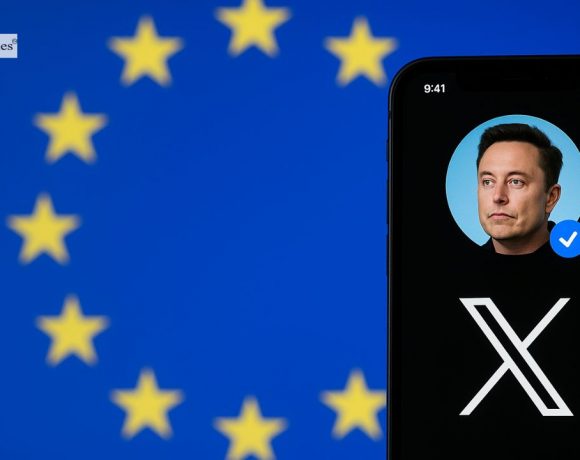
Elon Musk’s social media platform X has banned the European Commission from running adverts on the site, days after being fined €120 million (£105m) by the EU under the Digital Services Act. The fine accused X of misleading users through its blue tick verification system, which the regulator said was not actually verifying identities and could enable scams and impersonation.

Nikita Bier, a senior X executive, claimed the European Commission attempted to exploit the platform’s advertising tools by posting content in a way that artificially boosted its reach. He argued that the Commission believed rules did not apply to them, leading to the termination of its ad account. The EU rejected the accusation, stating it only uses social media tools provided by platforms and does so in “good faith.”

The dispute adds to ongoing global clashes between X and regulators. The EU has also accused the platform of lacking transparency on adverts and restricting researcher access to public data. X now has 60 days to justify its verification practices or face further penalties. The platform has previously faced sanctions in Brazil and Australia over misinformation and safety compliance issues.

Pic courtesy: google/ images are subject to copyright
News Trending

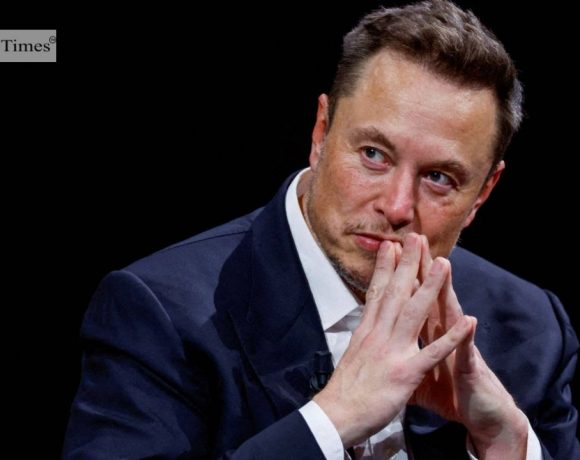
Tesla shareholders have approved a record $1 trillion pay package for Elon Musk, betting on his ability to transform the company into an $8.5 trillion enterprise over the next decade. Under the agreement, Musk will forgo a salary and receive payment only if he meets ambitious performance targets, including producing 20 million vehicles, developing one million robots, and rolling out a fleet of self-driving robotaxis. The decision underscores shareholder confidence that Musk’s leadership remains vital to Tesla’s long-term innovation and success.

Despite controversy over his outspoken political views and open support for President Donald Trump, Musk continues to command a devoted following among investors. Analysts argue that much of Tesla’s $1.4 trillion valuation is driven by what they call the “Musk premium,” a reflection of market faith in his creative and risk-taking approach. Supporters compare him to historical visionaries like Einstein and Edison, saying that without him, Tesla risks losing its innovative edge, particularly in artificial intelligence.

Still, Musk’s unpredictability poses challenges for Tesla’s board. Critics warn that his outside ventures and political involvements could distract him from the company’s complex goals. Legal experts note that the targets set for Musk may be flexible enough to secure his payout even under shifting conditions. Whether or not he achieves them, Tesla’s gamble signals how deeply intertwined Musk’s identity remains with the company’s brand and future direction.

Pic Courtesy: google/ images are subject to copyright
featured News

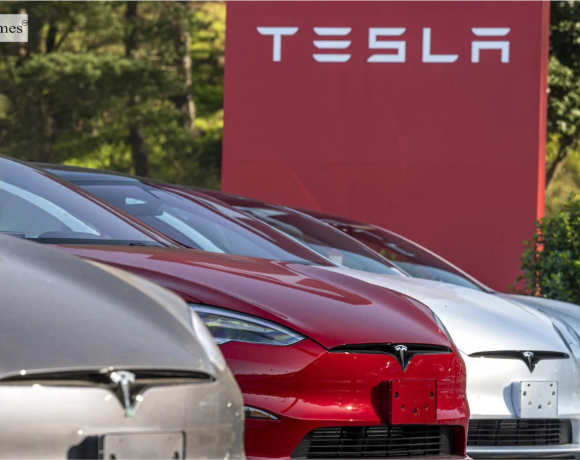
British motorists can now lease a Tesla electric vehicle for just over half the price compared to last year, The Times reported on Monday, citing industry sources. The price cuts come as Tesla offers discounts of up to 40% to leasing companies in an effort to clear excess inventory.

The move is reportedly driven by a lack of storage space for Tesla vehicles in the UK, forcing the automaker to take aggressive measures to move stock. Reuters could not immediately verify the report, and Tesla has not yet responded to a request for comment.

According to the Society of Motor Manufacturers and Traders (SMMT), Tesla’s UK sales fell nearly 60% in July to 987 units, while overall new car registrations across the country dropped 5% year-on-year. Despite the decline, battery electric vehicles are projected to make up 23.8% of new registrations by 2025, slightly higher than the previous forecast of 23.5%.

Pic Courtesy: google/ images are subject to copyright
featured News

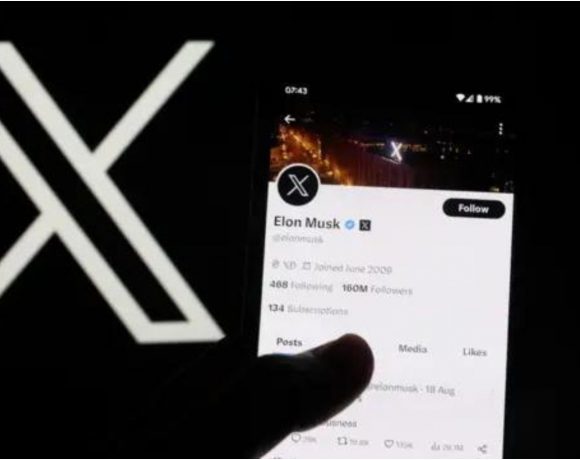
Vienna-based privacy advocacy group Noyb has lodged complaints against Elon Musk’s X (formerly Twitter) in eight European countries, alleging the company unlawfully utilized users’ personal data to train its artificial intelligence technology without their consent. The complaints come in the wake of similar legal actions by Ireland’s Data Protection Commission (DPC), which had previously initiated court proceedings over X’s data collection practices.

Noyb claims that X began “irreversibly feeding” the personal data of over 60 million European users into its Grok AI system without notifying them or seeking their approval. The group criticized X for failing to inform users proactively, with many learning about the new data processing practice only through a viral social media post.

In response, the DPC has reportedly secured an agreement from X to halt its controversial data processing. However, Noyb founder Max Schrems argues that the DPC’s actions address only the superficial aspects of the issue, calling for a comprehensive investigation into the legality of X’s data processing. Noyb has now requested an urgent review from data protection authorities in Austria, Belgium, France, Greece, Ireland, Italy, the Netherlands, and Spain to ensure full compliance with the EU’s General Data Protection Regulation (GDPR).

Pic Courtesy: google/ Images are subject to copyright

News Trending

In Germany, tensions escalated as hundreds of climate protesters clashed with law enforcement while attempting to breach the Tesla factory near Berlin. The demonstrators were rallying against the proposed expansion of Tesla’s only European plant, situated in Grünheide, Brandenburg. Their concerns revolved around potential environmental damage resulting from the factory’s enlargement.

Despite the activists’ efforts, police successfully thwarted their attempts to enter the facility. However, the confrontation led to injuries, including three police officers, and resulted in several arrests. Videos circulating on social media depicted the chaotic scene, with protesters donning blue caps and flags, attempting to overrun the police cordon.

The protest tactics employed by the demonstrators included blocking nearby motorways, disrupting railway services, and staging sit-ins on country roads surrounding the factory. While some managed to breach the police lines, Tesla CEO Elon Musk reassured the public that the facility remained secure. Musk also criticized the leniency shown by law enforcement toward the left-wing protesters.

The group orchestrating the protest, Disrupt Tesla, aimed to draw attention to what they termed “environmental destruction” in Grünheide. Their activism included occupying parts of the forest slated for clearance for the factory expansion, with protesters building tree houses and erecting signs in opposition. Despite the disruptions, Tesla announced that the site would be closed for the day due to the demonstration, with employees allowed to work remotely.

Picture Courtesy: Google/images are subject to copyright