featured News Trending

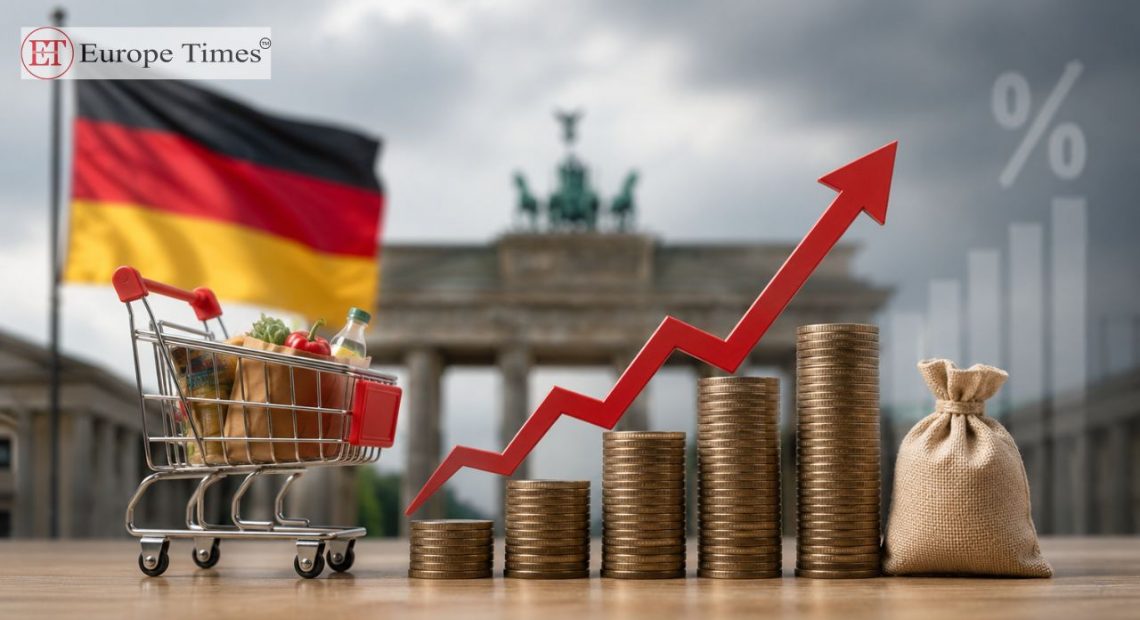
European retailers are warning of rising prices and weakening consumer demand as the ongoing Middle East conflict drives up energy and transportation costs. Companies across the sector say prolonged disruption could fuel inflation, with oil prices already climbing above $100 per barrel and increasing pressure on global supply chains.

Major retailers including H&M and Next have signalled potential price increases in the coming months. While short-term hikes may remain modest, executives caution that prolonged conflict could push prices significantly higher, particularly as manufacturing and freight costs rise. Firms are relying on flexible supply chains to manage uncertainty but acknowledge growing risks.

At the same time, consumer confidence across Europe is weakening, with falling retail sales and declining sentiment in countries such as the UK, Germany, and Italy. Retailers like Co-op warn that households are becoming more cautious amid rising living costs, and further escalation of the conflict could intensify inflationary pressures, dampening spending and slowing economic growth.

Pic courtesy: google/ images are subject to copyright

featured News Trending

The ongoing Iran conflict has begun to impact tourism in Cyprus and Greece, with rising cancellations and a slowdown in new bookings ahead of the crucial summer season. The situation escalated after military strikes in late February and subsequent counterattacks, including a drone strike near a British base in Cyprus, triggering concerns among travellers and leading to a sharp drop in visitor interest.

In Cyprus, cancellations for short-term rentals surged dramatically, at one point reaching nearly 100% in the days following the escalation, before easing to around 45% by late March. The country’s hospitality sector has reported significant declines in bookings for March and April, prompting the central bank to cut its 2026 economic growth forecast. Airlines and travel operators have also noted reduced demand, with tourists shifting preferences to destinations like Spain.

Greece has also seen a slowdown, particularly in pre-bookings, although the impact has been less severe. Major carriers report declining demand from key markets such as Israel and Gulf countries, while tourism officials remain cautiously optimistic. Industry stakeholders warn that if the uncertainty continues into peak summer months, it could pose a serious risk to economies heavily reliant on seasonal tourism.

Pic courtesy: google/ images are subject to copyright

featured News Trending

The Irish government has announced plans to reduce excise duty on petrol and diesel in an effort to ease pressure on motorists facing sharp fuel price increases linked to ongoing conflict in the Middle East. The temporary measures, expected to take effect from midnight Wednesday until the end of May, will lower diesel duty by 20 cents per litre and petrol by 15 cents per litre, pending cabinet approval.

Fuel prices have surged in recent days, with diesel rising from around €1.80 per litre to between €2.20 and €2.30, while petrol prices climbed close to €2 per litre. In addition to the duty cuts, authorities are preparing a backdated diesel rebate scheme aimed at supporting hauliers and bus operators, along with reductions for agricultural and green diesel users.

The broader support package, estimated to cost €235 million, will also include targeted energy assistance for pensioners, carers, and people with disabilities. Irish Prime Minister Micheál Martin noted that recent diplomatic developments involving the United States and Iran had helped lower crude oil prices but declined to confirm whether the changes would alter the government’s planned relief measures.

Pic courtesy: google/ images are subject to copyright

featured News Trending

London Mayor Sadiq Khan has called on the Labour Party to commit to rejoining the European Union in its next general election manifesto. In an interview, he described Brexit as damaging economically, socially, and culturally, and said returning to the EU was “inevitable.” He also urged the government to first rejoin the customs union and single market before the expected 2029 election.

The UK government, led by Prime Minister Keir Starmer, has repeatedly ruled out rejoining those structures. The Conservatives criticized Khan’s remarks, suggesting they reveal divisions within Labour leadership. Meanwhile, Khan hinted that rejoining the EU might not necessarily require another referendum, though he did not explicitly confirm this.

The comments have added to broader political debate, with figures like Angela Rayner raising concerns about immigration policies, and former Prime Minister John Major warning that Brexit has harmed trade and economic stability. Other parties remain split, with some supporting closer EU ties while others strongly oppose any move to rejoin.

Pic courtesy: google/ images are subject to copyright

featured News Trending

The Swiss government has urged voters to reject a proposal that would cap the country’s population at 10 million, warning the measure could harm the economy and strain relations with the European Union. The referendum, backed by the right-wing Swiss People’s Party (SVP), is scheduled for June 14 and comes as Switzerland seeks closer cooperation with the EU to maintain access to its largest trading market.

Supporters of the initiative argue that high immigration levels are driving housing shortages, rising rents, and increased pressure on public infrastructure. The proposal calls for limiting permanent residents to under 10 million by 2050 and ending Switzerland’s freedom of movement agreement with the EU, which critics say could weaken economic ties and labor mobility.

The Federal Council, along with business groups, trade unions, and cantonal leaders, has warned the plan would undermine job markets, security cooperation, and Switzerland’s humanitarian traditions. With the population already exceeding 9 million and foreign nationals accounting for more than 27%, officials say the initiative would create uncertainty during a period of global instability.

Pic courtesy: google/ images are subject to copyright

featured News Trending

Russia is increasingly recruiting workers from India to address a severe labour shortage worsened by the war in Ukraine. Officials estimate the country needs at least 2.3 million additional workers, particularly in manufacturing, construction and services. With fewer migrants arriving from Central Asia — traditionally Russia’s main source of foreign labour — Moscow has sharply increased work permits for Indians, approving nearly 72,000 last year compared with about 5,000 in 2021.

The shift reflects both economic necessity and strengthening ties between Moscow and New Delhi. President Vladimir Putin and Prime Minister Narendra Modi signed an agreement in December to simplify employment procedures for Indians in Russia. Russian officials say the country could accept an “unlimited number” of Indian workers, with hundreds of thousands needed across key sectors. A weaker rouble, stricter migration rules and rising anti-immigrant rhetoric have also reduced inflows from Central Asia, prompting the pivot toward South Asia.

Indian migrants are now working in textile factories, farms and service industries around Moscow and beyond. Employers say the workers are motivated and quickly adapt to new skills, while migrants cite higher wages compared to opportunities back home. Though U.S. pressure on India over its purchases of discounted Russian oil could affect broader ties, Moscow has downplayed tensions, and the inflow of Indian labour continues for now.

Pic courtesy: google/ images are subject to copyright

featured News Trending

Spain’s government has unveiled a draft decree to provide legal status to hundreds of thousands of undocumented migrants, in a bid to accelerate integration and support key economic sectors. The measure targets those who have lived in the country for at least five months by the end of 2025 and have no criminal record, as well as asylum applicants. The permit will initially be valid for one year, extendable up to five years for children, and could lead to citizenship after 10 years—or sooner for Latin American nationals and refugees.

The decree is expected to benefit around 500,000 people, primarily from Latin America, strengthening Spain’s approach to migration based on human rights, social cohesion, and economic growth. Migration Minister Elma Saiz emphasized that Spain’s openness to migrants has helped fuel employment in sectors such as hospitality and care, contributing to lower unemployment and robust economic performance relative to other European nations.

While the decree can be enacted by the cabinet without parliamentary approval, it faces potential political opposition. Conservative leader Alberto Nuñez Feijoo has pledged to reverse the policy if his party wins the next election. The initiative follows citizen-backed campaigns supported by hundreds of rights groups and the Catholic Church, aimed at regularizing undocumented migrants who now account for a significant portion of Spain’s non-EU population.

Pic courtesy: google/ images are subject to copyright

featured News Trending

French Prime Minister Sebastien Lecornu announced that he will use Article 49.3 of the Constitution to pass the 2026 budget without a parliamentary vote, after securing enough support to survive an expected no-confidence motion. Lecornu expressed regret for going back on his previous promise to avoid this procedure but said it was necessary to finalize the centrist government’s deficit-cutting budget. The lower house is expected to approve the income side of the legislation before it moves to the Senate.

To gain Socialist backing while keeping conservatives from opposing, the government has increased support for low-income households, extended affordable university meals, and promised more affordable housing. Measures to fund these initiatives include extending a corporate surtax on large companies, projected to raise €8 billion. Socialist leader Boris Vallaud indicated that these concessions might prevent the need for a no-confidence vote.

France has faced political instability over the budget, losing two governments and risking a snap election. While neither major party is fully satisfied with the proposals, they are reluctant to trigger early elections ahead of the presidential vote. Hard-left France Unbowed has promised to file a no-confidence motion, though analysts say the final budget, with higher taxes and increased spending, may weigh on investment and economic growth in 2026.

Pic courtesy: google/ images are subject to copyright

featured News Trending

Germany’s Social Democratic Party (SPD) has proposed sweeping changes to inheritance tax rules, setting up a fresh dispute with its conservative coalition partner. The reforms aim to make the system fairer by increasing taxes on large estates while easing the burden on smaller inheritances, just as the government faces several important regional elections this year.

While both the SPD and Chancellor Friedrich Merz’s conservative bloc agree on the need for tax relief to revive the weak economy, they strongly disagree on how to achieve it. The disagreement adds to growing tensions within the coalition, reinforcing public perceptions of a divided and slow-moving government at a time when voters are demanding clear economic direction.

Under the SPD plan, heirs would be able to inherit up to around one million euros tax-free, and family homes would remain exempt if the heir continues to live there. Family businesses would receive allowances of about five million euros, but larger firms would face higher taxes — a move strongly opposed by conservatives, who warn it could hurt Germany’s small and medium-sized companies.

Pic courtesy: google/ images are subject to copyright

featured News

German Chancellor Friedrich Merz has called on Europe to assert its interests more forcefully to safeguard peace and prosperity in 2026, warning of mounting threats from Russian aggression, global protectionism and shifting relations with the United States. Speaking in his New Year’s address, Merz said the war in Ukraine posed a direct threat to Europe’s freedom and security, adding that Russia’s actions were part of a broader strategy targeting the entire continent.

Since taking office in May, Merz has played a key role in pushing European support for Ukraine and strengthening Germany’s defence posture. He said Germany now faces daily challenges including sabotage, espionage and cyberattacks, underscoring the need for greater resilience. Merz also highlighted economic risks from rising protectionism and Europe’s dependence on imported raw materials, which he said were increasingly being used as tools of political pressure.

Merz pointed to Germany’s struggle to revive its export-driven economy after two years of contraction, as Berlin seeks to reduce reliance on China while navigating global trade tensions and the impact of U.S. President Donald Trump’s tariff policies. Acknowledging a more difficult partnership with Washington since Trump’s return to office in 2025, Merz said Europe must rely more on itself, stressing that confidence, not fear, should guide the continent’s response as it works to renew long-standing peace, freedom and prosperity.

Pic courtesy: google/ images are subject to copyright