

featured News Trending

Glencore has reached an agreement to purchase nearly 2,000 metric tons of cobalt from industry veteran Rami Weisfisch, worth around $115 million at current market prices. The deal, spanning 12 months in 2026, is expected to supply the United States for its planned National Defense Stockpile under Project Vault, a program backed by $12 billion in public and private funding. The cobalt, originally acquired by Weisfisch in 2015, is stored across Europe and the U.S., and marks the end of Weisfisch’s 50-year involvement in the cobalt industry.

The move comes amid heightened U.S. efforts to secure critical materials, including cobalt, to reduce reliance on China, the dominant global supplier and processor of strategic metals. Glencore’s CEO Gary Nagle confirmed the company’s participation in Project Vault, following the cancellation of a U.S. Defense Logistics Agency tender for cobalt last year. The deal uses pricing tied to Fastmarkets assessments, ensuring alignment with current market conditions.

Cobalt prices have surged approximately 160% since February 2025, reaching $26 per pound ($57,320 per ton), driven by tight supply and rising global demand. Democratic Republic of Congo, the top producer, imposed export quotas from February to mid-October, disrupting supply chains. China, the largest cobalt processor, has been most affected by these restrictions, scrambling to secure cobalt for its industries, including lithium-ion battery production for electric vehicles and mobile devices.

Pic courtesy: google/ images are subject to copyright
featured News

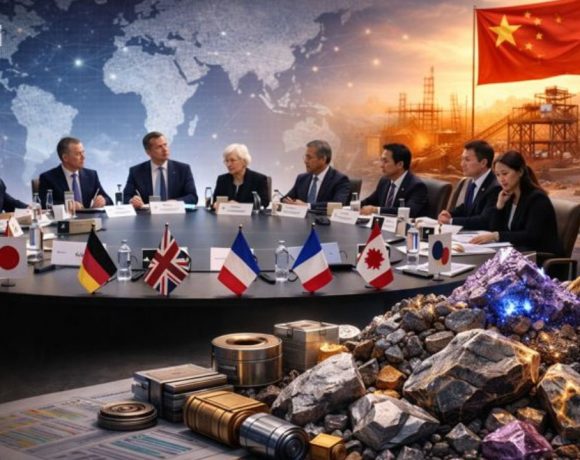
Finance ministers from the G7 countries, along with officials from Australia, Mexico, South Korea, and India, met in Washington on January 12 to discuss strategies for reducing dependence on Chinese rare earths. The meeting, convened by U.S. Treasury Secretary Scott Bessent, focused on securing alternative supply chains for critical minerals through measures such as price floors and new international partnerships. No joint statement was issued, but officials highlighted broad agreement on the urgency of diversifying sources.

Japanese Finance Minister Satsuki Katayama emphasized short-, medium-, and long-term approaches to strengthen non-Chinese rare earth supplies. Proposed measures include promoting labor and human rights standards in mineral sourcing, deploying financial incentives, trade and tariff tools, and minimum price settings. Countries participating in the discussions, along with the EU, represent 60% of global demand for critical minerals, which are vital for defense, semiconductors, renewable energy, and battery technologies.

German Finance Minister Lars Klingbeil and South Korean Finance Minister Koo Yun-cheol stressed the importance of proactive steps, including developing domestic supplies, recycling, and technology collaborations to create resilient supply chains. While participants warned against forming an anti-China coalition, they agreed on the need for urgent action to secure critical minerals and reduce vulnerability to export restrictions, particularly amid China’s recent curbs on materials destined for Japan’s military.

Pic courtesy: google/ images are subject to copyright