featured News

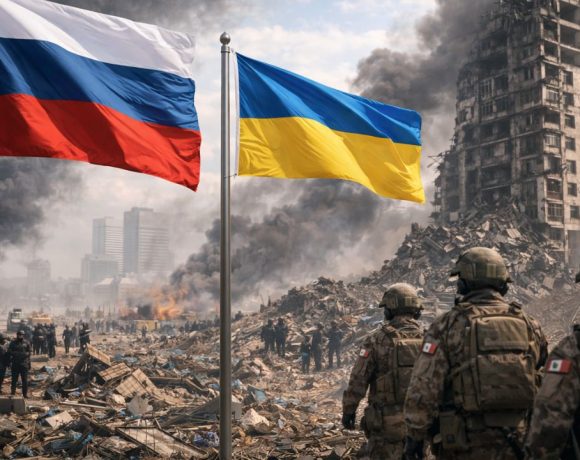
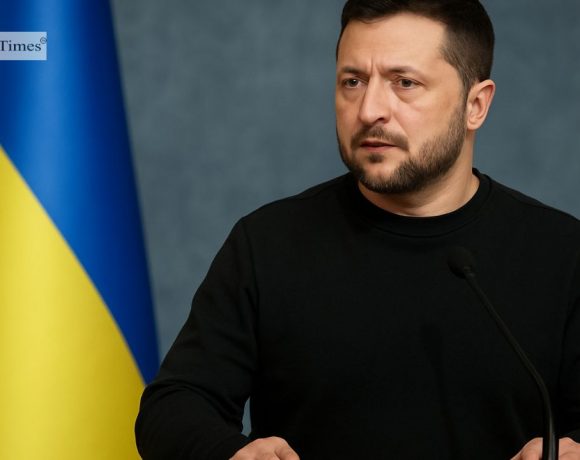
Ukrainian President Volodymyr Zelensky has said he is prepared to work with the United States on what he called “their vision” for ending the war with Russia, following reports of a leaked draft peace proposal shaped during meetings between US special envoy Steve Witkoff and Russian representative Kirill Dmitriev. The plan, which has drawn global attention, suggests Ukraine would cede parts of the Donetsk region still under its control, reduce the size of its military, and commit not to join NATO—terms Kyiv has previously rejected.

The White House insists Ukraine has been included in discussions, pushing back against criticism that negotiations happened behind its back. The draft emerged as Russia reported small territorial gains in eastern Ukraine and as Zelensky faces a domestic political crisis linked to a $100 million corruption scandal. In a televised address, Zelensky confirmed that US military officials had presented points of a peace proposal in Kyiv, stressing that Ukraine seeks a “real peace… one that will not be broken by a third invasion.”

The plan has triggered concern among European leaders, who say they were excluded from early talks. Germany’s foreign minister described the US proposal as only a “list of topics and options” rather than a complete agreement. While Washington claims the draft is balanced and acceptable to both sides, Kyiv maintains that any peace must protect Ukraine’s sovereignty and dignity. The debate unfolds as fighting continues, including recent deadly Russian attacks in Zaporizhzhia and Ternopil, and as the fourth anniversary of Russia’s full-scale invasion approaches.

Pic Courtesy: google/ images are subject to copyright

News Trending

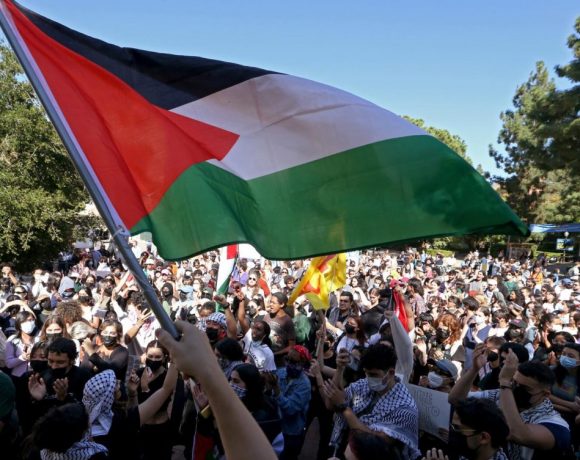
Leaders from Spain, Ireland, Slovenia, and Malta have declared their readiness to acknowledge the State of Palestine as a crucial step towards achieving peace and stability in the conflict-ridden region. During a meeting on the sidelines of a summit in Brussels, they emphasized their willingness to recognize Palestine when it could contribute positively to the situation. They stressed the necessity of a two-state solution, with both Israeli and Palestinian states coexisting peacefully.

Slovenian Prime Minister Robert Golob expressed optimism about garnering political support for Palestine at the United Nations, suggesting that conditions for establishing a Palestinian government could be ripe in the near future. Currently, nine out of the EU’s 27 member states recognize Palestine based on the 1967 borders. Belgium, represented at the meeting, also supports Palestinian statehood but may be constrained from signing such declarations due to its presidency of the Council of the EU.

While the EU backs the two-state solution and provides significant aid to Palestinians, it has not unanimously supported recognizing a Palestinian state. Spain and Ireland have been vocal advocates for recognizing Palestine, particularly following the recent conflict in Gaza. Spanish Prime Minister Pedro Sánchez emphasized the importance of unified action among EU countries rather than unilateral recognition. He stressed the need for careful timing to ensure a lasting peace.

The political diversity of the leaders involved suggests broad consensus on the necessity of recognizing Palestine for future peace efforts. Irish Taoiseach Leo Varadkar also confirmed ongoing discussions among member states regarding formal recognition of Palestine to facilitate more equitable negotiations post-conflict.

Picture Courtesy: Google/images are subject to copyright

News Trending

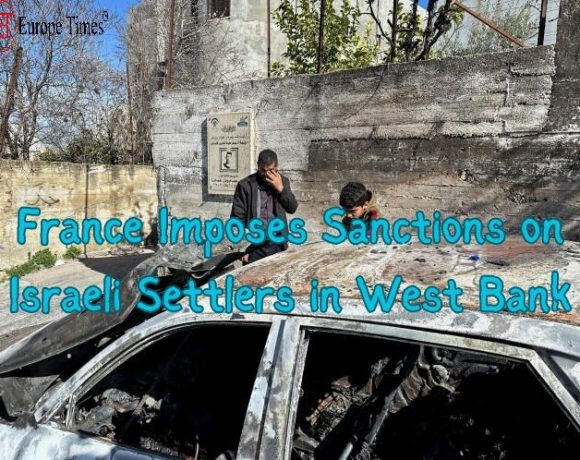
France has taken decisive action by announcing the ban of 28 Israeli settlers who stand accused of perpetrating attacks against Palestinian civilians in the occupied West Bank. This move aligns with similar measures enacted by other nations, including the United States and the United Kingdom, which have also imposed restrictions on individuals involved in comparable activities. The French government’s decision comes amidst escalating violence against Palestinians in the West Bank, prompting a firm condemnation of such actions.

In a statement issued by the French foreign ministry, the country emphasized the gravity of the situation, denouncing the unacceptable violence perpetrated against Palestinian civilians. France, along with Poland and Germany, collectively announced sanctions against Israelis implicated in attacks within the West Bank. This concerted effort underscores the international community’s recognition of the need to address the escalating tensions and safeguard the rights of Palestinians in the region.

The French government reiterated its stance on the illegality of colonization under international law, emphasizing the imperative to halt such activities. It emphasized the necessity of ending colonization to pave the way for the establishment of a viable Palestinian state, thereby enabling Israelis and Palestinians to coexist peacefully and securely. France also expressed its intention to pursue sanctions at the European level, highlighting the importance of a coordinated approach among European Union member states in addressing the ongoing conflict.

While the individuals affected by these measures have not been publicly named, the broader context underscores the gravity of the situation. The imposition of sanctions by France and other nations reflects a concerted effort to address the escalating violence and promote stability in the region. As the international community continues to grapple with the complexities of the Israeli-Palestinian conflict, such actions serve as a testament to the importance of upholding human rights and seeking avenues for peaceful resolution.

Picture Courtesy: Google/images are subject to copyright