
featured News Trending

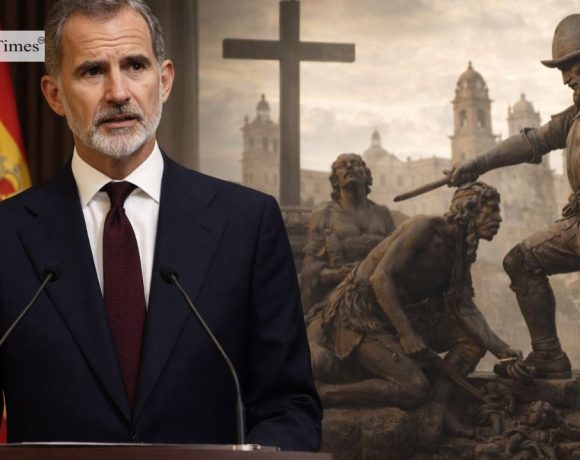
King Felipe VI made a rare acknowledgment of abuses during Spain’s colonial past, noting that while historical laws were intended to offer protection, they often resulted in exploitation and injustice. Speaking in Madrid, he said such actions, when viewed through modern values, cannot be a source of pride.

At its peak between the 16th and 18th centuries, Spain controlled a vast global empire spanning multiple continents, including much of Latin America. The period was marked by forced labour, land seizures, and violence against Indigenous communities, leaving a legacy that continues to shape international relations today.

The remarks come amid ongoing tensions with Mexico over historical accountability. While past leaders like Andrés Manuel López Obrador have called for formal apologies, Spain has not issued one. The issue has strained diplomatic ties, with recent disagreements highlighting the continued sensitivity surrounding colonial history.

Pic courtesy: google/ images are subject to copyright

News Trending

The Portuguese government has firmly rejected the notion of offering reparations for the country’s involvement in transatlantic slavery and colonialism, despite recent remarks by President Marcelo Rebelo de Sousa suggesting otherwise. President de Sousa acknowledged Portugal’s historical wrongdoings, including acts of violence and exploitation, but refrained from specifically addressing the issue of slavery. Instead, he proposed taking full responsibility for the past through alternative measures such as development aid and debt forgiveness.

However, the government swiftly issued a statement asserting that there is no concrete plan or program for reparations, maintaining continuity with the stance of previous administrations. While there have been discussions within the government about returning looted items from colonial times, the official position remains unchanged. The current Minister of Culture, who previously served as the director of a national museum housing artifacts from former colonies, has expressed support for the idea in the past.

Despite the government’s stance, anti-racist groups and left-wing political parties have reignited the debate surrounding Portugal’s colonial legacy in recent days. They advocate for acknowledgment and redress of historical injustices, including slavery and colonial-era abuses. President de Sousa, with his personal family ties to colonial governance, emerges as a significant figure in advocating for a nuanced understanding of Portugal’s colonial past, countering narratives minimizing its impact.

Picture Courtesy: Google/images are subject to copyright