
featured News Trending

The Czech Republic is set to close its last deep hard coal mine at the end of January, marking the end of more than 250 years of underground coal mining in the Ostrava region. Final extraction is underway at the CSM mine in Stonava near the Polish border, as low global coal prices, rising mining costs and Europe’s green transition have made deep mining economically unviable. The shutdown brings to a close an industry that once powered Central Europe’s industrial growth.

State-owned miner OKD had planned to shut the mine earlier, but soaring energy prices following Russia’s invasion of Ukraine temporarily extended operations. However, kilometre-deep shafts and increasing operational costs proved unsustainable. For miners, the closure carries emotional weight, ending generations of underground work that shaped the region’s identity and economy. OKD now employs about 2,300 workers, with further job cuts expected in the coming months.

Once an industrial powerhouse employing over 100,000 miners, the Ostrava basin has been reshaped by decades of mine closures. While unemployment remains above the national average, retraining programmes, foreign investment and EU support have helped stabilise the region. Backed by funding from the EU’s Just Transition programme, OKD is planning a post-coal future that includes energy storage, data infrastructure and alternative power projects, signalling a shift from underground mining to new above-ground industries.

Pic courtesy: google/ images are subject to copyright
News Trending

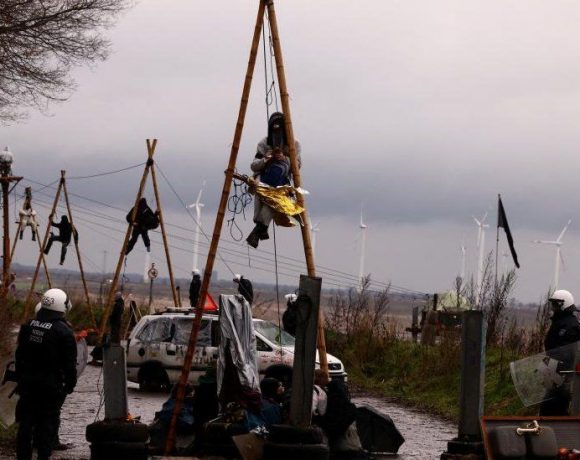
Climate activists who have been occupying an abandoned village in western Germany for months are being dragged away by police in riot gear. To stop the adjoining Garzweiler open coal mine from engulfing Lützerath, protesters shut themselves inside.

As the police started to evacuate the camp, several protesters hurled rocks and fireworks at them. In an effort to make the eviction more challenging, protesters climbed into treehouses.

The final resident of the village, which is owned by the energy company RWE, left over a year ago. As police in riot gear invaded the village early on Wednesday to remove the demonstrators, there were bloody altercations.

They pulled a few protesters through the muddy ground, several of whom had scarves covering their faces. The atmosphere was afterwards characterised as being calmer, but numerous demonstrators persisted.

Others have retreated to treehouses or the village rooftops, while others have created human chains. Lützerath is practically about to be engulfed by the enormous open coal mine that is right outside its door. The mine is run by RWE, who also has expansion ambitions. At the edge of the settlement, a massive mechanical digger stands a few metres from the treeline.

The state of North Rhine-Westphalia, where the mine is located, has promised to advance the phase-out of coal to 2030. The country’s goal is 2038.

Police are currently surrounding Lützerath, and one of them told the media this morning that the area would be cleansed.

However, the demonstrators are still adamant about delaying the eviction and the village’s apparent doom for as long as they can.

Picture Courtesy: Google/images are subject to copyright