featured News Trending

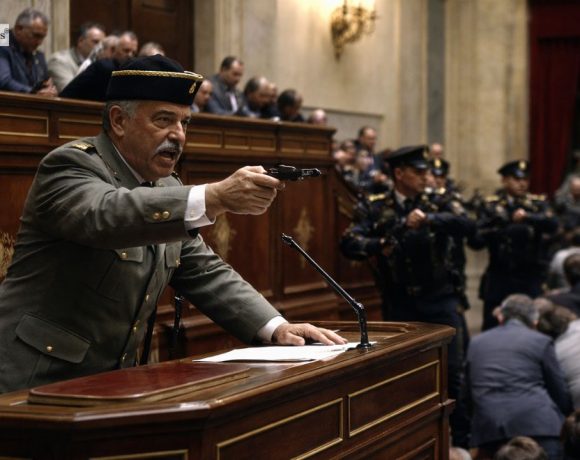
Antonio Tejero, the former Civil Guard officer who led Spain’s failed coup attempt on February 23, 1981, has died at the age of 93. Tejero stormed the Spanish parliament armed with a pistol, ordering lawmakers to the floor and holding them hostage for nearly 17 hours in a bid to reverse the country’s transition to democracy. The dramatic episode, broadcast in part by national television, became one of the most defining moments in modern Spanish history. His death in Alzira, Valencia, was announced by his family through their law firm.

A staunch loyalist of dictator Francisco Franco, Tejero opposed Spain’s democratic reforms following Franco’s death in 1975. The 1981 coup attempt tested the young constitution adopted just three years earlier. Then-King Juan Carlos I played a crucial role in quelling the uprising by delivering a televised address backing the elected government, a move widely credited with safeguarding Spain’s democracy. Tejero was later sentenced to 30 years in prison for his role in the plot.

Born in Malaga in 1932, Tejero rose quickly through the ranks of the Civil Guard but grew increasingly disillusioned as Spain embraced democratic governance. After an earlier failed conspiracy known as “Operation Galaxia,” he became a central figure in far-right opposition to political reforms. Released from prison in 1996, he lived largely out of the public eye, remaining unapologetic about his actions. The bullet holes from the shots fired during the 1981 coup attempt still mark the ceiling of Spain’s parliament, a lasting reminder of the fragile moment in the nation’s democratic transition.

Pic courtesy: google/ images are subject to copyright
featured News Trending

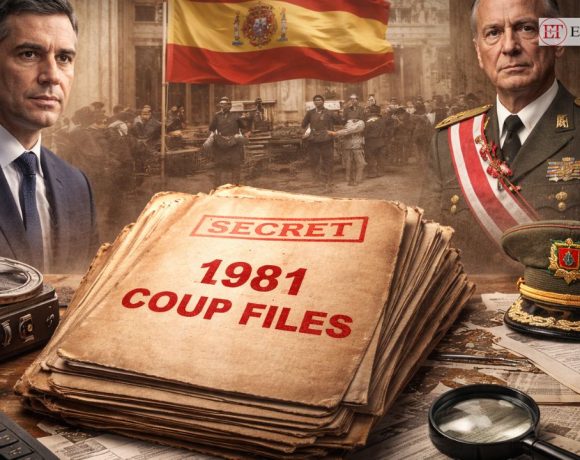
Spain will release classified documents related to the failed 1981 coup attempt that shook its young democracy, Prime Minister Pedro Sanchez announced on Monday. The files, set to be made public on Wednesday, are expected to provide deeper insight into the events surrounding the attempted overthrow of the government. Sanchez said the move aims to settle a historic debt with the Spanish public and reinforce democratic transparency.

The declassified records may shed new light on the role of former King Juan Carlos I and the involvement of intelligence services and other state institutions during the crisis. However, former spy chief Alberto Saiz previously warned that several key documents connected to the plot have gone missing, potentially limiting the full picture.

The coup unfolded when Lieutenant Colonel Antonio Tejero and armed members of the Civil Guard stormed Spain’s parliament, firing shots and holding lawmakers hostage for 17 hours in a bid to restore dictatorship. The attempt ultimately failed after King Juan Carlos delivered a televised address defending the constitutional order and the elected government.

Pic courtesy: google/ images are subject to copyright
News Trending

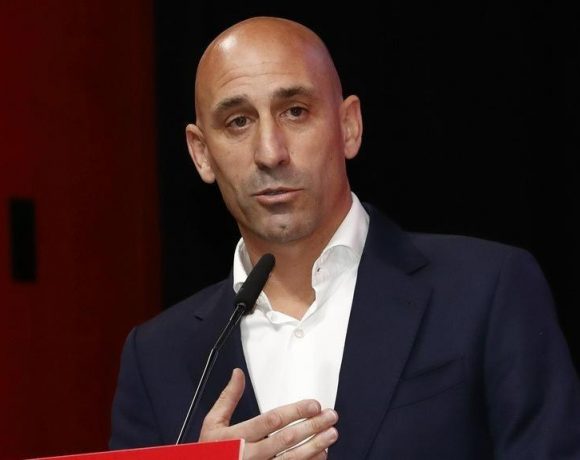
Luis Rubiales, the former president of the Spanish football federation (RFEF), has been detained upon his arrival in Madrid from the Dominican Republic as part of a corruption investigation. It is alleged that Rubiales received illegal commissions during negotiations for the Spanish Super Cup competition to be held in Saudi Arabia.

Prosecutors are seeking a two-and-a-half-year jail term for Rubiales, who vehemently denies any wrongdoing. Following his arrival, Rubiales was taken into custody by members of the Civil Guard and is now subject to 72 hours of questioning. This action follows a previous search of his home by the police last month, along with simultaneous searches conducted at the football federation headquarters, resulting in several arrests.

In addition to the corruption allegations, Rubiales is also facing a separate trial for sexual assault. This case emerged after an incident where he kissed the player Jenni Hermoso on the mouth after the World Cup final, which she and her teammates deemed unwanted and demeaning. Despite denying any misconduct, Rubiales was forced to resign from his position as RFEF president amidst the controversy surrounding the incident.

Picture Courtesy: Google/images are subject to copyright

News Trending

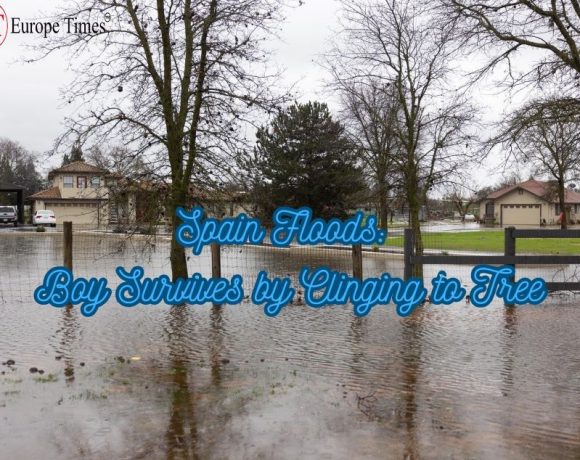
A young boy in Spain managed to survive a deadly flood by climbing a tree and holding on throughout the night. His family’s car had been swept away into a river, and tragically, his father remains missing. The 10-year-old is now receiving treatment for hypothermia, as reported by Spanish media.

The devastating floods, caused by record rainfall, have resulted in at least three fatalities and the disappearance of three others in central Spain, according to police. Regions southwest of Madrid were particularly hard-hit, with bridges destroyed and roads transformed into muddy rivers.

The boy’s family was attempting to escape the floodwaters in a rural part of the affected area when their car was swept into the river, explained Isabel Díaz Ayuso, the head of the Madrid region. The young boy spent the entire night clinging to a tree for survival.

While the boy’s mother and sister have been located, rescue efforts are still underway to find his missing father near Aldea de Fresno, one of the three individuals swept away by the heavy rainfall, according to the civil guard police force.

Additionally, three deaths have been confirmed in the Toledo region, situated southwest of Madrid, due to the storm, as stated by the civil guard.

The Spanish weather service, Aemet, recorded record-breaking rainfall of 9cm (3.5in) in the region on Sunday.

Efforts to clean up the aftermath of the floods are ongoing, with residents working to remove mud and debris left in their wake. Regional administrations in Madrid and Castilla-La Mancha have requested that the federal government declare the affected areas as “catastrophe zones,” which would provide government funding for repairing damaged buildings.

In a first-time move, emergency text messages and loud alarms were used to warn residents about the storm on Sunday, and authorities credit people adhering to advice to stay at home and leave their vehicles behind for helping rescue services manage the thousands of calls they received.

This disaster in Spain follows an intense summer heatwave, with climate scientists warning that global warming leads to more water evaporation during the summer, resulting in more severe storms.

Picture Courtesy: Google/images are subject to copyright