featured News

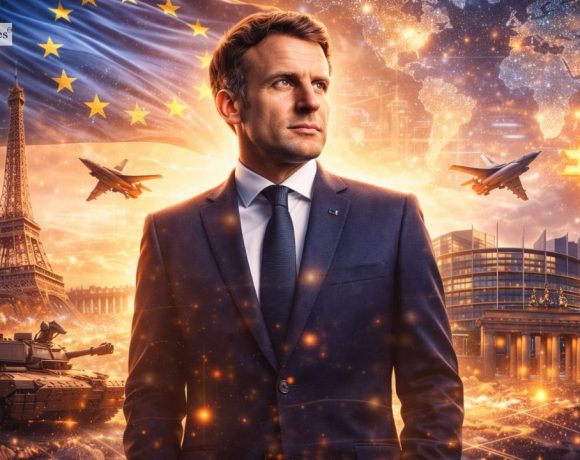
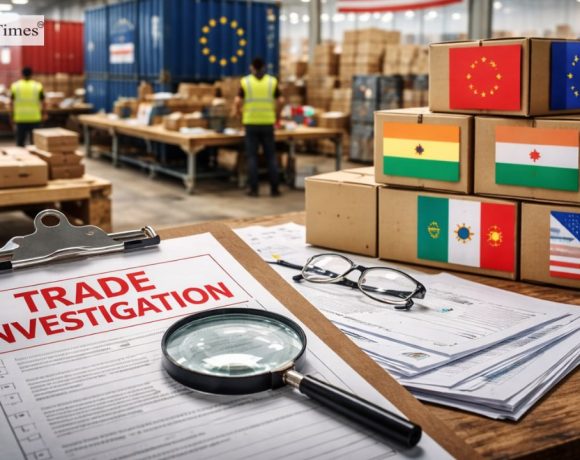
French President Emmanuel Macron will travel to China from December 3 to 5 as Europe attempts to navigate a complex balance between economic dependence and strategic rivalry with Beijing. His agenda includes meetings with President Xi Jinping in Beijing and Chengdu, where he is expected to push for fairer trade conditions, stronger market access, and more balanced technological cooperation. The visit comes as EU-China relations face growing strain, with Brussels warning that ties have reached a critical turning point.

Europe’s concerns centre on China’s surge of low-cost exports—especially steel—and its dominance in electric vehicles and rare earth processing, which pose risks to key European industries. As Washington’s tariffs reshape global trade, China is positioning itself as a business-friendly alternative, even as EU leaders remain wary of Beijing’s support for Russia and its heavily subsidised industrial model. Macron’s team says he will press for a rebalanced relationship that encourages Chinese domestic consumption and shared innovation benefits.

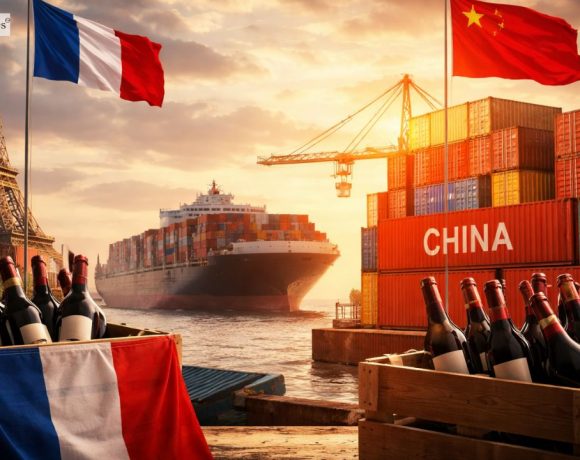
The European Union is preparing a tougher economic security strategy, considering more assertive trade measures against China. France has backed higher tariffs on Chinese EV imports, triggering a year-long Chinese investigation into French brandy in what many saw as retaliation. Despite Airbus expanding its presence in China, a major aircraft deal is not expected during Macron’s trip, reflecting Beijing’s strategic use of aviation purchases in its broader geopolitical negotiations.

Pic Courtesy: google/ images are subject to copyright
featured News

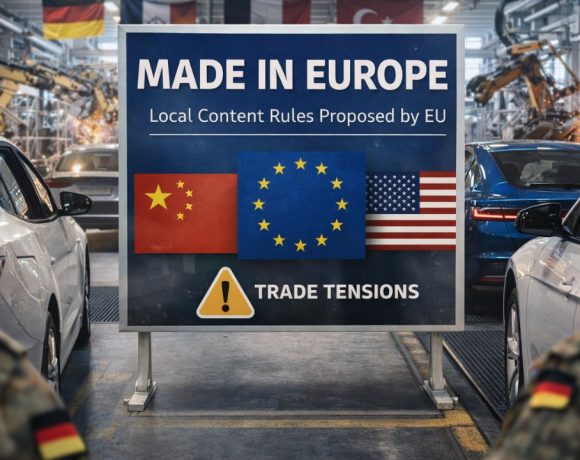
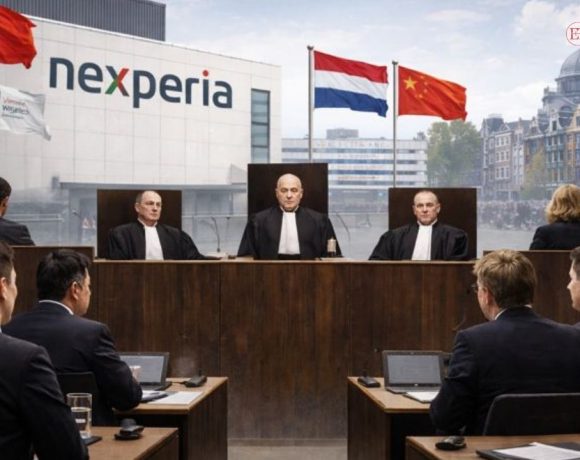
Semiconductor maker Nexperia has restarted some chip deliveries after weeks of disruption caused by a dispute between the Netherlands and China over technology transfers. German officials welcomed the signs of “de-escalation,” expressing hope that temporary permits would soon restore supply to Europe’s major automotive industry.

Germany’s Aumovio has secured exemptions from Chinese export controls, becoming the first supplier to confirm resumed access to Nexperia chips. Honda also reported progress, saying shipments in China had begun and production at affected plants in North America could restart as early as next week, though uncertainty remains.

Nexperia, which is Chinese-owned but headquartered in the Netherlands, produces essential components for car electronics. Suppliers had warned they might furlough workers if shortages continued. While Nexperia expects product flows to normalize soon, European automakers like Volkswagen remain cautious, warning that chip constraints could still threaten output into 2025.

Pic Courtesy: google/ images are subject to copyright
featured News

At a United Nations Security Council session on Ukraine, the United States directly called on China to cease enabling Russia’s military operations through the export of dual-use goods. Acting U.S. Ambassador to the U.N., Dorothy Shea, stated that Chinese-manufactured components are consistently found in Russian drones, weapons, and vehicles deployed against Ukraine, despite Beijing’s claims of strict export controls.

Responding to the accusations, China’s Deputy U.N. Ambassador Geng Shuang firmly denied any involvement in the conflict, emphasizing that China has neither supplied lethal weapons nor violated international controls on dual-use materials. Geng accused the U.S. of attempting to deflect responsibility and urged Washington to contribute more constructively to peace efforts rather than fueling confrontation.

The exchange followed a Reuters report revealing that Chinese-made drone engines are being secretly routed to Russia under the guise of “industrial refrigeration units,” allegedly in violation of Western sanctions. Shea asserted that if China genuinely supports peace, it must stop aiding Russia’s aggression, highlighting growing tensions between Washington and Beijing over the Ukraine war.

Pic Courtesy: google/ images are subject to copyright
featured News Trending

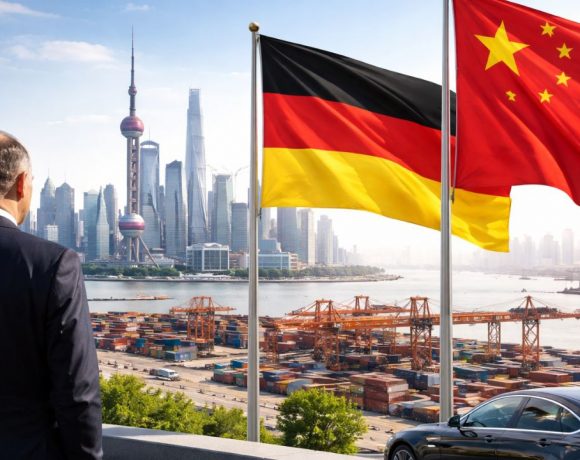
Italy’s Prime Minister Giorgia Meloni described China as an “important interlocutor” for managing global tensions during her meeting with President Xi Jinping in Beijing. Xi acknowledged the “long-established friendly” relations and emphasized “tolerance, mutual trust, and mutual respect” between the two nations.

On her first visit to China since taking office, Meloni and Chinese Premier Li Qiang signed a three-year plan aimed at enhancing economic cooperation. This five-day trip follows Meloni’s decision last year to withdraw Italy from President Xi’s Belt and Road Initiative (BRI), a move motivated by the disappointing returns on the significant investment scheme intended to boost bilateral trade.

Meloni framed her visit as an effort to “relaunch” the Italy-China relationship. After discussions with Xi at Beijing’s Diaoyutai State Guesthouse, she noted the rising global insecurity and the necessity for China to play a crucial role in addressing these challenges. Meloni highlighted the need for the two countries to collaborate for stability and peace.

Italy’s prime minister’s office reported that their talks covered various global governance issues, including the Ukraine conflict, potential escalations in the Middle East, and increasing tensions in the Indo-Pacific. Xi called for both nations to “uphold the spirit of the Silk Road” to foster a new era in East-West relations, stating that both sides have significant opportunities for mutual growth and welcoming Italian investments in China while expressing a willingness to import more high-quality Italian goods.

Italy was the only major Western nation to sign onto the BRI, which was met with strong criticism from the US and other Western countries. Since assuming office in 2022, Meloni has adopted a more pro-Western and pro-NATO stance than her predecessors, previously criticizing the prior government’s decision to join the BRI as a “serious mistake.” Alicia Garcia-Herrero, chief economist for the Asia Pacific at Natixis, remarked that Meloni’s absence from the BRI allows her to engage with China on a more equal footing, as a partner rather than a subordinate.

Under Meloni’s leadership, Italy has blocked a Chinese state-owned firm from acquiring the tire manufacturer Pirelli and supported the European Commission’s recent move to impose tariffs of up to 37.6% on electric vehicles imported from China. Trade between Italy and China reached 66.8 billion euros (£56.3 billion) last year, making China Italy’s largest non-EU trading partner after the US.

Picture Courtesy: Google/images are subject to copyright
News Trending

Alice Weidel, leader of Germany’s far-right Alternative for Germany (AfD), expressed on Monday that there is a growing demand for a vote of confidence and new elections, stating that the public is frustrated. The AfD is celebrating their unexpected success in the European Parliament elections, where they secured 16%, surpassing Chancellor Olaf Scholz’s centre-left SPD.

Despite facing numerous scandals, including allegations of money laundering, connections to the Kremlin, and espionage for China, the AfD’s campaign managed to perform well. Their two lead candidates, Maximilian Krah and Petr Bystron, were sidelined due to investigations into these allegations, with Krah further tarnishing the party’s image by downplaying Nazi crimes. Consequently, France’s hard-right leader Marine Le Pen distanced herself from the AfD.

In an effort to rehabilitate the party’s image, Weidel has excluded Krah from the AfD’s EU delegation. The party attributes the scandals to a “media campaign” and criticizes the judiciary and intelligence services for being politically biased. This narrative of victimization seems to have resonated with voters.

The AfD’s effective use of social media and direct slogans contrasted with the government’s more abstract campaign messaging about “defending democracy.” Co-leader Tino Chrupalla emphasized addressing real issues over engaging in mutual insults, which appeared to appeal to the electorate, especially in eastern Germany and among younger voters.

Meanwhile, the governing coalition is grappling with the poor election results, described as a “painful humiliation” by an SPD leader. Although the conservatives led with 30%, their performance was not seen as particularly strong given the government’s unpopularity. In eastern Germany, the AfD outperformed them, and the results complicate the formation of a stable coalition in the national parliament.

This outcome bolsters CDU leader Friedrich Merz’s efforts to steer his party towards a more conservative stance and supports his ambition to become Germany’s next chancellor. However, the real beneficiaries of the election are the populists.

Picture Courtesy: Google/images are subject to copyright

News Trending

Ukrainian President Zelensky has accused Russia and China of trying to sabotage his upcoming global peace summit in Switzerland. He claims Russia is pressuring countries not to attend and alleges China is assisting in this effort. Zelensky made these statements at an Asian security forum, where he urged delegates to attend his summit focused on nuclear security, food security, and the release of prisoners of war and Ukrainian children held in Russia.

Despite 106 countries confirming attendance, Russia has not been invited and China is not participating. Zelensky criticized China for being an instrument in Putin’s hands and accused China of supplying elements for Russia’s weaponry. However, China denies supplying weapons to either side of the Ukraine conflict and asserts its commitment to peace.

Zelensky also discussed with US Secretary of Defense Austin the US decision to allow Ukraine to use American weapons on Russian territory, albeit with restrictions. This move by the US and other Western states has drawn warnings from Russia about serious consequences.

Picture Courtesy: Google/images are subject to copyright

News Trending

Maximilian Krah, a prominent far-right German politician from the Alternative for Germany (AfD), announced he would scale back his campaign efforts for the upcoming EU elections while remaining the party’s lead candidate. This decision followed a controversial interview with the Italian newspaper La Repubblica, where Krah remarked that not all SS members were automatically “criminals” and emphasized assessing individual culpability. He referenced Günter Grass, the German novelist who served in the Waffen SS, to support his point.

The SS, or Schutzstaffel, was a Nazi paramilitary group notorious for its central role in the Holocaust and other war crimes. Krah’s comments provoked a strong reaction, leading France’s far-right National Rally (RN) to sever ties with the AfD in the European Parliament. RN leader Marine Le Pen called for a “cordon sanitaire” to distance her party from the AfD, stating the urgency of this separation due to the extremity of Krah’s views.

The relationship between RN and AfD had already been strained following a secret meeting involving AfD members discussing the mass deportations of non-ethnic Germans. Marine Le Pen had previously condemned such ideas.

Facing mounting pressures ahead of the EU elections in June, Krah declared on social media that he would step back from public campaign appearances and resign from the federal executive board to preserve party unity. This decision comes amid various scandals, including the arrest of one of his staffers for alleged espionage for China and an ongoing investigation into Krah over purported payments from Russia and China, which he denies. Despite these controversies, the AfD remains a significant political force, polling second or third nationally and leading in some states set for local elections later this year.

Picture Courtesy: Google/images are subject to copyright

News Trending

Hungary’s ambition in electric vehicle (EV) battery manufacturing has surged, with plans to become a significant player globally. Despite ranking third behind China and the US, Hungary aims to surpass the US soon, as articulated by Foreign Minister Peter Szijjarto during his visit to Beijing. This push aligns with Hungary’s broader strategy of strengthening economic ties with Eastern nations, particularly China and South Korea.

The influx of Chinese investment is evident, with numerous factories, including those of CATL and BYD, dotting the Hungarian landscape. However, this rapid industrial expansion has sparked environmental concerns and local opposition, particularly regarding water scarcity and potential health hazards. Critics worry that Hungary risks becoming overly reliant on foreign companies, potentially leading to stagnant domestic research and development.

The Hungarian government acknowledges these challenges, emphasizing the importance of not just attracting production but also integrating research efforts. Balazs Orban, from the Prime Minister’s Office, highlights the need to merge foreign investors’ research with Hungarian companies to ensure long-term economic sustainability. Despite the economic benefits of foreign investment, concerns persist regarding labor exploitation and Hungary’s evolving role in the global supply chain.

As Hungary’s industrial landscape transforms, balancing economic growth with environmental sustainability and domestic innovation remains a pressing concern. The government faces the delicate task of harnessing foreign investment while safeguarding Hungary’s long-term interests and preserving its environmental and social fabric.

Picture Courtesy: Google/images are subject to copyright

News Trending

In a significant speech at Sorbonne University, French President Emmanuel Macron issued a stark warning to Europe, stating that the continent must shed its self-imposed naivety or risk its demise. Macron emphasized the urgent need for Europe to adapt to a rapidly changing global landscape, highlighting challenges such as Russian hostility, diminishing US interest, and Chinese competition that could marginalize the EU.

Macron urged European leaders to make decisive moves toward bolstering defense and the economy, advocating for increased protectionism and the development of an independent defense capability. He stressed the importance of Europe asserting itself in international trade, particularly as major players like China and the US disregard established norms.

Addressing concerns over Russia’s actions, Macron defended his stance of strategic ambiguity regarding potential military involvement in Ukraine, emphasizing the need for Europe to assert its independence from the US and reject a bipolar world order.

Macron also warned against Europe’s internal demoralization, urging a reconnection with the values that distinguish the continent. He highlighted the dangers of online disinformation and advocated for stricter regulations, including imposing a minimum age for social media access.

While Macron’s speech aimed to position France at the forefront of European leadership and boost his party’s electoral prospects, it also underscored concerns about the party’s dependence on Macron’s leadership.

Picture Courtesy: Google/images are subject to copyright

News Trending

Prosecutors in Germany have apprehended an individual suspected of spying for China, who was identified as Jian G, 43, allegedly working as an assistant to AfD MEP Maximilian Krah. Jian G is accused of passing information about the European Parliament to Chinese intelligence and monitoring Chinese opposition figures in Germany. The timing of these allegations, just before the European Parliament elections, is sensitive for the AfD.

Maximilian Krah stated that he learned of his aide’s arrest through the media and emphasized that if the accusations were proven, the employment would be terminated immediately. The AfD expressed concern over the reports and awaited further investigations.

German officials, including Interior Minister Nancy Faeser and Justice Minister Marco Buschmann, deemed the allegations gravely serious, emphasizing the necessity of severe consequences if proven true.

China’s foreign affairs ministry dismissed the arrest as unfounded speculation aimed at defaming China. Prosecutors indicated that Jian G was scheduled to appear before an investigating judge soon.

Meanwhile, another separate incident involved the arrest of two men and a woman suspected of spying for China, unrelated to Jian G’s case. This group allegedly obtained military technology information in Germany for China.

These developments occurred shortly after German Chancellor Olaf Scholz’s recent visit to Beijing, where discussions with President Xi Jinping touched upon various issues, including the conflict in Ukraine.

Picture Courtesy: Google/images are subject to copyright