
featured News

Belgium has raised strong objections to the European Union’s plan to use frozen Russian assets to provide a “reparations loan” to Ukraine. Prime Minister Bart De Wever and Foreign Minister Maxime Prévot argue that tapping €140bn of Russian state assets held in Belgium could expose the country to massive legal risks and potential bankruptcy if Russia takes action. They have called for an alternative approach, suggesting the EU borrow the necessary funds from financial markets instead.

Most EU countries, including Germany, support the proposal, viewing it as an urgent way to fund Ukraine’s defense amid ongoing Russian attacks. Chancellor Friedrich Merz and EU foreign policy chief Kaja Kallas argue that a reparations loan would strengthen Europe’s position against Moscow and could incentivize Russia to negotiate peace. However, legal experts and Belgium’s central securities depository, Euroclear, caution that lending these frozen assets carries significant financial and legal dangers.

The European Commission is preparing a legal framework to address the plan, but disagreements among member states have delayed progress. Belgium insists on legally binding guarantees to share risk with other EU countries, while Russia has threatened decades of litigation if the assets are used for Ukraine. With the EU summit approaching, a final decision on the contentious proposal remains uncertain.

Pic courtesy: google/ images are subject to copyright

featured News

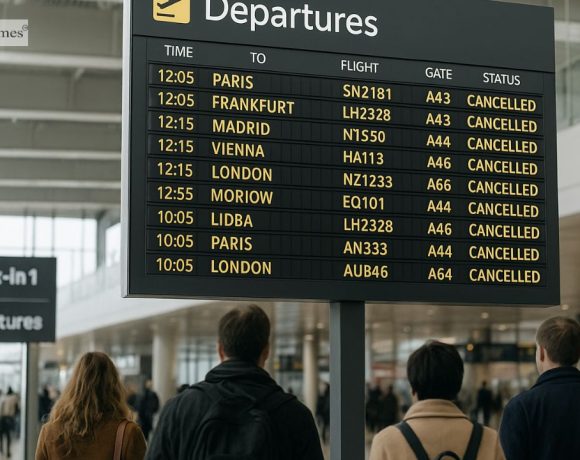
Belgium witnessed major nationwide disruption on Wednesday as the third and final day of a national strike brought much of the country to a standstill. The protest, driven by the country’s main labour unions, targeted Prime Minister Bart De Wever’s coalition government over proposed pension changes and labour market reforms. Brussels Airport cancelled all departing flights and more than half of its scheduled arrivals, while Charleroi Airport also warned of severe operational delays due to staff shortages.

The strike extended far beyond aviation, affecting schools, public transport, and several private-sector operations, making it the most disruptive day of the three-day action. Unions argue that the government’s reform plans will force Belgians to “work longer and harder” with less security regarding pensions, healthcare, and purchasing power. They also criticised the government for not involving unions in budget-related negotiations.

A large protest was planned in Brussels on Wednesday afternoon, following an October demonstration that drew around 80,000 people. Despite the government finalising next year’s budget earlier this week — which includes new taxes on banks, airline tickets, and natural gas — the agreements failed to prevent the strike. Belgium’s deficit is projected to reach 4.5% of GDP this year, with debt levels significantly above EU limits, prompting the government’s push for spending cuts and new revenue measures.

Pic Courtesy: google/ images are subject to copyright