
featured News Trending

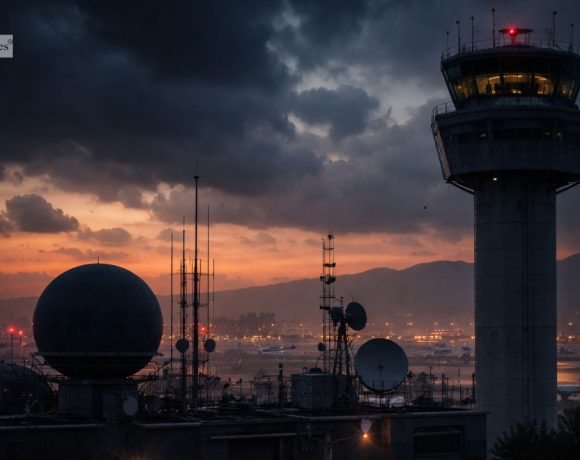
Greece’s air traffic control system suffered a major communications outage on Sunday, cutting contact between controllers and aircraft across much of the country and forcing authorities to suspend flights into and over Greek airspace. Controllers described radios falling silent mid-operation, replaced by a high-pitched noise, while internet systems also failed, disrupting coordination nationwide. The outage, which lasted several hours, stranded thousands of passengers before systems inexplicably came back online.

Officials have ruled out a cyberattack but admitted they do not yet know what caused the blackout or how it resolved itself. Controllers managed to find a limited number of functioning radio frequencies, but not enough to ensure safe operations, prompting the unprecedented shutdown. Neighbouring countries assisted using telephone communication, with aviation experts describing the episode as a “black hole” in Greek airspace that could have caused chaos during peak tourist season.

The incident has renewed scrutiny of Greece’s ageing and underfunded air traffic infrastructure, much of which dates back to the 1990s. Unions and experts warn that outdated equipment and staffing shortages pose ongoing safety risks, despite government assurances that modernisation plans meeting EU standards are underway and scheduled for completion by 2028. Critics argue that human expertise can no longer compensate for systemic weaknesses, warning of further disruptions if upgrades are delayed.

Pic courtesy: google/ images are subject to copyright
featured News

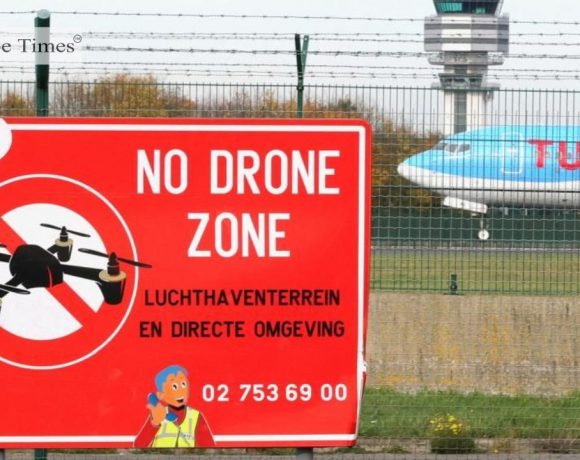
Belgium is urgently working to strengthen its drone defence systems following sightings that caused temporary shutdowns at Brussels’ Zaventem Airport, affecting around 3,000 passengers. Drones were also spotted near a Belgian military base, prompting concern over growing threats to both civilian and defence infrastructure across Europe. Support has already come from Germany, which is providing anti-drone technology.

Airlines including Brussels Airlines suffered major operational and financial disruptions, with flights cancelled or diverted, and emergency arrangements required for stranded travellers. The carrier said drones are a “new threat”, and even short disruptions at major airports have significant ripple effects.

European officials increasingly suspect Russia’s involvement in recent airspace incursions across the region, though no evidence has been publicly confirmed. Analysts say such actions may be aimed at testing European security and undermining support for Ukraine, particularly as the EU considers using frozen Russian assets to fund a major aid package for Kyiv.

Pic Courtesy: google/ images are subject to copyright
News Trending

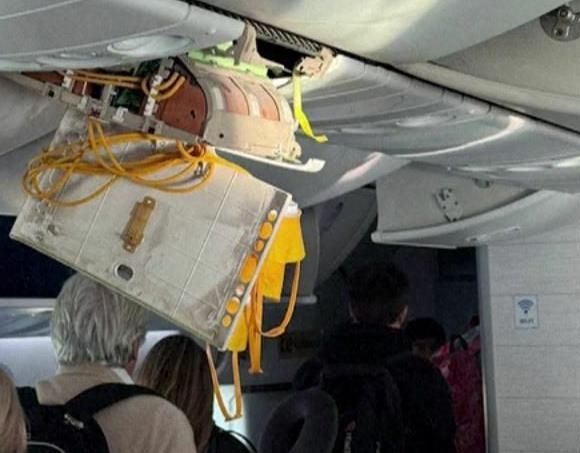
A Boeing 787-9 Dreamliner operated by Air Europa, flying from Madrid to Montevideo, made an emergency landing in Brazil after encountering severe turbulence over the Atlantic near the Brazilian coast. The incident occurred on Flight UX045, prompting the aircraft to divert to Natal Airport in north-eastern Brazil instead of continuing to its destination in Uruguay.

The airline confirmed that the turbulence caused injuries among passengers, with approximately 30 individuals requiring medical attention. Local authorities and airport officials deployed a fleet of ambulances to meet the aircraft upon landing. Reports from Brazilian medical teams indicated that some passengers suffered cranial fractures and facial cuts, with 10 of them needing hospitalization.

This incident occurred weeks after a Singapore Airlines flight experienced severe turbulence over Myanmar, resulting in numerous injuries and the tragic death of a British passenger. While severe turbulence incidents are rare, recent studies have suggested a potential increase in risk due to climate change.

Air Europa expressed its commitment to assisting affected passengers and ensuring their well-being following the mid-air emergency.

Picture Courtesy: Google/images are subject to copyright