
featured News Trending

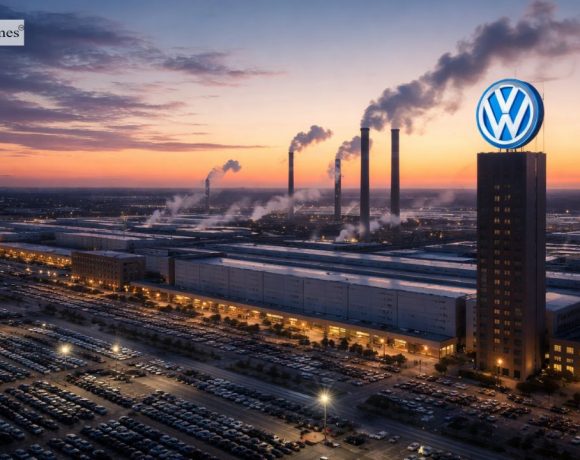
Volkswagen announced plans to cut 50,000 jobs across Germany by 2030, as post-tax profits fell by 44% in 2025, marking their lowest level since 2016. CEO Oliver Blume said the reductions will impact the entire group, including Audi and Porsche, and follow earlier agreements with unions to cut over 35,000 jobs in a socially responsible manner.

The company cited challenges including US import tariffs, declining demand in China, high restructuring costs from the shift to electric vehicles, and rising competition from Chinese carmakers entering Europe. Net profits fell from €12.4 billion to €6.9 billion, and Volkswagen projects a core profit margin of 4% to 5.5% for 2026, potentially lower than the current 4.6%.

Finance chief Arno Antlitz emphasized the need for rigorous cost reductions to maintain profitability in the long run. The company expects the job cuts and efficiency measures to save around €15 billion while navigating a fundamentally changed automotive market.

Pic courtesy: google/ images are subject to copyright

featured News Trending

Germany’s automotive sector is facing a serious downturn, with investments and jobs increasingly relocating overseas, according to the German Association of the Automotive Industry (VDA). Survey results show that 72% of small- and medium-sized companies in the auto supply chain plan to reduce investments in Germany, either by moving them abroad, postponing, or canceling them altogether.

Job cuts are already underway, with almost two-thirds of surveyed companies reducing domestic employment last year and nearly half continuing to cut jobs this year. The shift is driven by competitive disadvantages, declining orders, and challenges in transitioning to electric vehicles and software-focused manufacturing. Major carmakers, including Volkswagen and Mercedes, along with suppliers like Bosch and ZF, have announced tens of thousands of layoffs.

VDA President Hildegard Mueller warned of political and social implications, highlighting risks to Germany’s prosperity and stability. She criticized EU regulatory measures aimed at supporting the shift to electric vehicles, calling for market-driven incentives rather than mandatory obligations to help maintain Germany’s competitiveness as a global automotive hub.

Pic courtesy: google/ images are subject to copyright