featured News

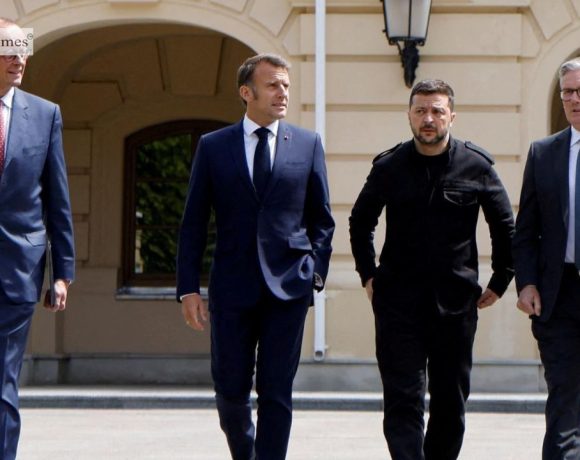
Group of Seven leaders and senior European officials, including EU chiefs Ursula von der Leyen and Antonio Costa, held closed-door discussions on Saturday regarding Washington’s proposed peace framework for Ukraine. The meeting took place on the sidelines of the G20 summit in Johannesburg, according to people familiar with the talks. Ahead of the broader conversation, the E3 group—France, Britain and Germany—convened separately to align positions.

The talks included several other European nations such as Finland, Norway, Spain and the Netherlands. The United States is currently negotiating a 28-point roadmap with Russia aimed at ending the conflict, but Brussels has not been directly involved in the negotiations so far. Von der Leyen said she plans to reach out to Ukrainian President Volodymyr Zelenskiy after the developments.

Zelenskiy responded that Ukraine is ready for “constructive, honest and prompt” engagement with Washington. Meanwhile, Rustem Umerov, Secretary of Ukraine’s National Security and Defence Council, confirmed that Ukrainian and US officials are holding consultations in Switzerland to work on potential pathways to ending the war.

Pic Courtesy: google/ images are subject to copyright
News Trending

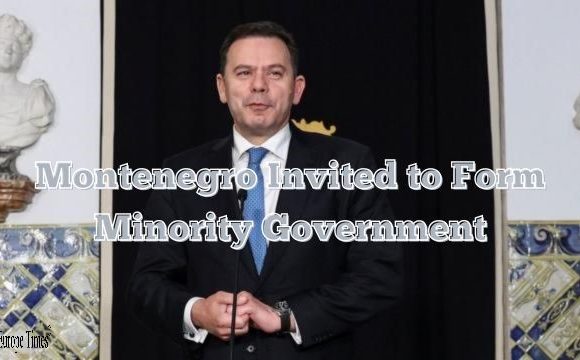
Portugal’s recent snap elections resulted in a fragmented parliament, with the center-right Democratic Alliance (AD) emerging as the leading party but falling short of a majority. President Marcelo Rebelo de Sousa has invited Luís Montenegro, a center-right politician, to form a minority government. However, with only 80 seats secured by the AD, alliances are necessary to pass legislation.

Montenegro’s appointment as prime minister follows consultations with party leaders and a refusal to collaborate with the far-right Chega party, despite their record gains. The rejection of Chega underscores the complexities of coalition-building in Portugal’s current political landscape, which faces its most fragmented parliament since the end of dictatorship.

As Montenegro assumes the role of prime minister, he confronts the challenge of navigating a divided parliament and securing support either from the Socialists or Chega to pass crucial legislation. His reluctance to divulge detailed strategies for forming a majority underscores the uncertainties surrounding the future governance of Portugal.

The premiership transition marks the departure of Antonio Costa, who led Portugal as Socialist party leader but resigned amid corruption allegations. Despite Costa’s departure, the issues that shaped voter discontent, such as low wages and rising rents, remain pertinent, highlighting the ongoing challenges facing the country’s leadership.

Picture Courtesy: Google/images are subject to copyright