
featured News

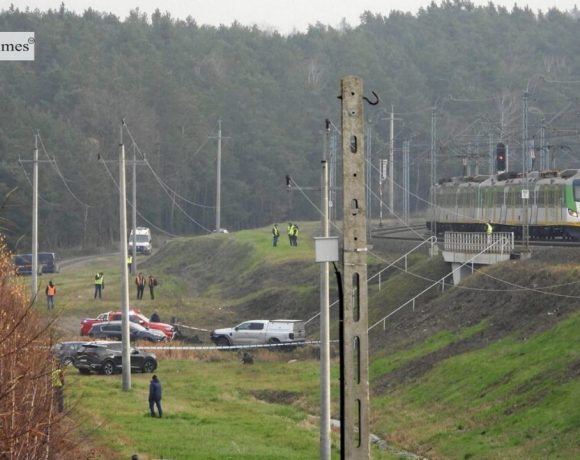
Poland announced on Wednesday that it will close Russia’s last remaining consulate on its territory, escalating its response to a railway explosion that Warsaw has blamed on Moscow. The blast, which occurred over the weekend on the Warsaw-Lublin line leading to the Ukrainian border, was allegedly carried out by two Ukrainians working with Russian intelligence. Polish authorities say the suspects fled to Belarus, a close ally of Russia.

Foreign Minister Radoslaw Sikorski said the closure of the Russian consulate in Gdansk is the first step, following earlier closures of Russian consulates in Krakow and Poznan in response to similar sabotage concerns. Calling the railway incident “an act of state terrorism,” Sikorski added that Poland would also pursue non-diplomatic measures. Moscow, which denies any involvement, accused Poland of “Russophobia” and indicated it would restrict Poland’s diplomatic presence in Russia.

Warsaw is now urging its EU partners to curb the movement of Russian diplomats within the Schengen zone, warning that further actions may follow. Poland and other EU states have repeatedly accused Russia and Belarus of destabilizing the region, including by fueling migration at the borders. Polish intelligence officials say several additional people have been detained in connection with the blast, amid a wider surge in sabotage, arson and cyberattacks across Europe since Russia’s full-scale invasion of Ukraine in 2022.

Pic Courtesy: google/ images are subject to copyright
featured News

An “ultra-left militant” was arrested in north-west France on Sunday after exhibiting suspicious behavior near a railway site, according to police sources cited by French media. When officers searched the man’s vehicle, they discovered keys to technical facilities, pliers, a set of universal keys, and literature associated with the ultra-left. The 28-year-old suspect is currently being interrogated by police in Rouen.

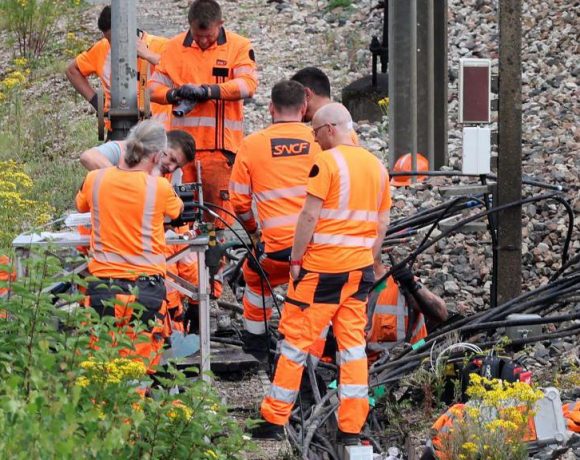
There are no indications that the man is connected to the suspected coordinated arson attacks on railway lines that occurred on Friday, just before the opening ceremony for the Paris Olympic Games. These acts of sabotage disrupted high-speed TGV services to and from Paris and significantly affected travel across France.

On Monday morning, France’s Minister of the Interior, Gerald Darmanin, stated that authorities had identified “a number of profiles of individuals” who could be behind these deliberate and targeted acts of sabotage. He noted that the methods used were characteristic of the ultra-left and suggested there may be a political motive behind the actions. “The question is whether they were manipulated or acting on their own,” Mr. Darmanin said, emphasizing that investigators were making good progress in identifying those responsible.

While he did not confirm any ties between the saboteurs and France’s national rail operator, SNCF, Mr. Darmanin pointed out that the locations of the arson attacks were “extremely specific.” He remarked that the attacks were well-planned, targeting three major lines.

Mr. Darmanin also reported that approximately 50 individuals had been arrested in connection with the Olympics, alongside others—estimated to be around 150—who intended to carry out acts of sabotage or radical protests during the early events of the Games. In addition to the train line damage, French media reported that fiber optic cables had been cut in six locations across France from Sunday into Monday, causing some isolated outages.

At this time, it remains unclear whether there is any connection between the vandalism of the telecoms infrastructure and the recent sabotage of the rail network, which impacted around 250,000 passengers on Friday and many more over the weekend. No group has claimed responsibility for either incident, although a security source suggested that the arson attacks resembled tactics used by the extreme left.

Transport Minister Patrice Vergriete announced on Monday that train services had returned to normal after teams worked tirelessly over the weekend to repair the damage. He mentioned that significant resources, including drones and police helicopters, were deployed to enhance the security of France’s extensive railway network. Mr. Vergriete estimated that the acts of sabotage could cost several million euros.

Picture Courtesy: Google/images are subject to copyright